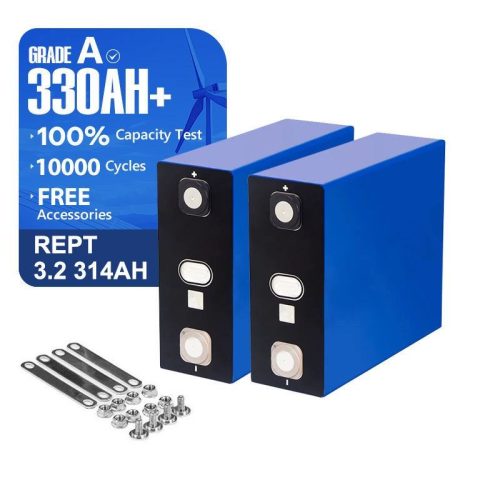
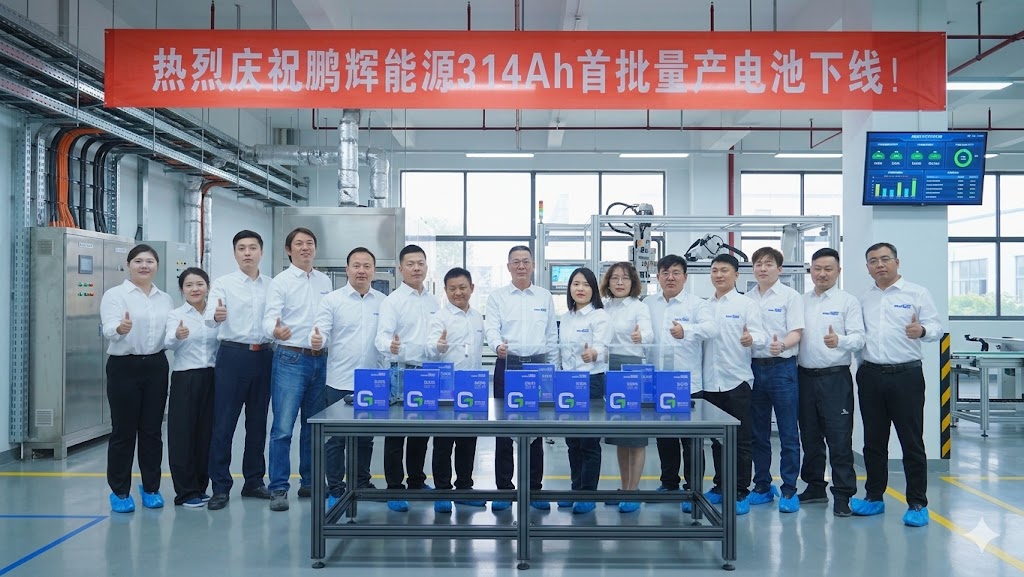
The Great Power 314Ah cell is a large-format LiFePO4 prismatic cell built specifically for stationary energy storage. It is not a consumer battery or a finished pack — it is a cell-level component designed for ESS integrators, pack manufacturers, and project procurement teams who need a reliable, high-capacity LFP building block for utility-scale and commercial-industrial systems.
At 3.2V nominal and 314Ah capacity, this cell delivers roughly 1 kWh per unit. That makes it practical for building large battery racks, cabinets, and containerized systems without stacking excessive cell counts. The model designation is GSP71173204F, and it sits within Great Power’s established ESS cell family alongside the 280Ah and 320Ah variants.
If you are evaluating LFP cells for a grid-tied storage project, a C&I peak-shaving system, or a renewable energy integration application, this page covers what you need to know before requesting a quote.
| Parameter | Value |
|---|---|
| Model | GSP71173204F |
| Chemistry | LiFePO4 (LFP) |
| Nominal Capacity | 314Ah |
| Nominal Voltage | 3.2V |
| Nominal Energy | ~1.005 kWh |
| Charge/Discharge Rate | 0.5P |
| Cycle Life | ≥8000 cycles @ 70% EOL |
| Charge Temperature | 0°C to 60°C |
| Discharge Temperature | -30°C to 60°C |
| Primary Application | Utility-scale ESS, C&I ESS |
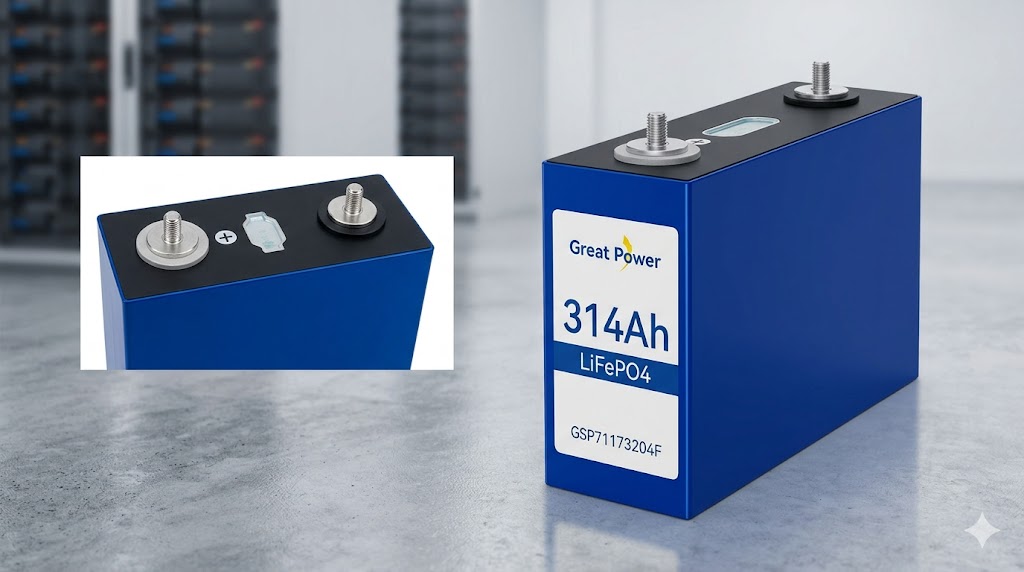
This is a large-format prismatic LiFePO4 cell — a single electrochemical unit, not a module, not a rack, and not a finished battery system. Buyers at the cell level are typically building something: a custom module, a battery rack, a containerized ESS, or a proprietary pack for a specific application.
Understanding that distinction matters because the specs, certifications, and integration requirements all apply at the cell level. System-level performance depends on how the cells are assembled, managed, and thermally controlled downstream.
When requesting quotes, datasheets, or certification documents, use the model number GSP71173204F to avoid confusion with other cells in the same capacity range from different manufacturers.
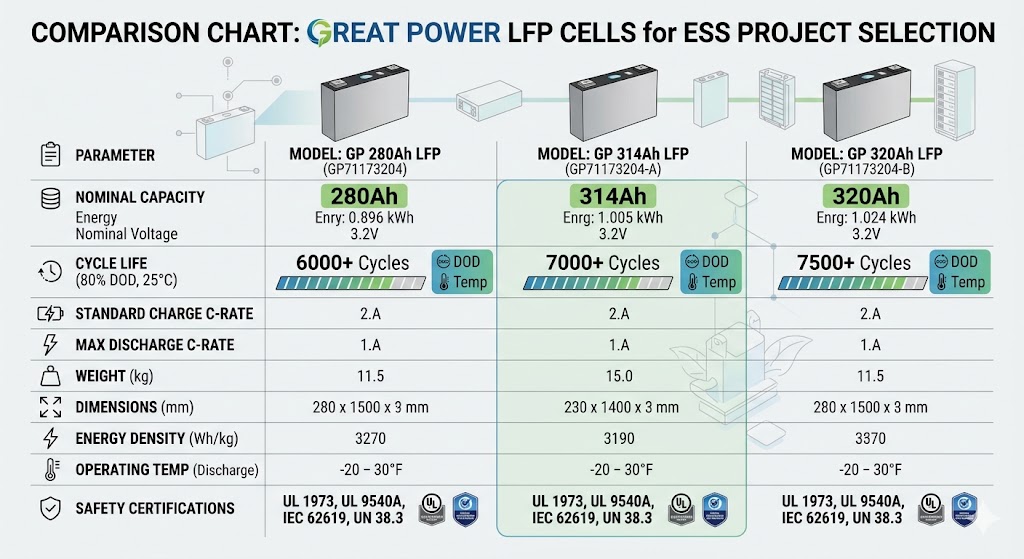
Great Power’s ESS cell lineup includes multiple capacity options within the same prismatic LFP family. The 280Ah, 314Ah, and 320Ah cells are presented together in Great Power’s official ESS materials as part of the same product generation. They share the same chemistry, form factor family, and application positioning — the differences are in capacity, cycle-life rating, and specific project fit.
The 314Ah cell occupies the middle position in that trio. It offers a higher cycle-life rating than the 280Ah while staying close in physical size to the 320Ah, which makes it a practical choice when project specifications call for long calendar life without moving to the highest capacity tier.
This page is written for:
If you are looking for a consumer battery, a drop-in replacement pack, or a finished ESS unit, this is not the right product. This cell is a component for professional system builders.
| Parameter | Value |
|---|---|
| Nominal Voltage | 3.2V |
| Nominal Capacity | 314Ah |
| Nominal Energy | ~1.005 kWh |
| Chemistry | LiFePO4 (LFP) |
The 3.2V nominal voltage is standard for LFP chemistry. This is lower than NMC or NCA cells, which is part of why LFP has a flatter discharge curve and better thermal stability — both important for stationary storage where the system runs daily cycles over many years.
| Parameter | Value |
|---|---|
| Charge Rate | 0.5P (0.5C equivalent) |
| Discharge Rate | 0.5P |
The 0.5P rating means the cell is designed to charge and discharge at half its capacity per hour — a full charge or discharge cycle takes approximately two hours under standard conditions. This is the correct operating window for most grid-tied ESS applications, where the priority is cycle longevity rather than peak power delivery.
Running cells at 0.5P rather than 1C or higher reduces heat generation, lowers internal stress per cycle, and directly contributes to the cell reaching its rated cycle life. For ESS projects where the battery cycles once or twice per day, 0.5P is a well-matched operating point.
Rated cycle life: ≥8000 cycles at 70% capacity retention
In practical terms, 8000 cycles at one cycle per day equals roughly 22 years of operation before the cell reaches 70% of its original capacity. Even at two cycles per day — common in some C&I peak-shaving applications — that is over 10 years of service life.
For project economics, cycle life is often more important than nameplate capacity. A cell with 8000 cycles at 70% EOL gives you a much lower levelized cost of storage than a cell with 3000–4000 cycles, even if the initial unit price is higher. When you are sizing a project with a 15–20 year asset life expectation, cycle life is a primary selection criterion.
The 314Ah cell’s ≥8000 cycle rating matches the 320Ah variant and exceeds the 280Ah cell’s ≥6000 cycle rating — a meaningful difference for long-duration project planning.
| Condition | Range |
|---|---|
| Charging | 0°C to 60°C |
| Discharging | -30°C to 60°C |
The asymmetry here is intentional and standard for LFP chemistry. Charging below 0°C causes lithium plating on the anode, which permanently degrades capacity and creates safety risks. The BMS in any properly designed system should enforce the 0°C lower charge limit.
The -30°C discharge capability is relevant for outdoor ESS installations in cold climates. The cell can deliver power at low temperatures, though capacity and efficiency will be reduced compared to operation at 20–25°C. For indoor C&I installations with climate control, the full temperature range is rarely a limiting factor.
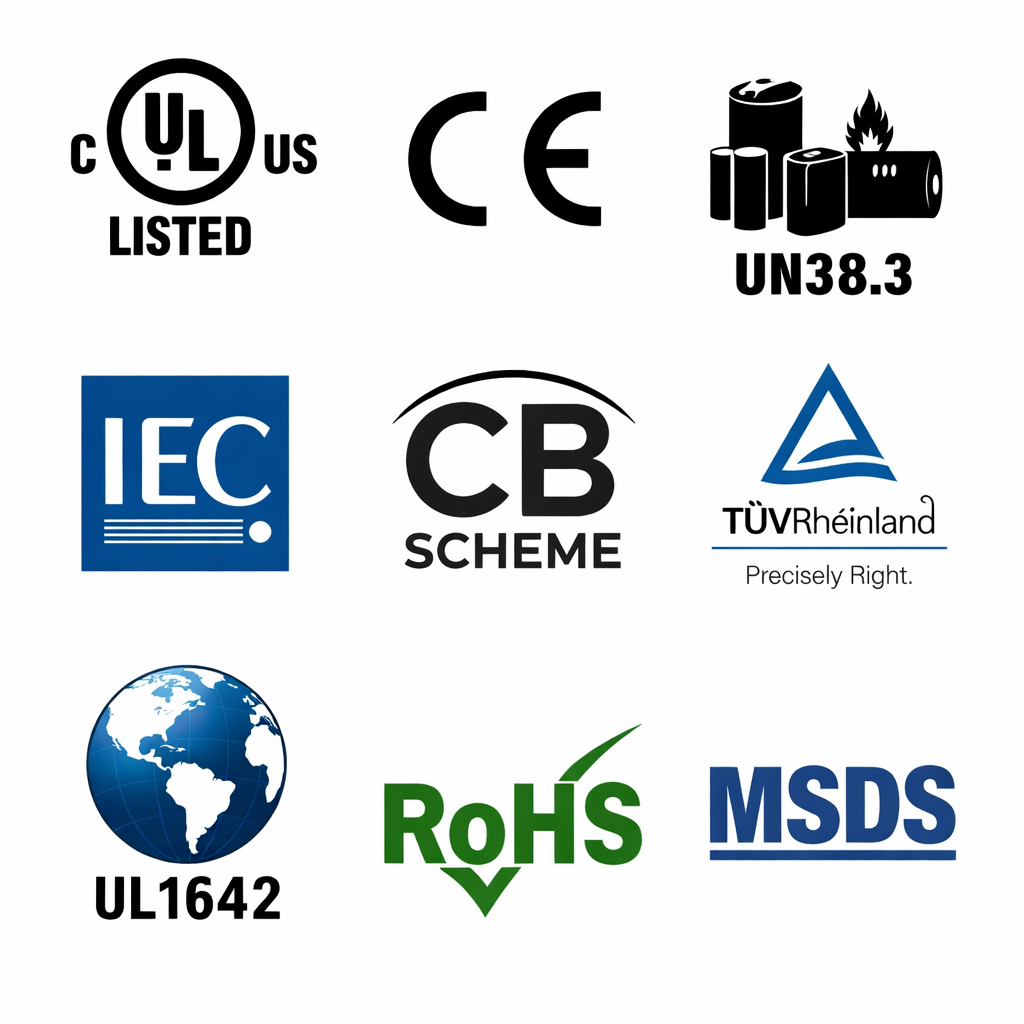
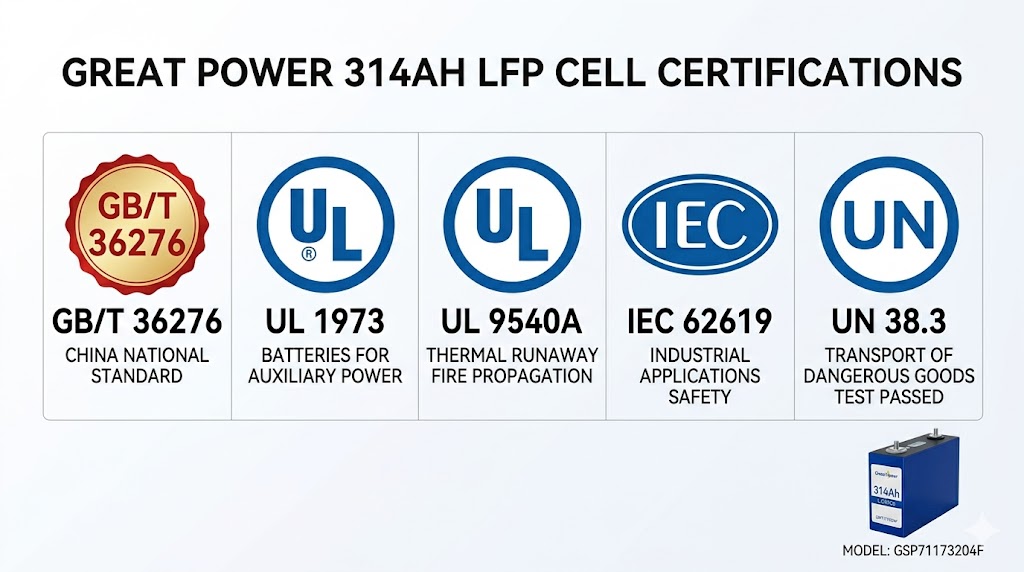
The Great Power 314Ah cell family is associated with the following certifications:
| Certification | Scope |
|---|---|
| GB/T 36276 | Chinese national standard for lithium-ion batteries in ESS |
| UL 1973 | Batteries for use in stationary and motive applications |
| UL 9540A | Test method for thermal runaway fire propagation |
| UL 1642 | Lithium batteries (cell-level safety) |
| IEC 62619 | Safety requirements for secondary lithium cells in stationary applications |
| MSDS | Material Safety Data Sheet |
| RoHS | Restriction of hazardous substances |
| UN 38.3 | Transport testing for lithium batteries |
Important note for buyers: Certifications in the battery industry are issued at specific product levels — cell, module, or system. A certification held at the system level does not automatically apply to the bare cell, and vice versa. Before finalizing procurement, confirm which certifications are held at the cell level for the specific model and production batch you are purchasing. Request the actual certificate documents, not just a list.
| Parameter | Value |
|---|---|
| Cell Format | Prismatic, aluminum-cased |
| Dimensions | [To be confirmed with supplier datasheet] |
| Weight | [To be confirmed with supplier datasheet] |
| Terminal Style | Threaded stud terminals |
| Casing | Aluminum alloy |
| Compression Requirement | Yes — requires end-plate compression in module assembly |
| Pallet Packing | [Confirm quantity per pallet and packing configuration with supplier] |
Physical dimensions and weight should always be confirmed against the current production datasheet before finalizing module or rack mechanical designs. Dimensional tolerances matter when you are designing compression fixtures, busbars, and thermal interface layers.
At 314Ah and approximately 1 kWh per cell, this format reduces the total cell count needed to build a given system capacity. Fewer cells means fewer electrical connections, fewer points of potential failure, and simpler BMS channel requirements. For a 100 kWh rack, you are working with roughly 100 cells rather than the 200+ cells you would need with a 50Ah format. That simplifies assembly, reduces labor cost, and improves system reliability.
Large-format cells like this have become the dominant choice for utility-scale and C&I ESS precisely because the economics of assembly and maintenance favor fewer, larger cells over many small ones.
The ≥8000 cycle rating directly affects the financial case for a storage project. When you calculate levelized cost of storage (LCOS), cycle life is one of the most sensitive inputs. A cell that lasts 8000 cycles spreads its capital cost over more energy throughput than a cell rated at 4000–5000 cycles.
For a project developer or asset owner, this translates to:
LiFePO4 chemistry has a fundamentally more stable crystal structure than NMC or NCA. The phosphate bond in the cathode is stronger than the oxide bond in competing chemistries, which means the cell is significantly less prone to thermal runaway under abuse conditions — overcharge, external short circuit, or mechanical damage.
For stationary ESS, this matters in several ways:
LFP is not the right chemistry for every application, but for daily-cycling stationary storage where safety, longevity, and total cost of ownership matter more than energy density, it is the standard choice.
Great Power’s own product materials position the 314Ah cell explicitly for utility-scale and commercial-industrial energy storage. This is not a cell that has been adapted from a consumer or EV application — it is designed from the ground up for stationary cycling duty.
That means the cell’s charge/discharge profile, thermal characteristics, and cycle-life testing are all calibrated for the operating patterns typical of grid-tied storage: daily cycling, moderate C-rates, wide temperature exposure, and multi-year continuous operation.
Great Power has been active in the energy storage market for over two decades and has deployed ESS products across multiple international markets. Their product portfolio spans cells, modules, racks, and complete containerized systems — which means the 314Ah cell exists within a broader ecosystem of compatible components and engineering support.
For buyers who may eventually need to scale from cell procurement to module or system procurement, working with a manufacturer that covers the full stack reduces integration risk and simplifies supplier management.
Grid-scale storage projects — frequency regulation, peak shaving, energy arbitrage, and renewable firming — are the primary target for this cell. At utility scale, the combination of high capacity per cell, long cycle life, and LFP safety characteristics makes the 314Ah format well-suited for multi-MWh installations where reliability and longevity are non-negotiable.
C&I applications include demand charge management, backup power for critical facilities, behind-the-meter storage for commercial buildings, and microgrid integration. These systems typically cycle once or twice per day and need to operate reliably for 10–15 years with minimal intervention. The 314Ah cell’s cycle life and temperature range fit this use case well.
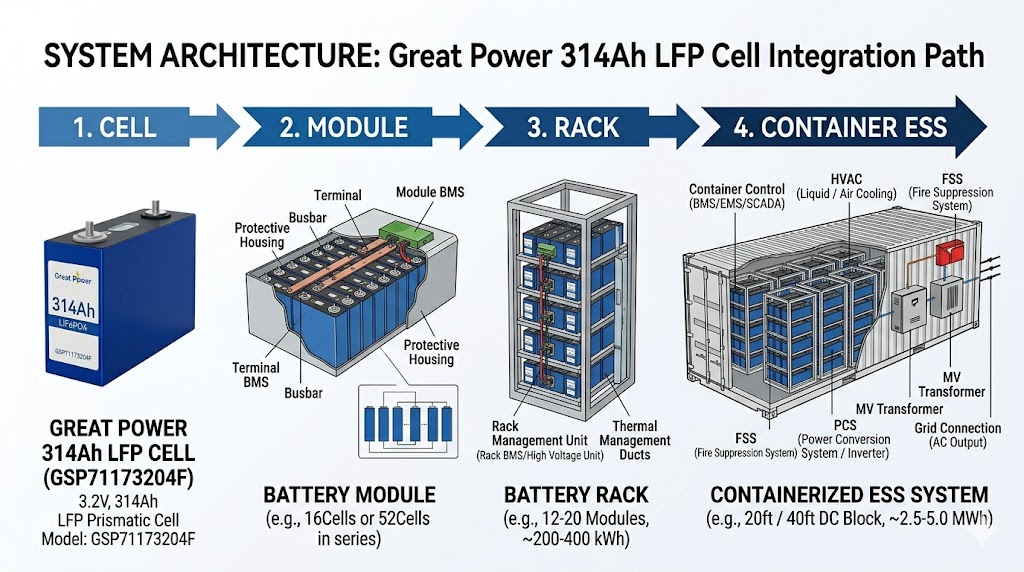
The 314Ah cell is a standard building block for rack-and-cabinet ESS architectures. Integrators typically assemble cells into modules, modules into racks, and racks into cabinets or 20-foot/40-foot container systems. The cell’s prismatic format and threaded terminals are compatible with standard busbar and compression fixture designs used across the industry.
Pack manufacturers and system integrators who design proprietary ESS products use cells like the 314Ah as the core component. The cell’s consistent electrical characteristics and available documentation support custom module design, BMS configuration, and system-level certification processes.
Solar-plus-storage and wind-plus-storage projects require cells that can handle irregular charge profiles driven by variable generation. LFP chemistry handles partial state-of-charge cycling well, and the 314Ah cell’s wide operating temperature range supports outdoor installations in diverse climates.
| Model | Capacity | Nominal Voltage | Nominal Energy |
|---|---|---|---|
| Great Power 280Ah | 280Ah | 3.2V | ~0.896 kWh |
| Great Power 314Ah (GSP71173204F) | 314Ah | 3.2V | ~1.005 kWh |
| Great Power 320Ah | 320Ah | 3.2V | ~1.024 kWh |
The capacity difference between 314Ah and 320Ah is about 2%. In a 100-cell rack, that is roughly 6 kWh — meaningful at scale, but not a dramatic difference in system sizing.
| Model | Cycle Life | EOL Threshold |
|---|---|---|
| Great Power 280Ah | ≥6000 cycles | 80% |
| Great Power 314Ah | ≥8000 cycles | 70% |
| Great Power 320Ah | ≥8000 cycles | 70% |
This is the most important comparison for project economics. The 280Ah cell is rated to 6000 cycles at 80% EOL, while both the 314Ah and 320Ah are rated to 8000 cycles at 70% EOL. Note that the EOL thresholds differ — 80% vs 70% — so the comparison is not purely about cycle count. In absolute energy throughput terms, the 314Ah and 320Ah cells deliver significantly more total energy over their rated life.
When to choose the 280Ah:
When 314Ah is the balanced option:
When buyers may prefer the 320Ah:
For most C&I and utility-scale projects, the 314Ah hits a practical sweet spot. It carries the same ≥8000 cycle rating as the 320Ah, which means the long-term economics are comparable. The capacity difference between 314Ah and 320Ah is small enough that most system designs can accommodate either without significant redesign. And the 314Ah has been in the market long enough to have a broader base of integration experience and available documentation.
If your project is in the design phase and you are choosing between these three options, the 314Ah is a low-risk choice that does not sacrifice cycle life for cost savings the way the 280Ah does.
The 314Ah cell is designed to be assembled into larger structures. Most integrators build a module first — typically 8 to 16 cells in series or parallel — then stack modules into a rack, and combine racks into a cabinet or container. The cell’s prismatic aluminum casing and threaded terminals are compatible with standard ESS module hardware.
Before finalizing a module design, confirm the cell’s exact dimensions and terminal torque specifications from the current datasheet. Dimensional tolerances affect compression fixture design, and terminal torque affects contact resistance and long-term connection reliability.
When assembling cells into modules, matching matters. Cells in the same module should be from the same production batch and should be screened for:
Mismatched cells in a series string will cause the weakest cell to reach its voltage limits first, reducing usable capacity and accelerating degradation of that cell. For large projects, request batch test data from the supplier and confirm the matching criteria used during production.
LFP prismatic cells expand slightly during charge and contract during discharge. Over thousands of cycles, this breathing motion can loosen connections and cause mechanical fatigue if the module is not properly constrained.
Key mechanical design points:
LFP cells are significantly safer than NMC under abuse conditions, but thermal management is still important for cycle life and system safety.
Practical considerations:
When qualifying this cell for a project, expect to need:
Request these documents before placing a bulk order, not after. Certification gaps discovered late in a project can cause significant delays.
Great Power operates dedicated ESS cell production lines with process controls aligned to the requirements of international certifications including IEC 62619 and UL 1973. Cell production involves electrode coating, calendering, winding or stacking, electrolyte filling, formation cycling, and capacity grading — each step with defined quality checkpoints.
For buyers, the relevant output of this process is a cell that meets its rated specifications consistently across production batches.
For large orders, buyers should define incoming inspection criteria before shipment. Standard incoming inspection for LFP cells typically includes:
Agree on the acceptable defect rate and the process for handling non-conforming cells before the order ships.
Each cell should carry a label with a unique identifier — typically a QR code or barcode — that links back to production batch data. This traceability is important for:
Confirm with the supplier what traceability data is available and in what format before placing a large order.
Most reputable cell manufacturers can provide factory test data for each cell or each production batch. This typically includes formation capacity, internal resistance, and OCV at a defined SOC. For project procurement, request this data as part of the delivery package — it establishes a baseline for incoming inspection and future performance comparison.
Cells should be shipped in purpose-designed export packaging that:
Confirm pallet configuration, carton dimensions, and gross weight per pallet before arranging freight — this affects container loading plans and freight cost calculations.

Minimum order quantity depends on order type and current production scheduling. Contact us directly to confirm MOQ for your specific requirement — sample quantities are available for qualified buyers.
Lead time varies based on order volume and production scheduling. Standard bulk orders typically require 4–8 weeks from order confirmation. Project orders with defined delivery milestones should be planned with additional lead time for documentation preparation and logistics coordination.
We support standard international trade terms including EXW, FOB, CIF, and DAP. Preferred terms depend on buyer logistics capability and destination. Contact us to discuss the most practical arrangement for your project.
Cells are packed in manufacturer-standard export cartons on wooden pallets, compliant with UN 38.3 transport requirements. Full packing specifications including carton dimensions, cells per carton, and pallet configuration are available on request.
For integrators building proprietary ESS products or EPC teams managing large project procurement, we can support:
Use the contact form below or reach out directly with:
We respond to qualified inquiries within one business day.
We maintain established supply relationships for Great Power ESS cells and can support both spot orders and ongoing project supply. For large projects, we work with buyers to plan delivery schedules that align with installation timelines.
We understand that cell procurement is one step in a larger engineering and project management process. Our team can engage at the technical level — discussing cell specifications, integration requirements, and documentation needs — not just at the commercial level.
We provide the full documentation package that ESS projects require: datasheet, MSDS, UN 38.3, certification copies, and factory test data. We do not treat documentation as an afterthought.
We have experience shipping LFP cells to multiple international markets and understand the logistics, labeling, and customs requirements involved. We can coordinate with your freight forwarder or handle logistics directly depending on your preference.
We encourage technical discussion before order placement. If you have questions about cell specifications, integration considerations, or how the 314Ah compares to other options for your specific application, we are available to work through those questions with you. That conversation reduces risk for both sides.
The model number is GSP71173204F. Use this when requesting datasheets, certifications, or quotes to ensure you are referencing the correct product.
Yes. The GSP71173204F uses LiFePO4 (LFP) chemistry. This is a lithium iron phosphate cell, not NMC, NCA, or any other lithium chemistry. LFP is the standard choice for stationary energy storage due to its thermal stability, long cycle life, and safety characteristics.
The 314Ah cell is designed for stationary energy storage — specifically utility-scale grid storage and commercial-industrial ESS. Typical applications include grid frequency regulation, peak demand management, solar and wind energy storage, and backup power for critical facilities. It is not designed for EV, marine, or consumer applications.
The rated cycle life is ≥8000 cycles at 70% capacity retention (end of life). At one cycle per day, that represents over 20 years of operation before the cell reaches 70% of its original capacity. Actual cycle life depends on operating conditions including depth of discharge, temperature, and charge/discharge rate.
Yes. Great Power’s official product materials position the 314Ah cell explicitly for utility-scale and commercial-industrial ESS. The cell’s capacity, cycle life, temperature range, and certification profile are all aligned with the requirements of those markets.
The Great Power 314Ah ESS cell family is associated with GB/T 36276, UL 1973, UL 9540A, UL 1642, IEC 62619, MSDS, RoHS, and UN 38.3. Buyers should confirm which certifications are held at the cell level for the specific production batch and request actual certificate documents rather than relying on a list.
The three cells are part of the same ESS family. The 280Ah is rated at ≥6000 cycles to 80% EOL. The 314Ah and 320Ah are both rated at ≥8000 cycles to 70% EOL. The capacity difference between 314Ah and 320Ah is approximately 2%. For projects where long cycle life is a priority, the 314Ah and 320Ah are the stronger options. The 280Ah may suit shorter-life or more cost-sensitive applications.
Yes. We provide the full documentation package including cell datasheet, MSDS, UN 38.3 test report, certification copies, and factory test data. Request documents through the contact form below or directly by email.
Yes. We support sample orders for engineering evaluation, standard bulk orders for integration and inventory, and project orders with phased delivery schedules. Contact us with your quantity, timeline, and destination to discuss the best arrangement.
The 314Ah cell is assembled into modules using end-plate compression fixtures, busbars, and a BMS. Key integration requirements include proper mechanical compression, cell matching within each module, thermal management design, and BMS configuration for LFP voltage windows. We recommend reviewing the cell datasheet and working with your mechanical and electrical engineering teams before finalizing a module design. We are available to discuss integration questions before order placement.
[Request Datasheet]
Need the full technical specification for the Great Power 314Ah cell (GSP71173204F)? Submit your request below and we will send the current datasheet along with available certification documents.
[Get Bulk Quote]
Ready to move forward with a volume order? Tell us your quantity, delivery location, and timeline. We will respond with pricing and lead time within one business day.
[Submit Project Inquiry]
Working on a utility-scale or C&I ESS project? Share your project details — capacity, timeline, location, and documentation requirements — and we will put together a project supply proposal.
Fields:
We respond to all qualified inquiries within one business day.

Provide a downloadable PDF of the current cell datasheet. Include file size and last-updated date. This is a high-value conversion element for engineering buyers who want to evaluate specs offline.