



Five core selling points:
Free standard shipping on all orders Estimated to be delivered within 2-5 business days.
Backed up by techical support within 24hrs.
30 Days Hassle Free Returns
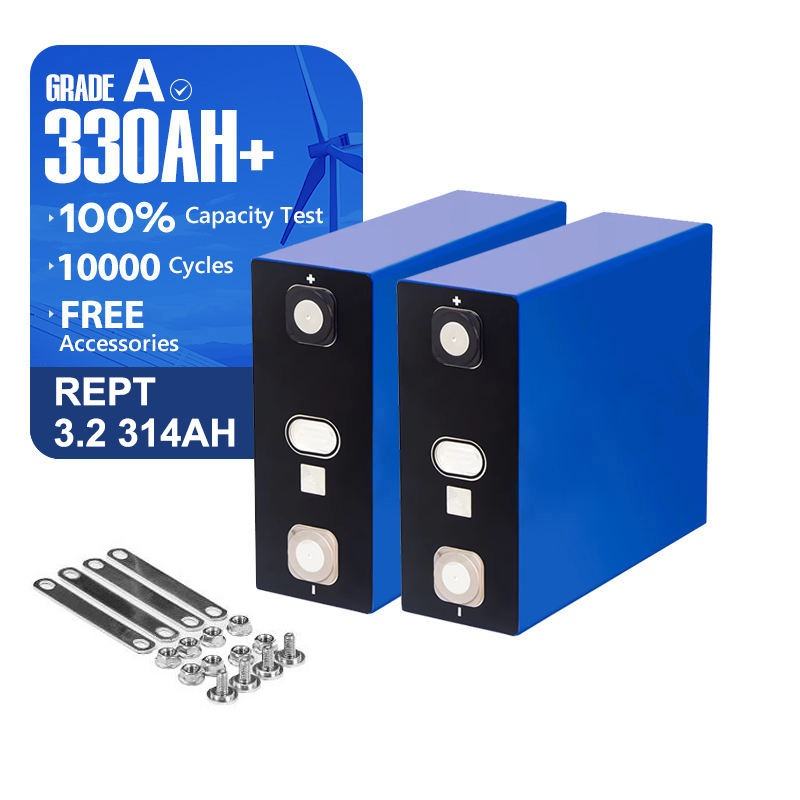
The REPT 314Ah cell is a single prismatic LiFePO4 cell rated at 3.2V nominal and 314Ah capacity. It is a raw cell — not a finished 12V, 24V, or 48V battery pack. You buy it as a building block, then assemble it into a larger battery system using a BMS, busbars, compression hardware, and an enclosure.
This cell is designed for stationary energy storage. Its large format and high capacity make it a natural fit for utility-scale ESS, commercial and industrial backup systems, solar storage, and custom battery pack projects.
[IMAGE SUGGESTION: Front and side view of REPT 314Ah prismatic LiFePO4 cell with terminal detail]
Alt text: REPT 314Ah 3.2V LiFePO4 prismatic cell front and side view showing terminals and housing
REPT positions this cell primarily in utility ESS and C&I ESS. Resellers also use it in solar storage, UPS backup, and industrial module integration. The strongest use case is stationary storage, and that is where this page stays focused.
| Parameter | Value |
|---|---|
| Chemistry | LiFePO4 (LFP) |
| Nominal Voltage | 3.2V |
| Nominal Capacity | 314Ah |
| Nominal Energy | ~1,004.8Wh |
| Operating Voltage Range | 2.5V – 3.65V |
| Cell Format | Prismatic |
The REPT 314Ah is a large-format LFP building block designed for stationary energy storage — a high-capacity, long-life cell that simplifies system architecture and scales cleanly from small commercial packs to utility-level storage installations.
When you search for this cell, you may encounter several different names on datasheets, reseller listings, and procurement documents:
These all refer to the same physical cell. The naming difference comes from how REPT codes its product line internally versus how distributors label it for search and catalog purposes.
If you are matching a listing to a datasheet, confirm both the capacity (314Ah) and the model code (CB75) before placing an order. Some marketplace listings mix 280Ah, 302Ah, 314Ah, and 320Ah cells on a single page, which creates confusion during procurement. Always verify the exact capacity and model code against the supplier’s current datasheet before confirming a batch.
On this page, REPT 314Ah Cell is the primary product name. The CB75 model code is referenced here for identification purposes. If you receive a quotation or datasheet referencing CB75, it should correspond to the 314Ah cell described on this page.
At 314Ah per cell, you need fewer cells to reach the same total energy compared to smaller-format cells. A 16S1P pack using 314Ah cells delivers roughly 16kWh. The same energy from a 100Ah cell would require 48 cells in a 16S3P configuration. Fewer cells means fewer interconnects, fewer potential failure points, and a simpler BMS configuration. For ESS projects where reliability and serviceability matter, that reduction in system complexity has real value.
LiFePO4 chemistry is known for its cycle durability, and the REPT 314Ah is designed for daily-cycling ESS applications. Actual cycle life depends on operating conditions — depth of discharge, charge and discharge rate, temperature, and how well the BMS manages cell balance. A system running at 80% DOD in a controlled temperature environment will typically see better cycle life than one running at 100% DOD in high ambient heat. Cycle life figures from datasheets are always measured under specific test conditions, so treat them as a reference baseline, not a guaranteed field result.
LiFePO4 has a more stable crystal structure than NMC or NCA chemistries. It does not release oxygen during thermal stress, which significantly reduces the risk of thermal runaway. For stationary ESS installations — especially those inside buildings, near occupied spaces, or in enclosed cabinets — this thermal stability is a meaningful safety advantage. It is one of the main reasons LFP has become the dominant chemistry for grid-connected and commercial storage applications.
Low internal resistance means the cell generates less heat under load and delivers voltage more consistently across the discharge curve. In a multi-cell pack, cells with matched internal resistance stay in better balance over time, which reduces the workload on the BMS and extends overall pack life. When sourcing cells for a large ESS build, internal resistance matching across a batch is worth confirming with your supplier.
The prismatic format and terminal layout of the REPT 314Ah are compatible with standard compression frame designs, rack-mount enclosures, and modular cabinet systems. The cell’s flat discharge platform — typical of LFP chemistry — makes it easier to design a BMS with consistent SOC estimation across the operating range. For integrators building standardized ESS products, that predictability simplifies both hardware design and firmware development.
| Parameter | Value |
|---|---|
| Nominal Voltage | 3.2V |
| Nominal Capacity | 314Ah |
| Nominal Energy | ~1,004.8Wh |
| Charge Cut-off Voltage | 3.65V |
| Discharge Cut-off Voltage | 2.5V |
| Standard Charge Rate | 0.5C |
| Standard Discharge Rate | 0.5C |
| Maximum Continuous Charge Rate | 1C |
| Maximum Continuous Discharge Rate | 1C |
| Internal Resistance (typical) | ≤0.25mΩ |
| Parameter | Value |
|---|---|
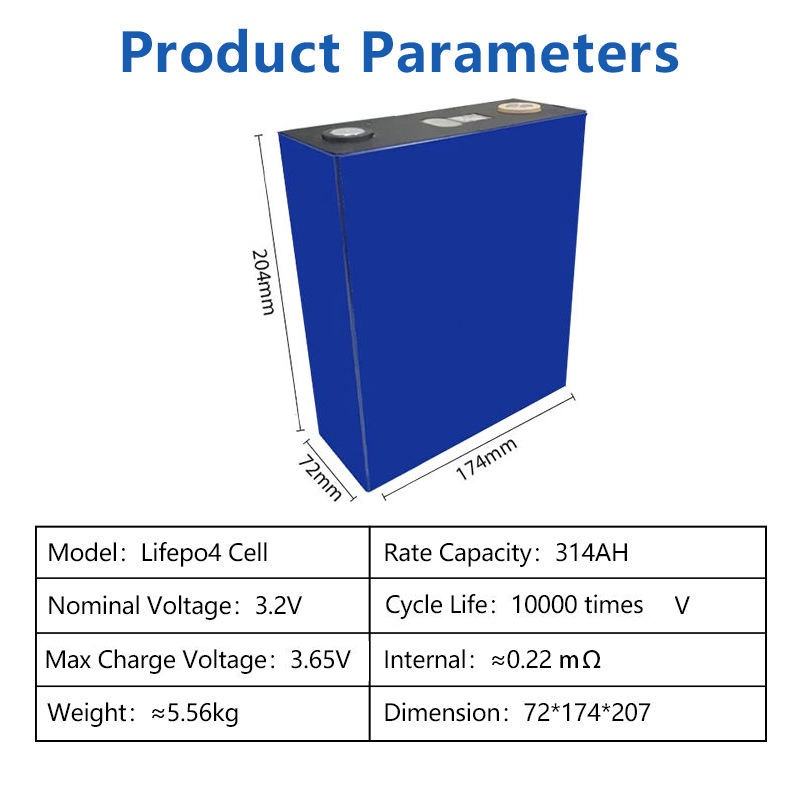
| Length | ~174mm |
| Width / Thickness | ~71.5mm |
| Height (with terminal) | ~207mm |
| Weight | ~5.6kg |
| Terminal Type | M6 threaded stud |
| Housing Material | Aluminum |
[IMAGE SUGGESTION: Labeled dimensional drawing of REPT 314Ah cell showing length, width, height, and terminal positions]
Alt text: REPT 314Ah LiFePO4 prismatic cell dimensional drawing with measurements in millimeters
| Parameter | Range |
|---|---|
| Charging Temperature | 0°C to 45°C |
| Discharging Temperature | -20°C to 60°C |
| Storage Temperature | -10°C to 35°C (recommended) |
| Parameter | Value |
|---|---|
| Cycle Life | ≥3,500 cycles at 80% DOD (0.5C/0.5C, 25°C) |
| Gravimetric Energy Density | ~179Wh/kg (typical) |
| Round-Trip Energy Efficiency | ≥96% (typical at 0.5C) |
Values listed above are nominal or typical figures based on standard test conditions (25°C, 0.5C charge/discharge, 80% DOD unless noted). Actual performance in the field will vary based on system design, operating temperature, charge/discharge rate, and BMS configuration. Always request the latest supplier datasheet and confirm batch-specific test data before finalizing a procurement order.
The REPT 314Ah cell measures approximately 174mm (L) × 71.5mm (W) × 207mm (H) including terminals. These are the dimensions you need for enclosure planning, compression frame selection, and rack layout.
[IMAGE SUGGESTION: Detailed dimensional drawing of REPT 314Ah cell with all six faces labeled and terminal height indicated]
Alt text: REPT 314Ah prismatic cell dimension drawing showing length width height and terminal detail
Getting the dimensions right before you design your pack saves significant rework later. Here is what each measurement affects in a real build:
If you are designing a custom enclosure or ordering compression frames from a third-party supplier, always verify dimensions against the actual datasheet for the batch you are ordering. Dimensional tolerances can vary slightly between production runs.
The REPT 314Ah cell is well-suited for large stationary storage systems connected to the grid. Common use cases include:
For C&I customers, this cell supports:
The flat discharge curve and long cycle life of LFP chemistry make the REPT 314Ah a practical choice for renewable storage. It handles daily charge/discharge cycling well, which is the typical operating pattern for solar-coupled storage. It also tolerates partial state-of-charge operation better than some other chemistries, which is useful in systems where generation is intermittent.
For industrial backup and UPS applications, the cell’s low internal resistance and stable voltage platform support reliable standby operation. It can be integrated into custom module designs for telecom backup, data center UPS, and industrial control system power.
Integrators and OEM buyers use the REPT 314Ah as the core cell in custom-built battery packs. Its large capacity simplifies pack architecture, and its prismatic format is compatible with most standard compression and busbar hardware. It is a common choice for branded ESS products built on a custom cell-level design.
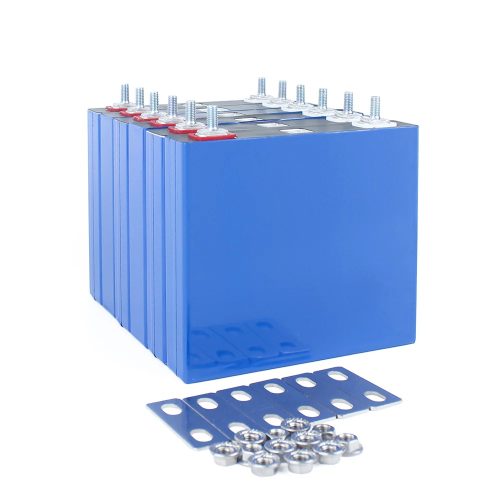
LiFePO4 cells have a nominal voltage of 3.2V per cell. To reach a target system voltage, you connect cells in series:
| Target System Voltage | Cells in Series | Nominal Pack Voltage |
|---|---|---|
| 12V class | 4S | 12.8V |
| 24V class | 8S | 25.6V |
| 48V / 51.2V class | 16S | 51.2V |
For the REPT 314Ah cell, a 16S1P configuration gives you 51.2V nominal at 314Ah, which is approximately 16kWh of usable energy at 100% DOD. Most ESS systems operate at 80–90% DOD, so plan for roughly 12.8–14.4kWh of practical capacity per 16S1P pack.
| Configuration | Voltage | Capacity | Approx. Energy |
|---|---|---|---|
| 4S1P | 12.8V | 314Ah | ~4kWh |
| 8S1P | 25.6V | 314Ah | ~8kWh |
| 16S1P | 51.2V | 314Ah | ~16kWh |
| 16S2P | 51.2V | 628Ah | ~32kWh |
| 16S4P | 51.2V | 1,256Ah | ~64kWh |
Parallel strings (P) increase capacity. Series strings (S) increase voltage. For most ESS applications, 16S is the standard building block, and you scale capacity by adding parallel strings or stacking multiple 16S packs.
[IMAGE SUGGESTION: Simple wiring diagram showing 16S1P configuration of REPT 314Ah cells with BMS connection points]
Alt text: 16S1P LiFePO4 battery pack wiring diagram using REPT 314Ah prismatic cells with BMS
A 314Ah cell is the energy storage element. A complete, functional battery pack also requires:
A few things that matter in a real build:
[IMAGE SUGGESTION: Exploded view diagram of a 16S LiFePO4 pack assembly showing cells, compression frame, busbars, and BMS placement]
Alt text: Exploded assembly diagram of 16S LiFePO4 prismatic battery pack with compression frame busbars and BMS
Compared to a 100Ah or 200Ah cell, the 314Ah format reduces the total cell count needed to reach a given energy target. Fewer cells means fewer busbar connections, fewer BMS balance channels, fewer potential failure points, and less assembly labor. For large ESS projects, that reduction in system complexity has a direct impact on build cost and long-term maintenance.
The cell’s dimensions and terminal layout are compatible with standard ESS cabinet and rack designs. Integrators building standardized products benefit from a cell that fits predictably into a repeatable mechanical design without custom tooling or non-standard hardware.
A cell rated for 3,500+ cycles at 80% DOD, cycling once per day, has a theoretical service life of nearly 10 years under controlled conditions. Longer service life means fewer replacement cycles over the life of an ESS installation, which reduces total cost of ownership. For project buyers evaluating 10–15 year system lifetimes, cycle life is a key economic variable, not just a spec sheet number.
The REPT 314Ah works in both smaller commercial systems (a single 16S1P pack at ~16kWh) and larger stationary storage installations built from multiple parallel strings. The same cell, the same BMS architecture, and the same mechanical hardware can scale from a 16kWh commercial backup system to a multi-hundred-kWh utility installation. That scalability simplifies procurement and system design for integrators working across multiple project sizes.
LiFePO4 chemistry has a fundamentally different failure mode compared to NMC or NCA. The iron-phosphate cathode structure is thermally stable and does not decompose and release oxygen the way layered oxide cathodes do. This means that even under abuse conditions — overcharge, external short circuit, mechanical damage — LFP cells are significantly less likely to enter thermal runaway. For ESS installations in occupied buildings, enclosed spaces, or locations where fire risk is a primary concern, this chemistry choice matters.
REPT cells are manufactured under a quality process that includes:
Grade A cells should arrive with consistent capacity and IR values across the batch. If you are buying in volume, request batch test data with your order.
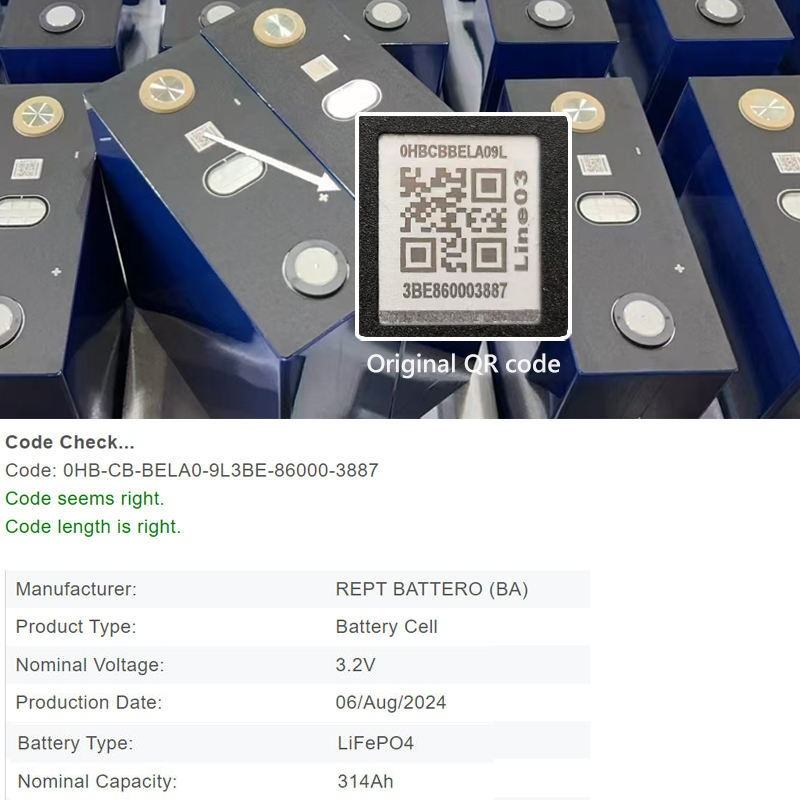
REPT 314Ah cells typically ship with a QR code label on the cell housing. This code links to production batch data and can be used to verify cell authenticity and trace the manufacturing origin. If you are buying through a distributor, confirm that the QR codes are intact and scannable on arrival. Cells with missing, damaged, or non-scanning QR codes should be flagged before acceptance.
Batch test reports — including capacity, internal resistance, and formation data — can typically be provided by the supplier on request. Ask for these before finalizing a large order.
When a shipment of REPT 314Ah cells arrives, do not skip incoming inspection. Here is a practical checklist:
REPT cells carry a strong certification set relevant to ESS applications and international shipping:
| Certification | Scope |
|---|---|
| UL 1973 | Batteries for use in stationary, vehicle auxiliary power, and light electric rail applications |
| UL 9540A | Test method for evaluating thermal runaway fire propagation in battery energy storage systems |
| IEC 62619 | Safety requirements for secondary lithium cells and batteries for use in industrial applications |
| UN 38.3 | Transportation testing for lithium batteries (required for air and sea freight) |
| UL 1642 | Standard for lithium batteries (cell-level) |
Certifications are not just paperwork. Here is what each one actually does for your project:
Having these certifications in hand before procurement simplifies the document review process for your engineering, legal, and procurement teams.
REPT 314Ah cells are typically shipped in individual cardboard cartons with foam or molded insert protection. Terminal protection caps or tape are applied to prevent short circuits during transit. For bulk orders, cells are palletized and stretch-wrapped for sea freight. Packaging should comply with UN 38.3 requirements for lithium battery transport.
Contact us to confirm current MOQ and sample lead times.
Busbars are not typically included in standard cell-only orders. Confirm with your supplier what is included in your specific order.
| Accessory | Notes |
|---|---|
| BMS | Size to match cell count and maximum current |
| Active balancer | Recommended for large parallel strings |
| Compression kit | End plates, threaded rods, foam pads |
| Metal enclosure | IP-rated housing for outdoor or industrial use |
| Busbar sets | Copper or aluminum, sized for your current rating |
Contact us to discuss accessory sourcing for your specific pack design.
It is a single cell. It outputs 3.2V nominal and stores approximately 1kWh of energy. To build a 12V, 24V, or 48V battery, you connect multiple cells in series and add a BMS, busbars, and an enclosure. This cell is a component, not a finished product.
CB75 is REPT’s internal model code for this cell. It is the product designation used in REPT’s own documentation and factory records. In commercial listings and reseller catalogs, the same cell is usually referred to as the REPT 314Ah. If a datasheet or quotation references CB75, it should correspond to the 314Ah cell described on this page — but always confirm capacity and dimensions before ordering.
This cell is designed and positioned for stationary energy storage (ESS). Its form factor, terminal layout, and cycle-life optimization are suited to daily-cycling stationary applications. It is not optimized for EV use, where high power density, vibration resistance, and different thermal management requirements apply.
You need 16 cells in series (16S) to reach 51.2V nominal, which is the standard “48V class” voltage for LFP systems. A 16S1P pack using 314Ah cells gives you approximately 16kWh at 100% DOD. For more capacity, add parallel strings: 16S2P gives ~32kWh, 16S4P gives ~64kWh.
Datasheet cycle life figures (typically ≥3,500 cycles at 80% DOD) are measured under controlled lab conditions: 25°C, 0.5C charge/discharge rate, and consistent DOD. In real installations, cycle life is affected by operating temperature, actual DOD, charge/discharge rate, and BMS quality. A well-managed system operating at 80% DOD in a temperature-controlled environment can approach datasheet figures. A system running at 100% DOD in high ambient heat will see shorter cycle life. Design your system to operate within the cell’s recommended conditions to maximize service life.
Yes, REPT 314Ah cells ship with QR code labels on the cell housing for batch traceability. Batch test reports including capacity and internal resistance data are available on request. Ask your supplier to provide these documents with your order, especially for large project purchases.
The REPT 314Ah cell carries UL 1973, UL 9540A, IEC 62619, UN 38.3, and UL 1642 certifications. Certification documentation is available on request for procurement and project permitting purposes.
Yes. LFP chemistry handles the daily charge/discharge cycling typical of solar storage well. The REPT 314Ah is used in both residential-scale and commercial solar storage systems. It tolerates partial state-of-charge operation, which is common in solar applications where generation is weather-dependent.
You need a BMS rated for 16 cells in series (16S) and sized for your maximum continuous current. For a 314Ah cell, a BMS rated for at least 100A continuous (and ideally 200A+ for higher-power applications) is a reasonable starting point. Look for a BMS with active or passive balancing, over-voltage and under-voltage protection, over-temperature protection, and a communication interface (CAN or RS485) if your system requires remote monitoring. Match the BMS to your specific application — a DIY home storage pack has different requirements than a C&I ESS cabinet.
Yes. For large ESS projects, matched-batch supply — cells sorted by capacity and internal resistance from the same production run — is available. Matched batches improve pack balance and long-term performance. Specify this requirement at the time of inquiry so it can be confirmed with lead time and pricing.
LFP prismatic cells require controlled compression to maintain electrode contact and manage the slight swelling that occurs during cycling. Typical compression pressure is in the range of 10–30 kPa, but confirm the specific value for the REPT 314Ah with the supplier datasheet. Use a compression frame with end plates, threaded rods, and foam or rubber pads between cells. Too little compression allows excessive swelling and capacity fade. Too much compression can deform the housing and damage internal structure. Do not rely on the enclosure alone to provide compression — use a dedicated compression frame.
Nominal capacity (314Ah) is the rated value under standard test conditions: 25°C, 0.5C discharge rate, discharged from 3.65V to 2.5V. Some sellers advertise tested capacity slightly above nominal — for example, 318Ah or 320Ah — which can occur when cells are tested at a slower discharge rate or at a slightly higher temperature. These are not inflated specs, but they are condition-dependent. When comparing cells from different suppliers, make sure you are comparing capacity figures measured under the same test conditions. The nominal value is the most reliable basis for system design.
Whether you are sourcing a sample for evaluation or placing a bulk order for an ESS project, we can support your procurement process.
To get an accurate quote, please provide:
[IMAGE SUGGESTION: Front view of REPT 314Ah cell showing label, QR code, and terminal detail]
Alt text: REPT 314Ah LiFePO4 prismatic cell front view with QR code label and M6 terminals
[IMAGE SUGGESTION: Side view of REPT 314Ah cell showing housing thickness and terminal height]
Alt text: REPT 314Ah prismatic cell side view showing cell thickness and terminal height
[IMAGE SUGGESTION: Close-up of REPT 314Ah cell terminals showing M6 stud and terminal spacing]
Alt text: Close-up of REPT 314Ah cell positive and negative terminals with M6 threaded studs
[IMAGE SUGGESTION: Close-up of REPT 314Ah cell QR code label for traceability verification]
Alt text: REPT 314Ah cell QR code label for batch traceability and authenticity verification
[IMAGE SUGGESTION: Dimensioned drawing of REPT 314Ah cell with all key measurements labeled in mm]
Alt text: REPT 314Ah LiFePO4 prismatic cell dimensional drawing with length width height and terminal spacing in millimeters
[IMAGE SUGGESTION: Terminal layout drawing showing positive and negative terminal positions and spacing]
Alt text: REPT 314Ah cell terminal layout drawing



Golf Cart Batteries Solar Batteries
Commercial Batteries
Mobility Scooter Batteries
Heated LiFePO4 Batteries
Wheelchair Batteries
Marine Starter Batteries
Lawn Mower Batteries
Semi Truck Batteries
Heavy Duty Truck Batteries
Yellow Iron Equipment Batteries
Motorcycle Batteries
ATV Batteries
Jet Ski Batteries
Snowmobile Batteries
Side by Side/UTV Batteries


