
TOSHIBA 2.3V 20Ah SCIB LTO Battery for Home Reserve Power & DIY Energy Storage
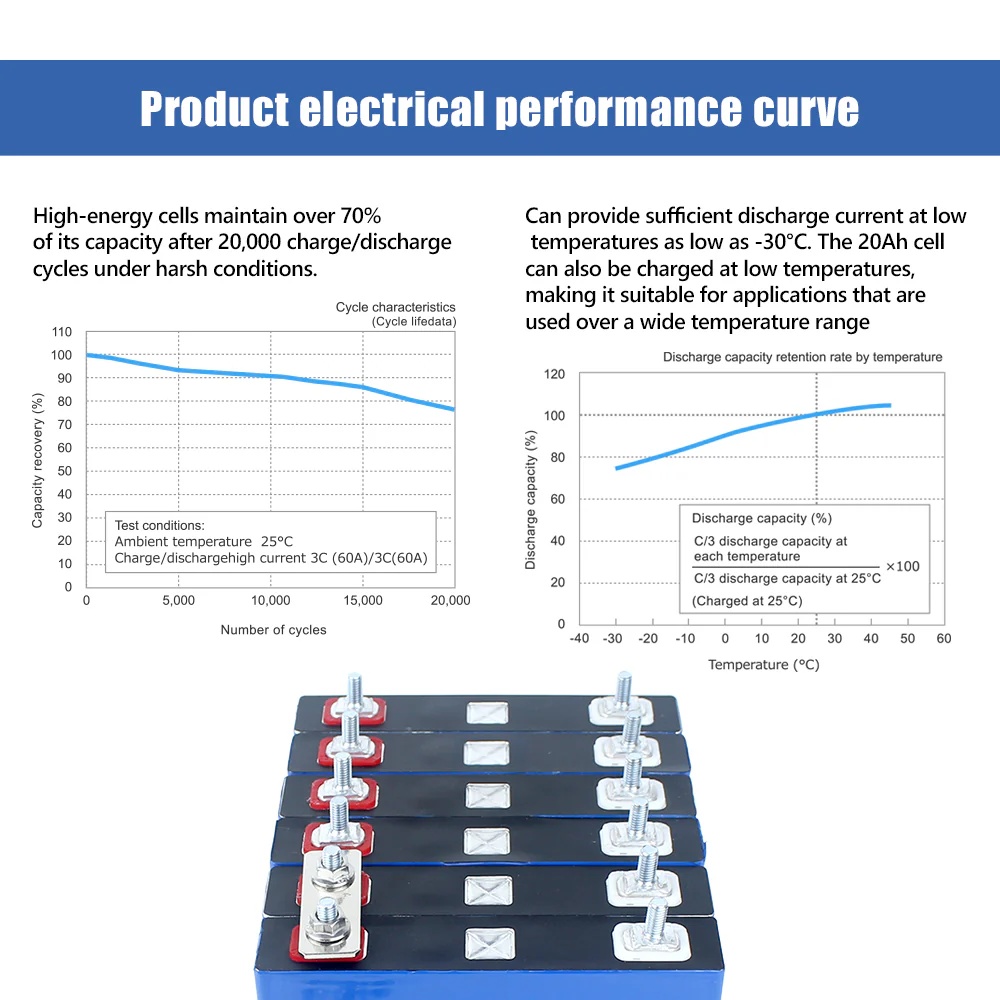
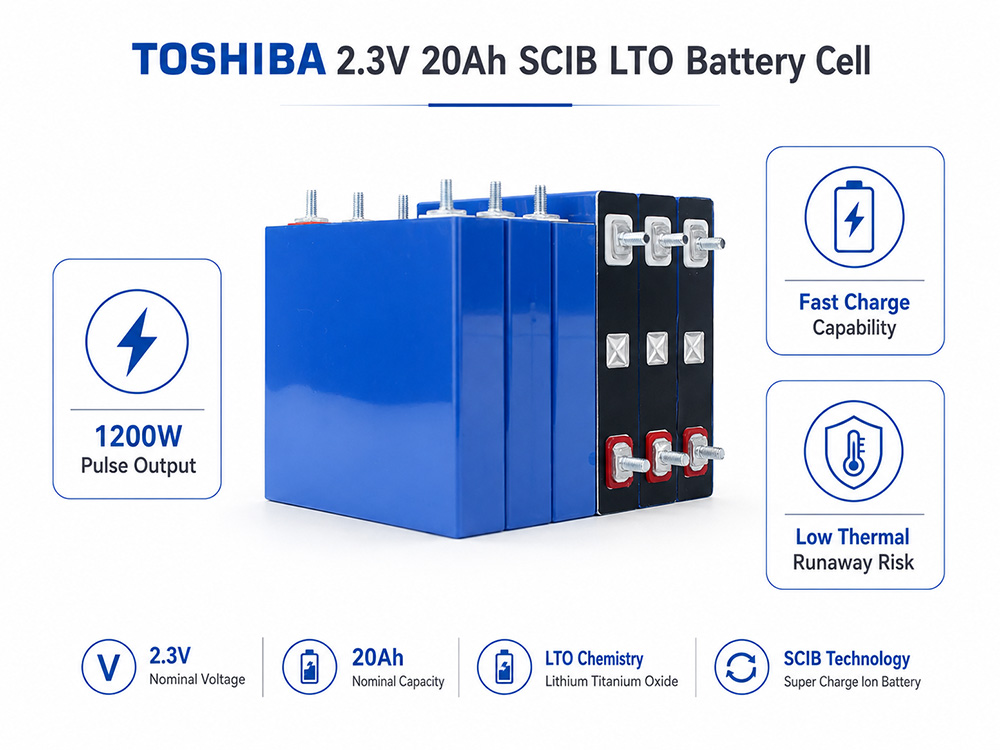
  1. Exceptional Cycle Life — 25,000+ Cycles The lithium titanate anode expands and contracts minimally during charge/discharge, eliminating the mechanical degradation that limits graphite-based cells to 2,000–5,000 cycles. At one cycle per day, this translates to decades of service life without cell replacement.
  2. High Pulse Power Output — 1,200W Capable of delivering 1,200W under pulse conditions, the cell handles heavy inrush loads — motor startup, inverter surge, compressor startup — that would stress lower-power chemistries. This makes it genuinely useful for backup systems, not just light storage applications.
  3. Fast Charging Capability The titanate anode structure accepts lithium-ion insertion at higher charge rates without the lithium plating risk inherent to graphite anodes. This allows faster pack recovery — particularly valuable in solar applications where charge windows are limited by available sunlight.
  4. Superior Safety Profile LTO chemistry carries significantly lower thermal runaway risk than graphite-anode alternatives (LFP, NMC, LCO). This makes it a more appropriate chemistry for enclosed indoor installations such as residential and commercial energy storage systems.
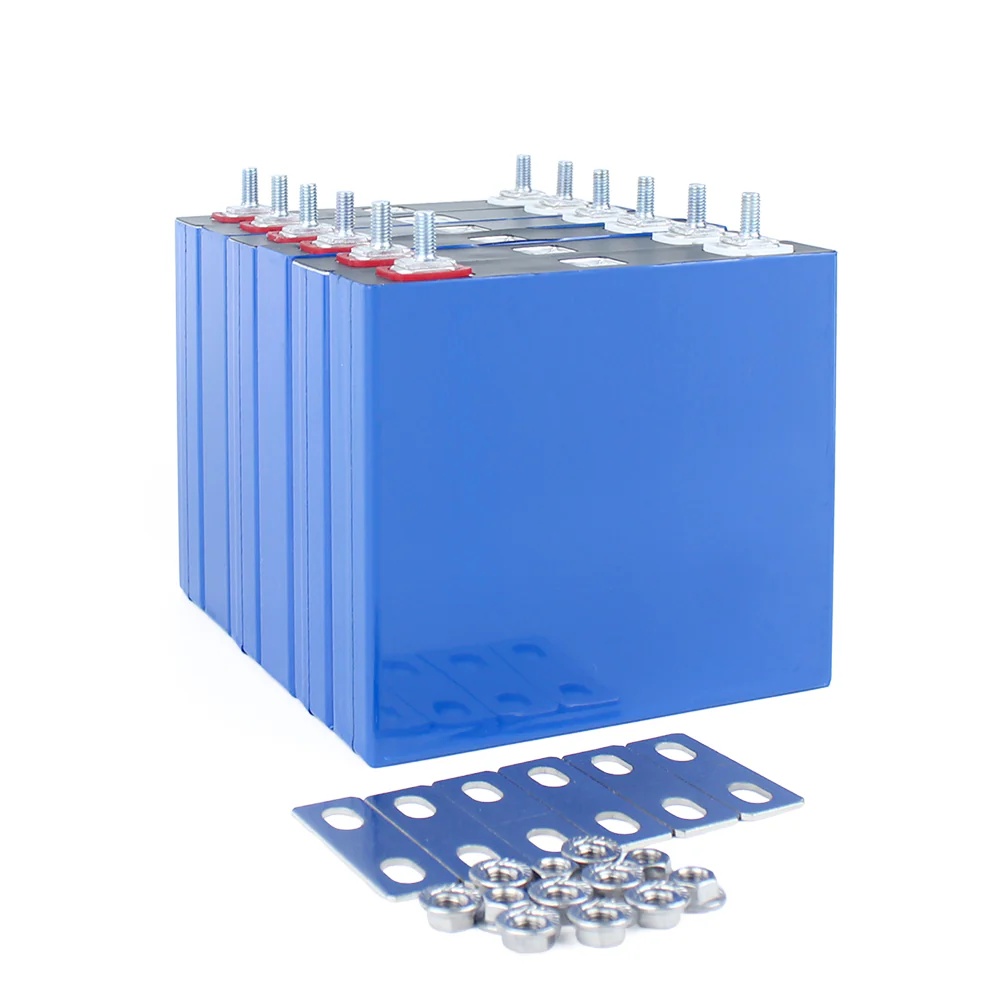
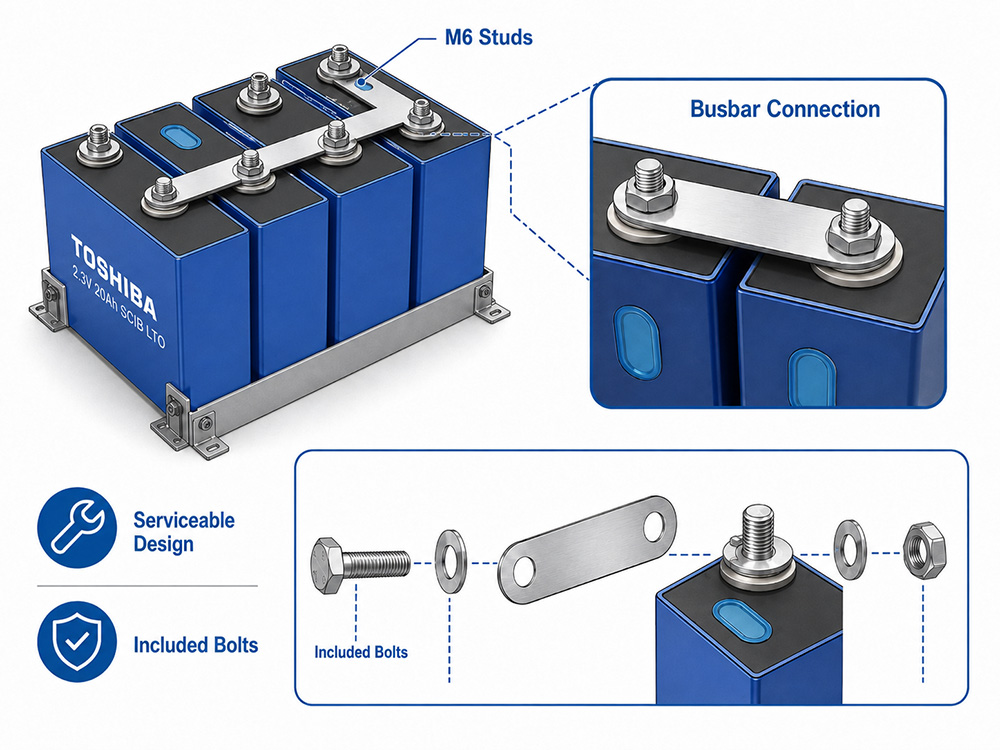
  5. Builder-Ready Mechanical Design Pre-installed M6 stud terminals, included busbars, and matched bolts eliminate the need for spot-welding equipment or sourcing third-party hardware. The flat prismatic form factor stacks predictably, and the bolt-down connections remain serviceable — individual cells can be replaced without dismantling the entire assembly.

Free Shipping

Free standard shipping on all orders Estimated to be delivered within 2-5 business days.

3 Years Warranty

Backed up by techical support within 24hrs.

Free Returns

30 Days Hassle Free Returns


TOSHIBA 2.3V 20Ah SCIB LTO Battery for Home Reserve Power & DIY Energy Storage


1. Product Overview

TOSHIBA SCIB Lithium Titanate Battery for High Cycle Energy Storage

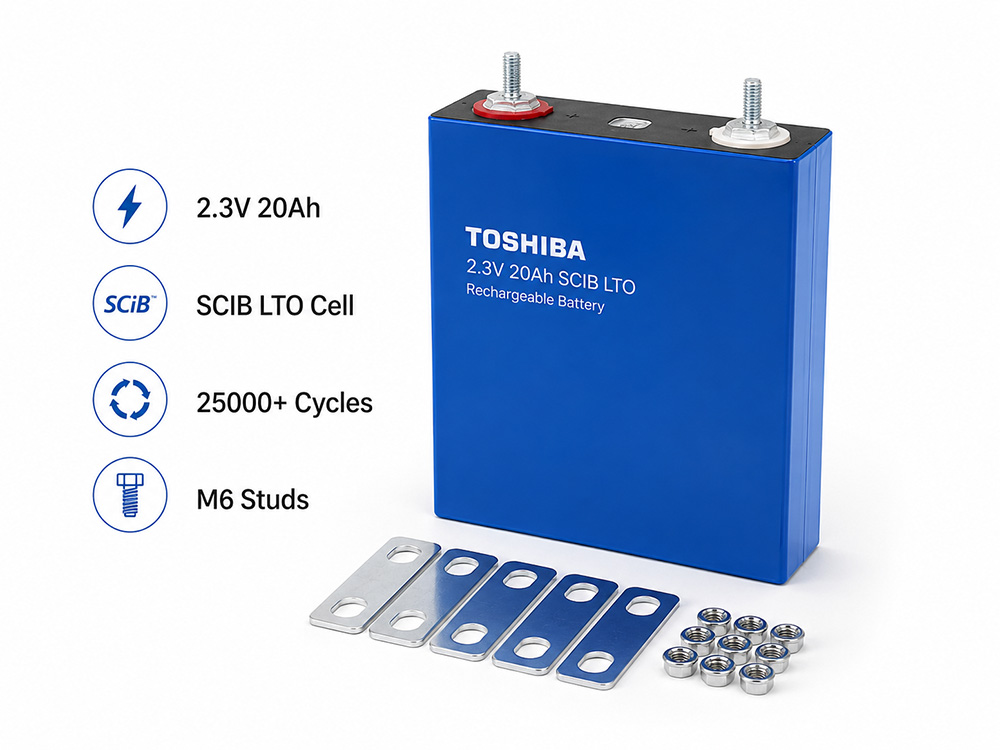
This is a genuine TOSHIBA 2.3V 20Ah SCIB LTO rechargeable battery cell built on lithium titanate oxide (LTO) chemistry. If you have built battery packs long enough, you know that most lithium cells will degrade long before your system does. This cell is engineered to outlast that problem.

The lithium titanate anode is the defining difference here. Unlike graphite-based chemistries — LFP, NMC, or LCO — the titanate anode expands and contracts very little during charge and discharge. That mechanical stability at the cell level is the primary reason the TOSHIBA SCIB reaches 25,000+ cycles while conventional lithium cells stop between 2,000 and 5,000.

As a 2.3V 20Ah lithium titanate battery cell for energy storage, this cell is designed for:

  • Daily-cycling home reserve power systems where long service life reduces total cost of ownership
  • Solar backup systems where charge rates vary with sunlight and the pack cycles frequently
  • DIY battery packs where the builder specifies and controls the full system design
  • High-demand backup applications where pulse power output matters alongside cycle life

This is a raw cell — not a complete battery module. It does not include a BMS, charger, or enclosure. Plan your pack design before ordering.
toshiba-2-3v-20ah-scib-lto-battery-main-view


2. Key Selling Points

Why Choose This 25000+ Cycle Life LTO Battery?

Here is what separates this cell from other lithium options:
  • TOSHIBA SCIB 20Ah LTO battery 25000 cycle life. At one cycle per day, that is roughly 68 years of theoretical cycling capacity. At two cycles per day, still over 30 years. No common lithium chemistry comes close to that figure.
  • High discharge lithium titanate battery cell with 1200W output power. The cell delivers up to 1200W output under pulse conditions (SOC 50%, 10 seconds, 25°C). This level of short-burst power makes it useful for backup systems that must handle heavy startup loads — motor inrush, inverter surge, compressor startup.
  • Fast charging TOSHIBA SCIB lithium titanate battery cell. Titanate anodes do not suffer the lithium plating risk that limits graphite at high charge rates. This cell can accept faster charging than LFP or NMC without the same degradation risk.
  • Long cycle life 20Ah LTO battery for home backup system. Capacity holds stable across thousands of cycles. You are not watching the pack slowly weaken over a few years the way you would with graphite-based chemistries.
  • Rechargeable lithium titanate battery cell with M6 studs. Mechanical bolt-down connections rather than welded tabs. More reliable, repeatable, and serviceable for pack builders.
  • TOSHIBA 20Ah LTO cell with free busbar and bolts. Each order includes busbars and bolts. You do not need to source connection hardware separately.
  • High safety LTO battery cell for home backup applications. Lithium titanate chemistry has a significantly lower thermal runaway risk than graphite-anode cells. That matters for indoor residential and commercial installations.

toshiba-lto-high-power-fast-charge-safety


3. Quantity Options for Different Battery Pack Projects

Choose 6PCS, 12PCS, 18PCS or 24PCS TOSHIBA 20Ah LTO Cells

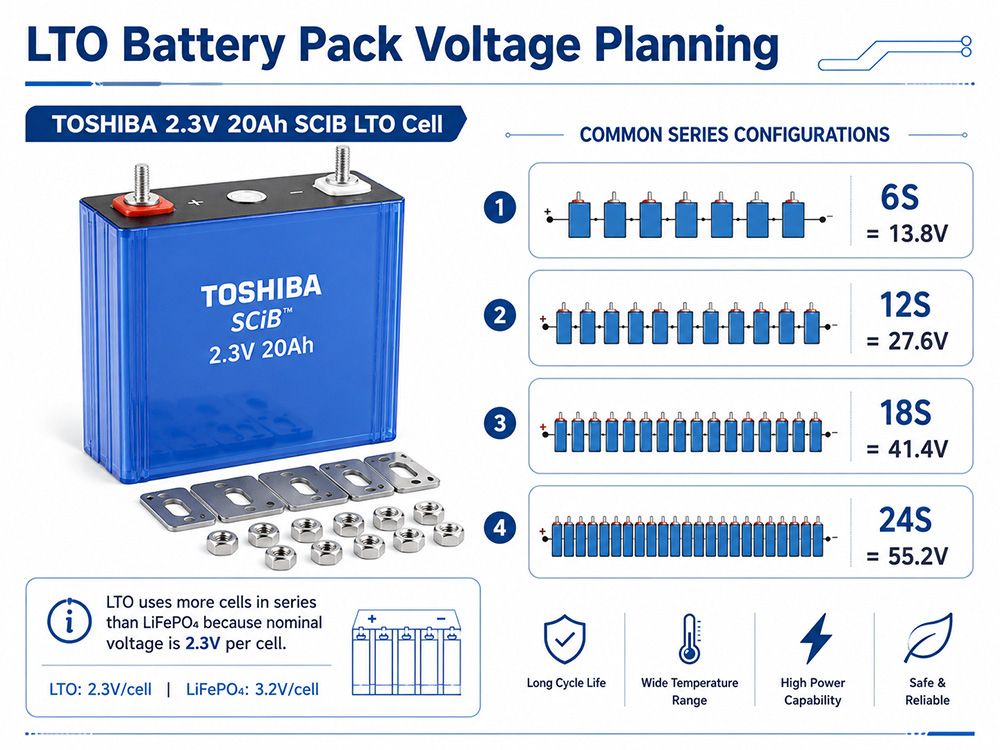
Cells are sold in four quantity options. Each one maps to a different class of battery project. Use the table below to match your system design.

Option Nominal Pack Voltage (2.3V/cell) Best For
6PCS TOSHIBA 2.3V 20Ah SCIB LTO battery for DIY pack ~13.8V (6S) Small test packs, sample builds, prototype projects
12PCS TOSHIBA 20Ah lithium titanate battery cells ~27.6V (12S) Small backup systems, 24V-range DIY packs
18PCS TOSHIBA SCIB LTO cells for home reserve power ~41.4V (18S) Medium-capacity storage, 48V-range battery builds
24PCS TOSHIBA 2.3V 20Ah LTO battery cells with M6 studs ~55.2V (24S) Larger home reserve power and solar backup systems

Important — LTO voltage planning note: Each cell has a 2.3V nominal voltage, which is lower per cell than LiFePO4 (3.2V) or NMC (3.6V). A 12V-equivalent LTO pack needs more cells in series than a 12V LFP pack. Calculate your series cell count based on 2.3V nominal per cell before ordering. For a broader overview of how series cell count, pack voltage, and chemistry interact during the battery pack design and assembly process, that context is useful reading before configuring your first LTO string.

Whether you are building a 6PCS TOSHIBA 2.3V 20Ah SCIB LTO battery for DIY pack testing or a full 24PCS TOSHIBA 2.3V 20Ah LTO battery cells with M6 studs storage system, the right quantity starts with knowing your target pack voltage. If you are unsure, contact us with your system voltage and we can help you select the right cell count.
lto-series-voltage-planning-guide


4. Technical Specification Section

TOSHIBA SCIB Cell Specification

Specification Value
Product Name TOSHIBA 2.3V 20Ah SCIB LTO Battery
Battery Type Lithium Titanate Oxide / LTO Battery Cell
Brand TOSHIBA
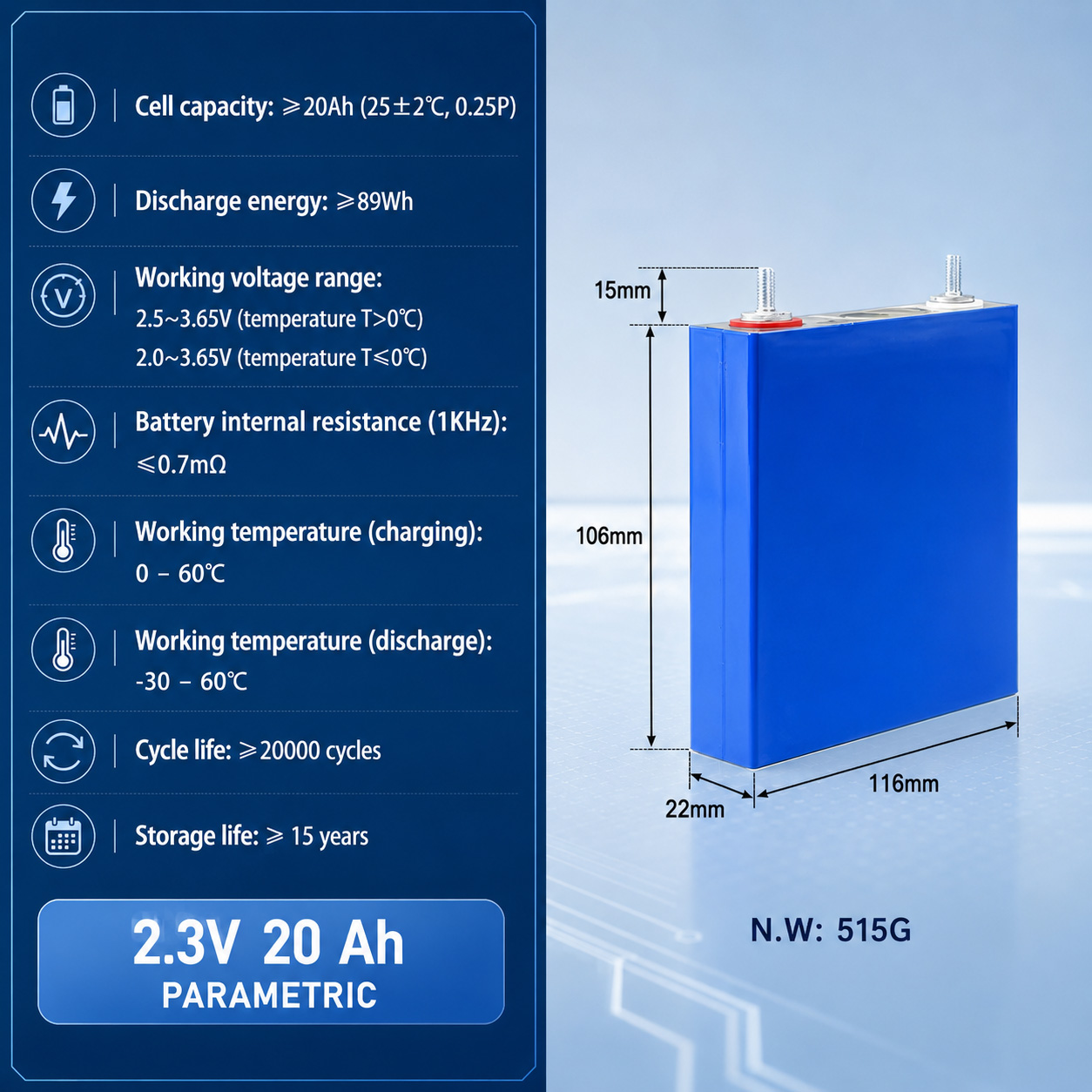
Nominal Voltage 2.3V
Rated Capacity 20Ah
Charge Voltage 2.9V
Cut-off Voltage 1.5V
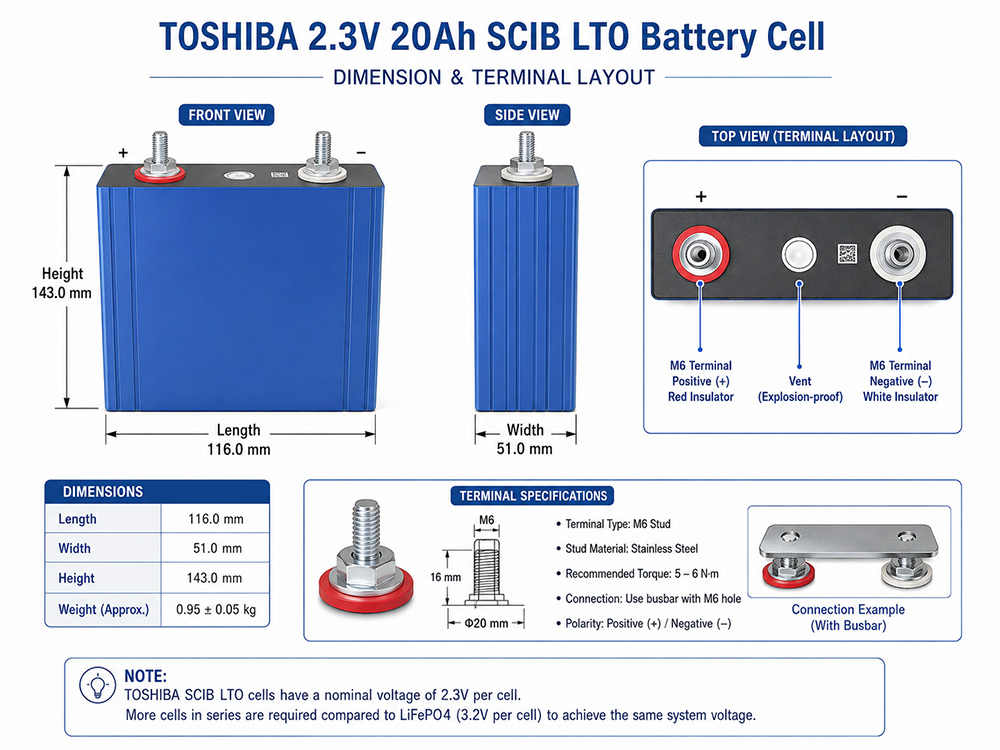
Size 116 × 22 × 106 mm
Weight 515 g
Output Power 1200W, SOC 50%, 10 sec, 25°C
Input Power 1100W, SOC 50%, 10 sec, 25°C
Volumetric Energy Density 176 Wh/L
Weight Energy Density 89 Wh/kg
Cycle Life 25,000+ cycles
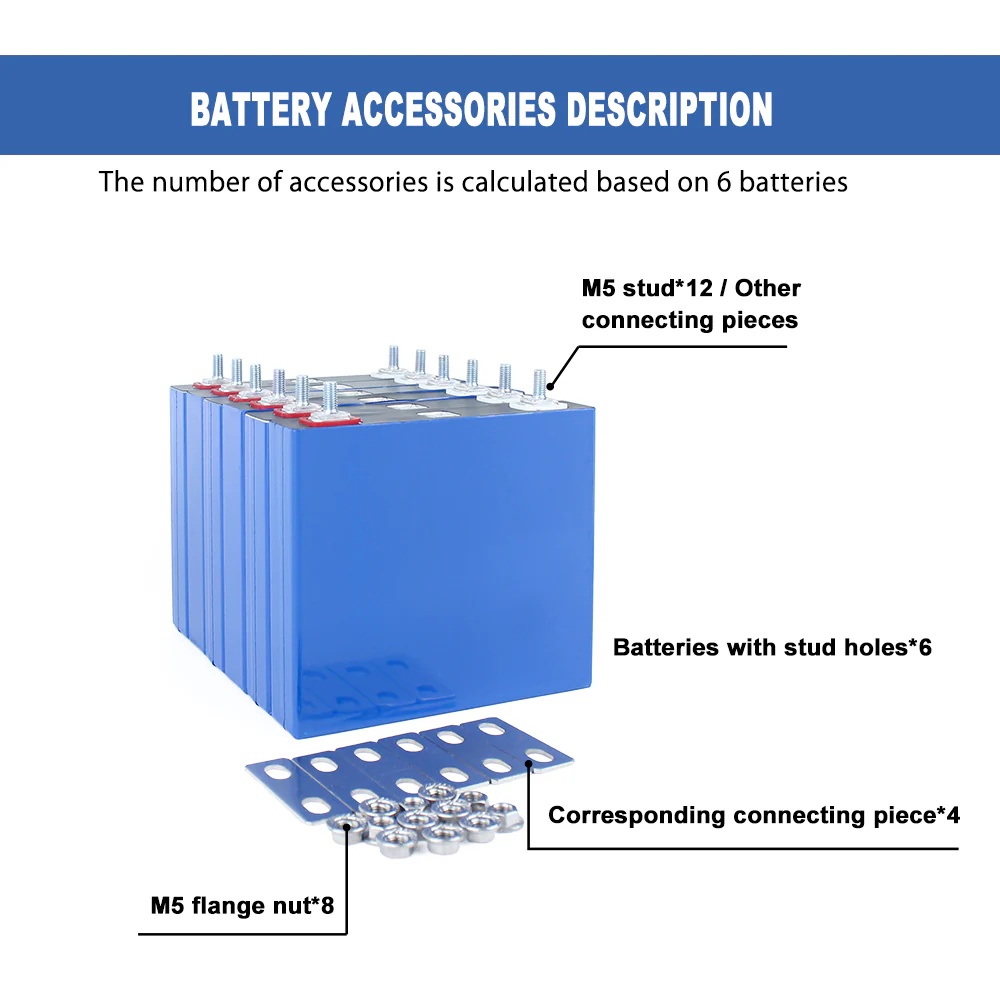
Terminal / Hardware M6 Studs, Busbar and Bolts

Notes for pack designers:

  • TOSHIBA 2.3V LTO battery cell with 2.9V charge voltage. Your charger and BMS charge cutoff must be set to exactly 2.9V per cell. A LFP charger calibrated to 3.65V per cell will overcharge this cell. Do not substitute chargers without verifying voltage settings. LFP-specific charger voltage profiles are fundamentally different — the LiFePO4 battery charger range illustrates these chemistry-specific voltage tiers clearly and is useful for understanding why a cross-chemistry substitution fails at the cutoff level.
  • 20Ah LTO rechargeable cell with 1.5V cut-off voltage. The discharge cutoff is 1.5V per cell — not the 2.5V or 2.8V typical for graphite-anode cells. A BMS configured for LFP discharge cutoff will stop discharge far too early and leave usable capacity on the table. Verify BMS voltage settings before assembly.
  • Energy density. The 89 Wh/kg and 176 Wh/L figures are lower than LFP or NMC. LTO trades energy density for cycle life, safety, and power output. If energy density is your primary constraint, LTO may not be the right chemistry. If cycle life and safety are primary, LTO is a serious option.
  • Cell dimensions. 116 × 22 × 106 mm per cell. Design your enclosure with this footprint before ordering. Leave clearance for busbars and clamping hardware.

toshiba-2-3v-20ah-lto-cell-dimensions-terminal-layout


5. Connection Hardware & Pack Building Advantage

LTO Battery Cell with M6 Studs, Busbar and Bolts

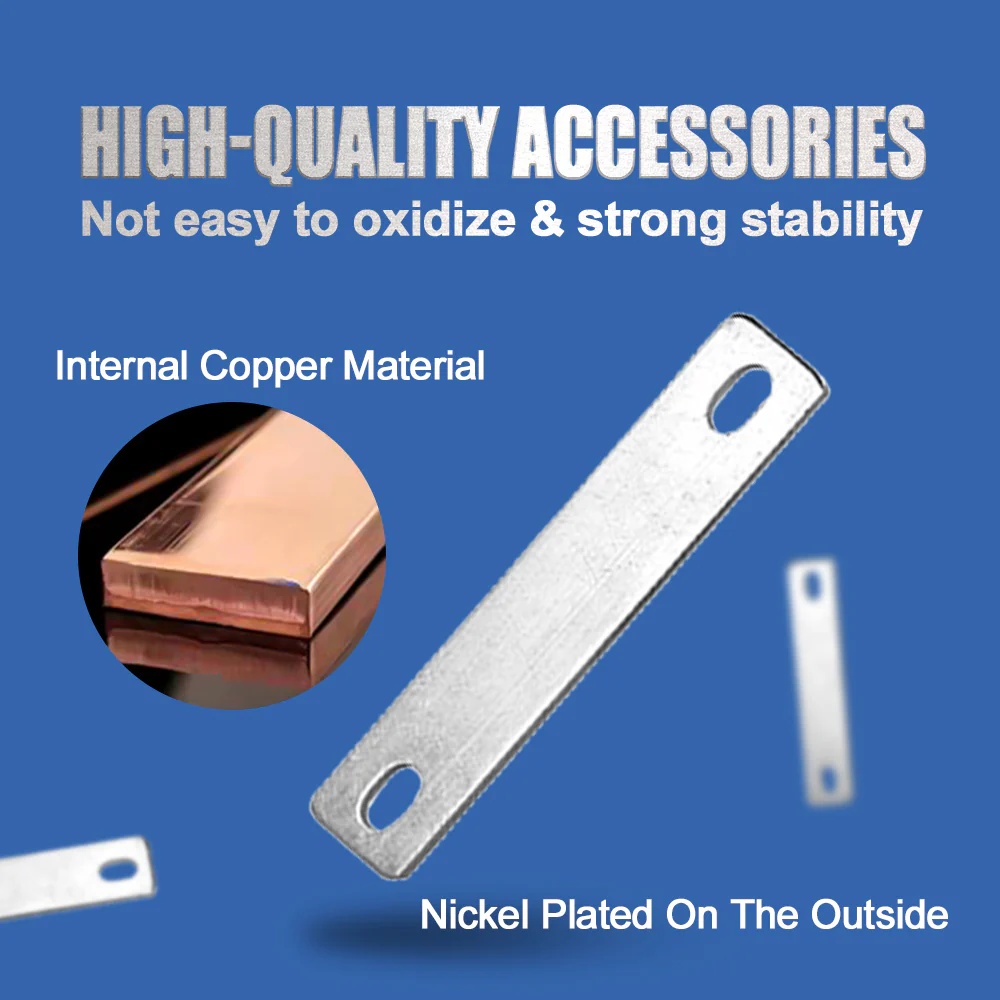
The LTO battery cells with busbars bolts and M6 terminal studs in this product eliminate one of the most common friction points in DIY pack building — sourcing the right connection hardware.

With graphite-based prismatic cells, some builders use welded tab connections that require spot-welding equipment and introduce a permanent joint that is difficult to service later. The M6 stud terminal approach is different. You bolt the busbar down. The connection is mechanical, repeatable, and reversible. If a cell needs to be replaced later, you unbolt it.

What comes with each cell:

  • M6 stud terminals pre-installed on each cell
  • Pre-cut busbars sized for series connections between adjacent cells
  • Bolts matched to the M6 thread

Practical pack assembly notes:

  • Series connection: positive terminal of one cell to negative terminal of the next, busbar bridging the two, bolt torqued down. Repeat for each cell junction.
  • Parallel connection: voltage-match cells before connecting. Even a small voltage difference between parallel cells causes a large inrush current at the moment of connection.
  • Apply the correct bolt torque. Undertightened connections create contact resistance and generate heat at the joint under load.
  • In humid or coastal environments, apply a thin anti-oxidation compound to busbar contact surfaces.

This is a genuinely useful high power 2.3V LTO battery cell for battery pack building. The prismatic form factor stacks predictably. The M6 terminals give you a professional-grade connection point without special tooling. It is a strong foundation for both DIY and professional pack builds.
lto-battery-cell-m6-studs-busbar-bolts-assembly


6. Application Section

TOSHIBA SCIB Battery for Home Reserve Power


Home Reserve Power

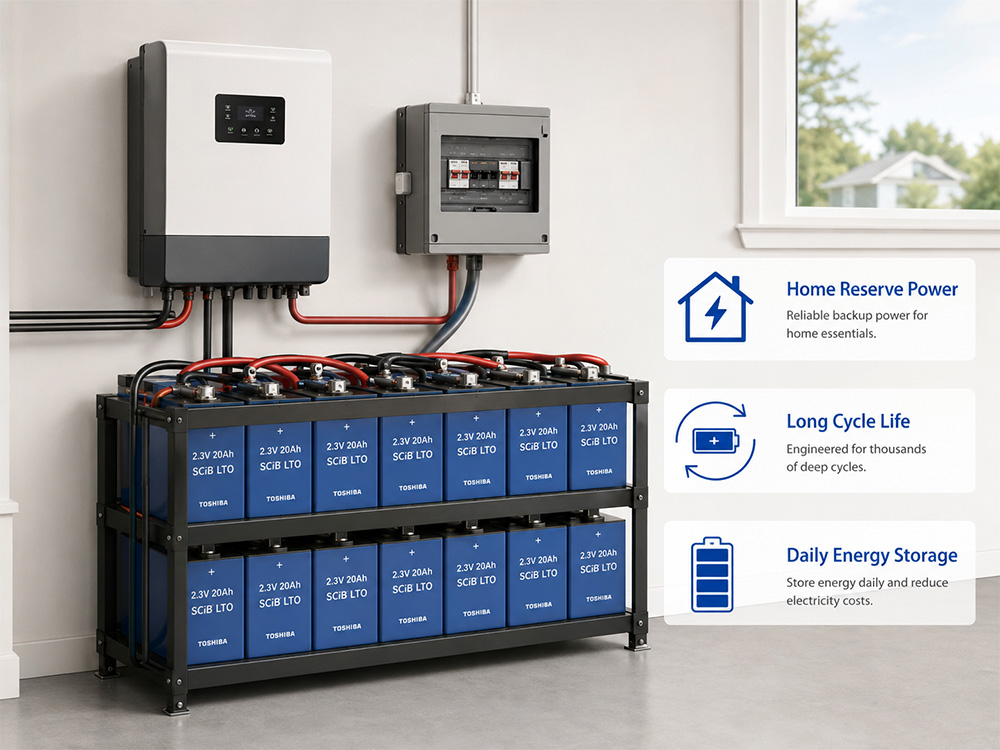
The TOSHIBA SCIB battery for home reserve power is built for systems that run daily for years. A residential backup system that charges and discharges every day will accumulate 300 to 700 cycles per year. At that rate, a 2,000-cycle LFP pack needs replacement in roughly 3 to 6 years. A 25,000-cycle LTO pack does not have that problem.

This matters in two ways. First, the total lifetime cost of the system goes down because you are not replacing cells on a 5-year cycle. Second, you are not managing a scheduled replacement in a system that is embedded in your home electrical setup.

For homeowners, small businesses, and facilities that want a reliable daily-use backup without planning for cell replacement, this lithium titanate oxide battery cell for home reserve power is a practical long-term choice.

Relevant applications: Home backup power, home energy storage, residential energy storage, emergency backup battery, power outage backup.
toshiba-lto-battery-home-reserve-power-application


Solar Backup System

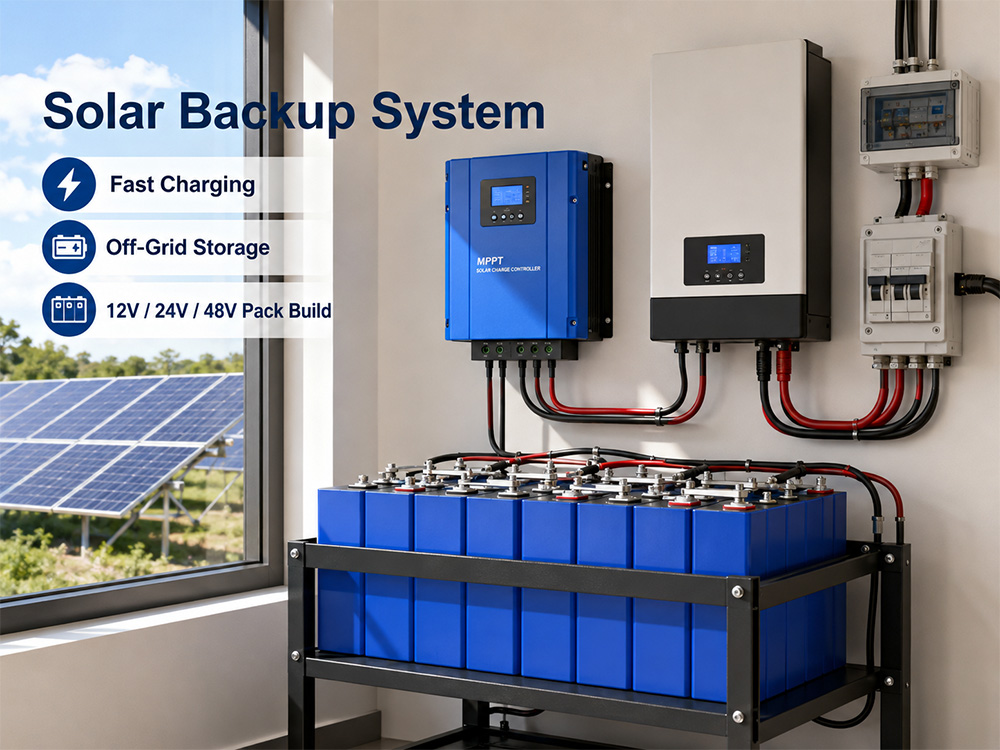
The TOSHIBA 2.3V LTO cell for solar reserve power fits solar storage for reasons beyond just cycle life.

Solar charging is irregular. When the sun is available, you want to charge fast. When it is not, the pack may sit idle. On high-production days, the system might charge and partially discharge multiple times. That profile — variable rate, frequent cycling, irregular depth of discharge — is exactly where LTO chemistry outperforms graphite-anode options.

The 2.3V 20Ah LTO cell for off-grid solar battery pack can be configured for 12V, 24V, or 48V nominal pack voltages by choosing the right number of cells in series. The four quantity options (6PCS, 12PCS, 18PCS, 24PCS) allow you to match the cell count to your system design.

Relevant applications: Solar backup system, solar energy storage, off-grid solar system, DIY solar battery pack, renewable energy storage, 2.3V LTO battery pack, 12V LTO battery pack, 24V LTO battery pack, 48V LTO battery pack.
toshiba-lto-battery-solar-backup-system


DIY Home Battery Storage

For the hands-on builder, the 20Ah SCIB LTO battery for DIY home energy storage offers a cell that is mechanically straightforward to work with. Flat prismatic form factor. Pre-installed M6 studs. Included busbars and bolts. A consistent cell size that stacks predictably.

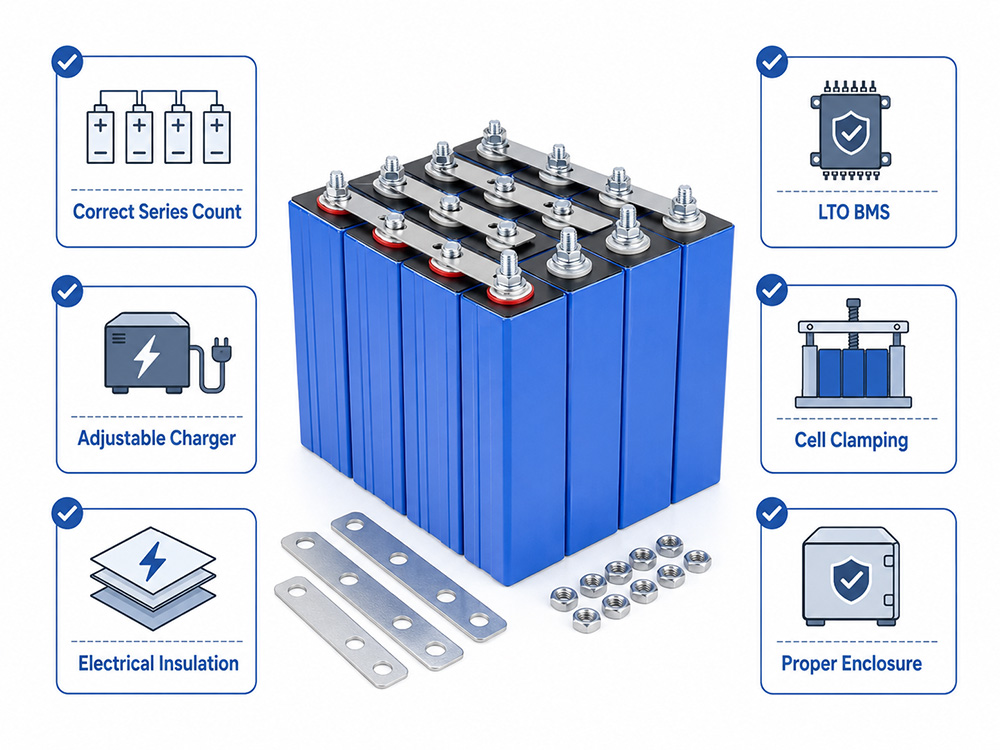
What you still need to provide for a safe, functional DIY LTO battery pack:

  • Correct series/parallel cell count for your target voltage and capacity
  • A BMS configured for LTO voltage thresholds (2.9V charge cutoff, 1.5V discharge cutoff per cell)
  • A charger with adjustable voltage settings calibrated to LTO
  • Cell-to-cell electrical insulation
  • Mechanical clamping or compression to keep cells from shifting under load
  • A suitable enclosure for your installation environment

This is a TOSHIBA 20Ah SCIB LTO cell for custom battery pack building. It is a strong foundation for a custom pack, but the full system design is yours to own. Those unfamiliar with how the mechanical and electrical elements come together during battery pack design and assembly — from cell arrangement to enclosure clamping — will find that overview useful context before starting.

Relevant applications: DIY home battery storage, DIY LTO battery pack, custom LTO battery pack, lithium titanate battery pack, battery pack building, energy storage DIY project, battery module assembly, battery test pack.
diy-lto-battery-pack-building-checklist


Backup Power Projects

The TOSHIBA SCIB LTO battery cell for backup power supply is not limited to residential use. The combination of high pulse power output, long cycle life, and stable LTO chemistry makes it usable across a wide range of backup and power storage applications.

Additional applications where this cell is a fit:

  • UPS backup power — the high pulse output handles the short, heavy discharge typical of UPS operation during power switchover
  • Telecom backup power — stable chemistry and long service life reduce maintenance cycles in remote telecom cabinet installations; for an overview of how battery systems are typically specified for telecommunications infrastructure, that context covers the key reliability and cycle requirements that drive chemistry selection in that sector
  • Industrial backup power — durable cell construction handles demanding industrial environments
  • Portable backup power and outdoor backup power — lightweight prismatic cell design suits portable storage builds
  • Marine backup battery and boat power storage — LTO chemistry tolerates temperature variation and repeated deep cycling better than lead-acid alternatives; the lithium marine battery application overview outlines the environmental stressors and cycling profiles that make chemistry selection particularly consequential in marine installations
  • AGV battery pack and robotics battery pack — high pulse power and fast recharge support automated guided vehicle and robotic duty cycles; battery design for robotics and AGV platforms covers the power-to-weight considerations and duty cycle characteristics that shape pack architecture in those applications
  • RV backup battery, camping power storage — suitable where weight and cycle life matter more than maximum energy density; RV battery system requirements are a useful reference for understanding the discharge profiles and space constraints common in mobile storage applications
  • Power tool battery pack — high discharge rate capability supports intermittent high-current tool applications; battery design for power tools and industrial equipment outlines the pulse discharge and fast recharge requirements typical of that duty cycle
  • Cold weather battery systems — LTO chemistry performs better at low temperatures than graphite-anode chemistries, making it a candidate for cold climate and low-temperature battery applications; a detailed treatment of how low-temperature battery pack design addresses performance degradation at sub-zero temperatures helps illustrate why chemistry selection is critical for cold climate deployments

Relevant applications: UPS backup power, telecom backup power, industrial backup power, portable backup power, outdoor backup power, camping power storage, RV backup battery, marine backup battery, boat power storage, yacht backup power, AGV battery pack, robotics battery pack, power tool battery pack, cold weather battery system, long life backup power system, high discharge battery application.
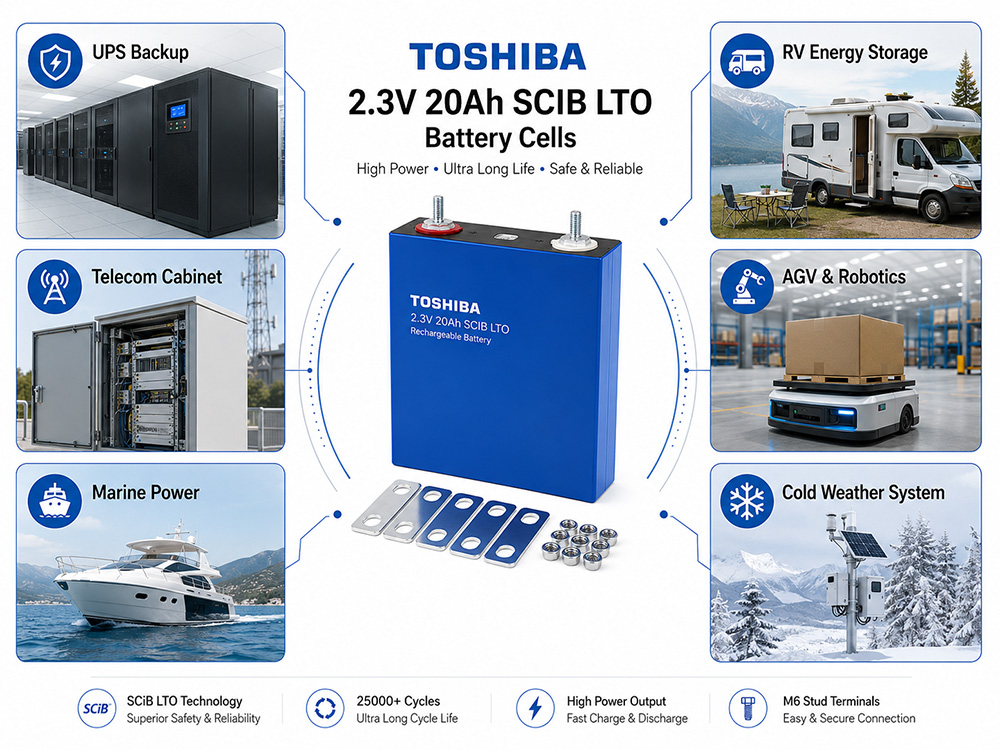
toshiba-scib-lto-battery-multi-application-overview


7. BMS Protection Recommendation

LTO Battery Pack BMS Protection

Every pack built from raw cells needs a BMS. This is not optional and it is not a convenience feature — it is the protection layer between your cells and conditions that will damage or destroy them. For an overview of what a well-engineered battery management system covers — including per-cell voltage monitoring, balancing, and protection circuit design — that reference is worth reviewing before selecting a BMS for an LTO pack.

Critical configuration point for LTO packs: Most BMS units sold for DIY battery building are pre-configured for LFP or NMC voltage thresholds. An LTO pack requires a BMS specifically programmed for LTO voltage windows:

  • Charge cutoff per cell: 2.9V
  • Discharge cutoff per cell: 1.5V

A standard LFP BMS will often cut off charge at voltages well below 2.9V and will allow discharge to voltages far below 1.5V. Both outcomes reduce the usable capacity and service life of the pack. Verify BMS voltage programming before assembly.

Recommended protection functions for every LTO pack build:

  • Overcharge protection for LTO battery pack — disconnects the charge circuit the moment any individual cell reaches 2.9V. Even a single cell overcharged repeatedly will degrade faster than the rest of the pack.
  • Over discharge protection for LTO battery pack — disconnects the load when any cell drops to 1.5V. Running cells below cutoff does permanent damage to LTO chemistry.
  • Short circuit protection for LTO battery pack — cuts the output circuit within milliseconds of a dead short. This protects the BMS, the cells, and the system wiring.
  • Over-current protection — limits output current to within the rated operating range for the cell count and busbar gauge in use.
  • Over-temperature protection — disconnects if the pack temperature exceeds defined safe limits. Important in any enclosed installation.
  • Per-cell voltage monitoring — tracks each cell individually. Pack-level voltage alone does not tell you if one cell is drifting out of balance.
  • Cell balancing — passive or active balancing corrects cell voltage imbalance over time. Particularly important after the first 500 cycles, when minor capacity differences between cells begin to show up as voltage divergence at the top and bottom of charge.

For any TOSHIBA SCIB lithium titanate cell for BMS battery pack project, confirm that the BMS supports LTO voltage programming or is sold pre-configured specifically for LTO. If the BMS datasheet lists only LFP or NMC profiles, it is the wrong unit for this cell.
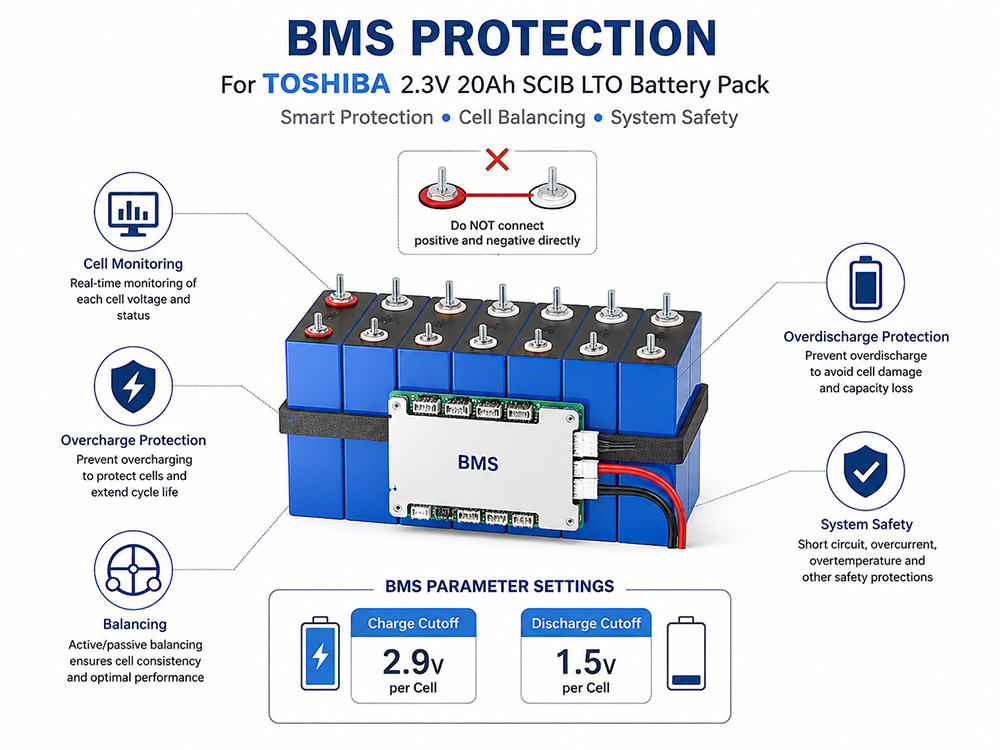
lto-bms-voltage-settings-protection-guide


8. Performance Advantage Section

Fast Charging, High Power Output, and Long Cycle Life

The TOSHIBA SCIB cell outperforms graphite-based lithium alternatives in three specific areas. Here is what each advantage means in practice.


Long Service Life

The TOSHIBA SCIB battery cell for long service life energy storage reaches 25,000+ cycles because the titanate anode changes dimension very little during lithium-ion insertion and extraction. Graphite expands and contracts with each cycle. That mechanical stress gradually breaks down the electrode structure, which is why graphite-anode cells lose capacity over hundreds or low thousands of cycles.

LTO does not have the same problem at the same rate. The result is a 25,000+ cycles LTO battery cell for renewable energy storage that holds usable capacity across a service life measured in decades, not years.

What this means for your system:

  • At one cycle per day: approximately 68 years of theoretical cycling life
  • At two cycles per day: approximately 34 years
  • Long lifespan LTO rechargeable battery for reserve power — significantly reduced cell replacement cost over the system lifetime
  • Suitable for daily-use home backup, solar storage, and any application where frequent cycling is a design requirement

High Power Output

The cell is rated at 1200W output under pulse conditions (SOC 50%, 10 seconds, 25°C). For a 20Ah, 2.3V cell, that represents a high C-rate — well above what the cell’s energy rating alone might suggest.

This matters in backup applications where the battery does not just sustain a light load. Motor startup, inverter surge, compressor startup — these events draw short, heavy bursts of current. The TOSHIBA SCIB 20Ah cell for high power battery pack design is built to handle that.

Key points on the power rating:

  • The 1200W output figure is a pulse rating under specified conditions — not a continuous discharge rating
  • Input power (charge) is rated at 1100W under the same conditions
  • High discharge lithium titanate battery cell 1200W output power — use this as a design reference for pulse load sizing, not for sustained continuous discharge calculations
  • Useful for high power battery pack designs that must handle load spikes in addition to baseline power delivery

Fast Charging Capability

Graphite anodes have a well-known charge rate limitation. Push the charge current too hard and lithium metal plates onto the anode surface rather than inserting cleanly into the carbon structure. That plating reduces capacity, changes cell impedance, and in some cases creates safety risks. It is why most LFP and NMC chargers limit charge rates to protect the graphite anode.

LTO does not share that limitation to the same degree. Lithium inserts into and extracts from the titanate structure more cleanly at higher rates. The fast charging TOSHIBA SCIB lithium titanate battery cell can accept higher charge rates than graphite-based alternatives without the same degradation penalty.

What this means for your system:

  • DIY LTO battery pack cells for solar backup system can be recharged faster when sunlight is available, improving how much solar energy the system actually captures
  • A fast charging battery system built on LTO cells handles variable charge availability — intermittent solar, short generator run times — better than graphite-anode alternatives; for reference on how charge voltage profiles differ between lithium chemistries, the lithium battery charger range illustrates the per-cell voltage steps used across different pack configurations
  • The pack recovers faster after a deep discharge event in a backup power application

9. Package Includes

What You Receive

Each order includes:

  • TOSHIBA 2.3V 20Ah SCIB LTO battery cells — quantity per selected option
  • Free busbars — pre-cut for series cell-to-cell connections
  • Bolts — thread-matched to M6 stud terminals
  • M6 studs — factory-installed on each cell terminal

No additional connection hardware is required to begin assembly. The cells, busbars, and bolts ship together as a matched set.

Quantity options:

Option Contents
6PCS 6 × TOSHIBA 2.3V 20Ah SCIB LTO cells + busbars + bolts
12PCS TOSHIBA 20Ah lithium titanate battery cells 12 × cells + busbars + bolts
18PCS TOSHIBA SCIB LTO cells for home reserve power 18 × cells + busbars + bolts
24PCS TOSHIBA 2.3V 20Ah LTO battery cells with M6 studs 24 × cells + busbars + bolts

The BMS, charger, enclosure, and cabling are not included. These must be selected and sourced separately based on your specific pack design.


10. Buyer Reminder / Before Purchase

Important Notes for DIY Battery Pack Building

This product is a raw 2.3V 20Ah LTO battery cell for power storage project use. It is not a complete battery system. It does not include a BMS, charger, inverter, or enclosure. Read the following notes before ordering.

Before you buy:

  • Calculate your series cell count first. At 2.3V nominal per cell, a 12V-nominal system requires 6 cells in series (13.8V), a 24V system requires 11 cells (25.3V), and a 48V system requires 21 or 22 cells. Confirm your required pack voltage and select the right quantity option before purchase.
  • Use an LTO-compatible charger. The charge cutoff must be set to 2.9V per cell. A charger calibrated for LFP (3.65V per cell) or NMC (4.2V per cell) will overcharge these cells. Do not use a charger without verifying its voltage settings can be adjusted to 2.9V per cell. The structural difference between LiFePO4 charger voltage profiles and those used for lithium-ion chemistries illustrates clearly why cross-chemistry charger substitution is not safe without explicit voltage reconfiguration.
  • Source a BMS configured for LTO voltage thresholds. Charge cutoff: 2.9V per cell. Discharge cutoff: 1.5V per cell. A standard LFP BMS will not cut off at the correct voltages for LTO. Confirm this before purchasing a BMS. An overview of what a properly specified battery management system includes in terms of protection functions and voltage configurability helps clarify what to look for in a BMS datasheet.
  • Do not mix cells from different brands, capacities, or usage histories. Cells in a series string must be closely matched. Mismatched cells drift out of balance faster, reducing pack capacity and increasing the risk of individual cell damage.
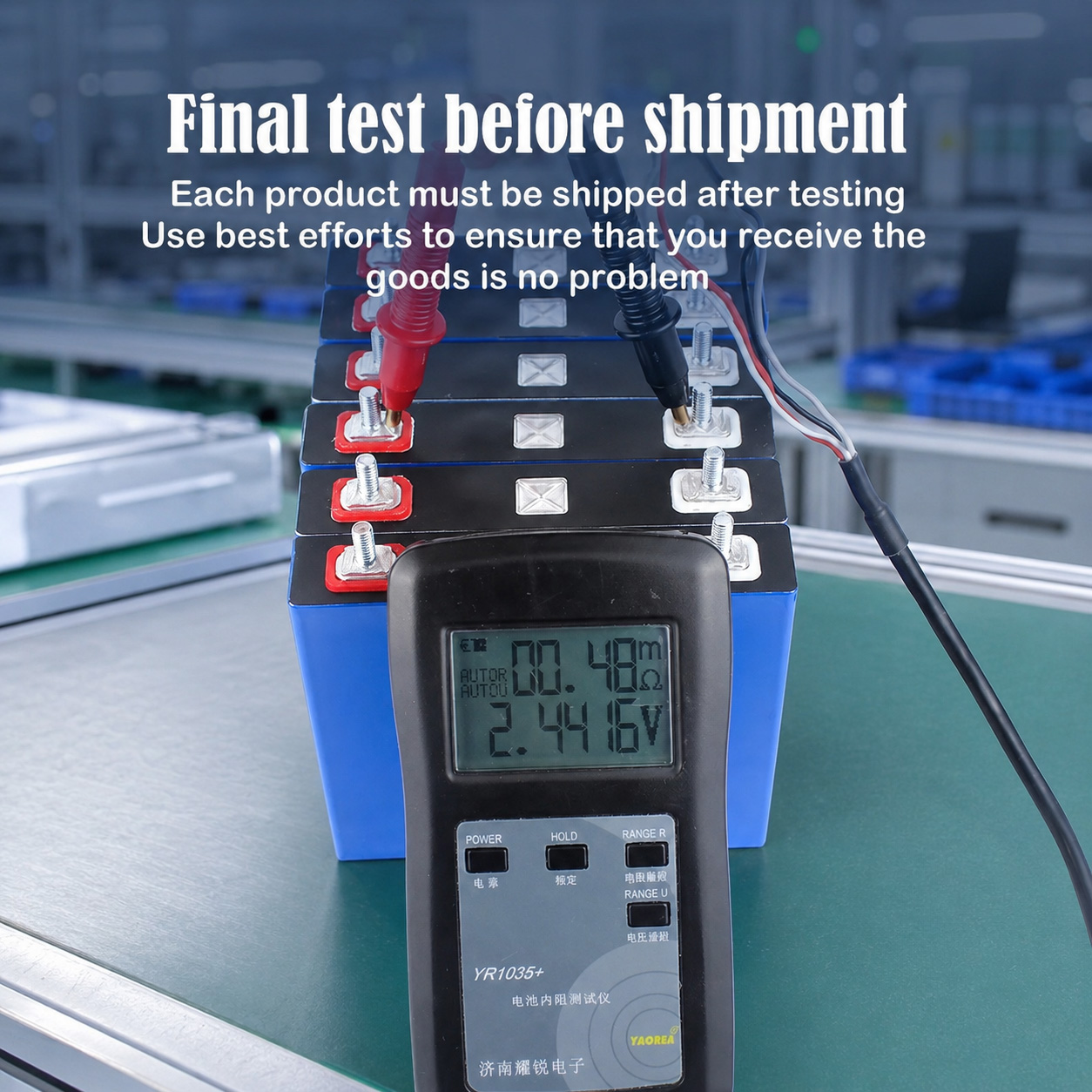
  • Inspect each cell on arrival. Check resting voltage against the spec. Look for any physical damage to the cell body or terminal studs. Verify that M6 threads are clean before assembly.
  • For home energy storage installations, professional installation is recommended. A properly designed and built LTO pack is safe. An incorrectly designed one — wrong BMS settings, undersized cabling, poor insulation — is not.

11. FAQ Section


FAQ 1: What is the nominal voltage of this TOSHIBA 2.3V 20Ah SCIB LTO Battery?

The nominal voltage is 2.3V per cell. This is lower per cell than LiFePO4 (3.2V) and NMC (3.6–3.7V). You need more cells in series than you would with LFP for the same nominal pack voltage. Plan your cell count using 2.3V per cell as the baseline.


FAQ 2: What is the rated capacity?

The rated capacity is 20Ah per cell. At 2.3V nominal, each cell stores approximately 46Wh of energy. For a 6-cell series pack at 13.8V nominal, total pack energy is approximately 276Wh.


FAQ 3: What is the charge voltage of this LTO battery cell?

The maximum charge voltage is 2.9V per cell. Your charger and BMS charge cutoff must both be set to this value. Do not use a charger or BMS that cannot be configured to 2.9V per cell — overcharging LTO cells damages them. This is one reason why chemistry-matched charger selection matters; the distinction between how LiFePO4 chargers and standard lithium chargers handle per-cell voltage termination illustrates the kind of configuration differences that make cross-chemistry charger use risky.


FAQ 4: What is the cut-off voltage?

The discharge cut-off voltage is 1.5V per cell. Set your BMS discharge protection cutoff at or above 1.5V per cell. Discharging below this point causes permanent cell damage and is not recoverable through normal charging.


FAQ 5: Is this battery suitable for DIY battery pack building?

Yes — if you are prepared to handle the full pack design. The rechargeable lithium titanate battery cell with M6 studs is builder-friendly: M6 terminal studs, included busbars, flat prismatic form factor that stacks cleanly. However, you are responsible for the BMS selection (LTO voltage-compatible), charger settings (2.9V per cell charge cutoff), series/parallel configuration, mechanical assembly, insulation, and enclosure. This is a cell, not a plug-and-play module. Builders who want to understand the full process from cell selection through enclosure design will find the battery pack design and assembly overview useful as a structural reference for how those elements relate to each other.


FAQ 6: Can I use it for solar backup?

Yes. The TOSHIBA 2.3V 20Ah LTO cell for solar reserve power handles the variable charge rates and frequent cycling typical of solar storage applications well. Fast charging capability means the pack can recover quickly when sunlight is available. High cycle life means daily cycling does not degrade the pack the way it would with graphite-anode cells. You still need to configure the pack for your system voltage and use an LTO-compatible charge controller or BMS.


FAQ 7: Does this battery need a BMS?

Yes. Every pack built from raw cells requires a BMS. For this cell specifically, the BMS must be configured with LTO voltage thresholds: 2.9V charge cutoff and 1.5V discharge cutoff per cell. A BMS pre-configured for LFP or NMC will operate at the wrong voltages. Verify the BMS supports LTO programming or is sold specifically for LTO cell packs before purchasing. For context on the range of protection functions a well-specified battery management system handles — from cell balancing to over-temperature disconnect — that overview clarifies what to confirm in a BMS specification before committing to a unit.


FAQ 8: Which quantity should I choose?

Choose based on your target pack voltage:

  • 6PCS TOSHIBA 2.3V 20Ah SCIB LTO battery for DIY pack — test builds, small experimental packs, 12V-nominal systems (6S = 13.8V)
  • 12PCS TOSHIBA 20Ah lithium titanate battery cells — small home backup systems, 24V-nominal range (12S = 27.6V)
  • 18PCS TOSHIBA SCIB LTO cells for home reserve power — medium-capacity storage builds, 48V-nominal range (18S = 41.4V)
  • 24PCS TOSHIBA 2.3V 20Ah LTO battery cells with M6 studs — larger home reserve power systems and solar backup builds (24S = 55.2V)

If you are not sure which quantity fits your system voltage and capacity requirement, send us your target specs and we can advise before you order.
Contact Us