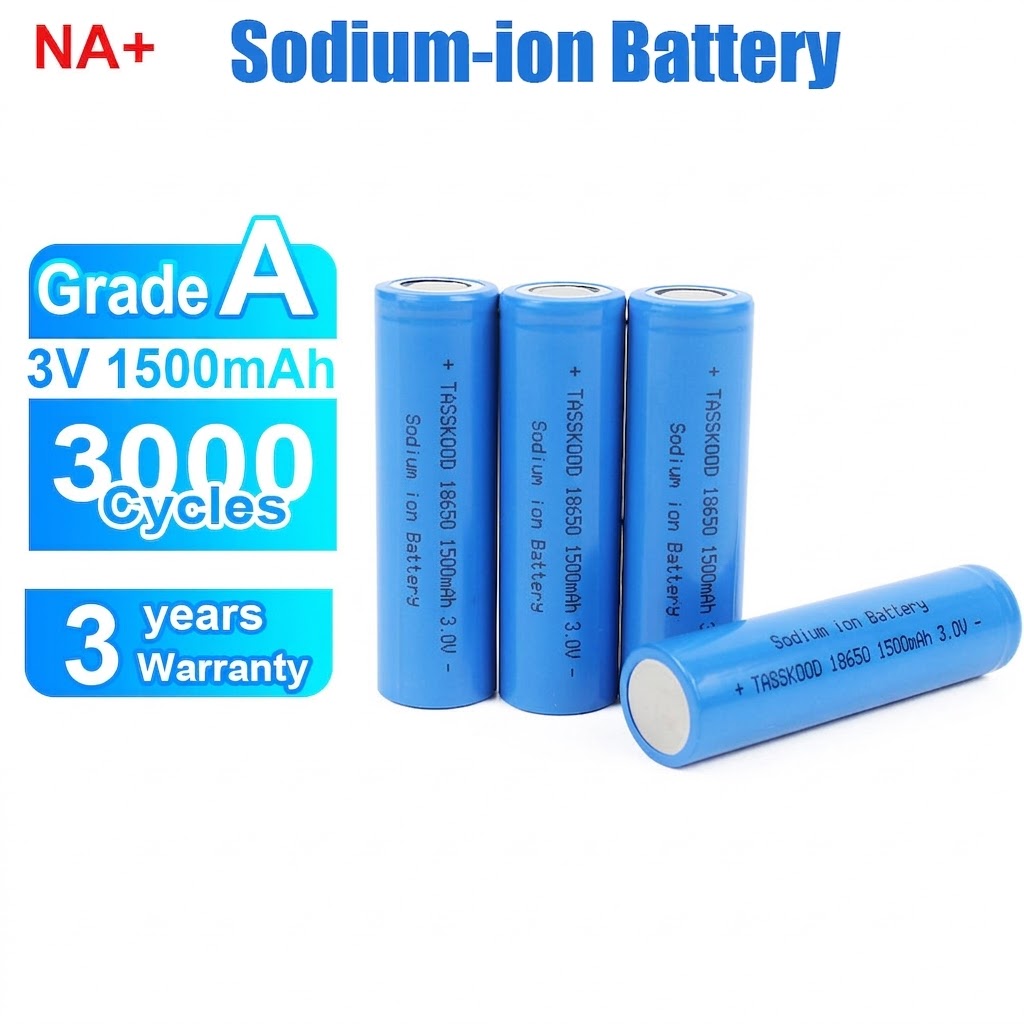
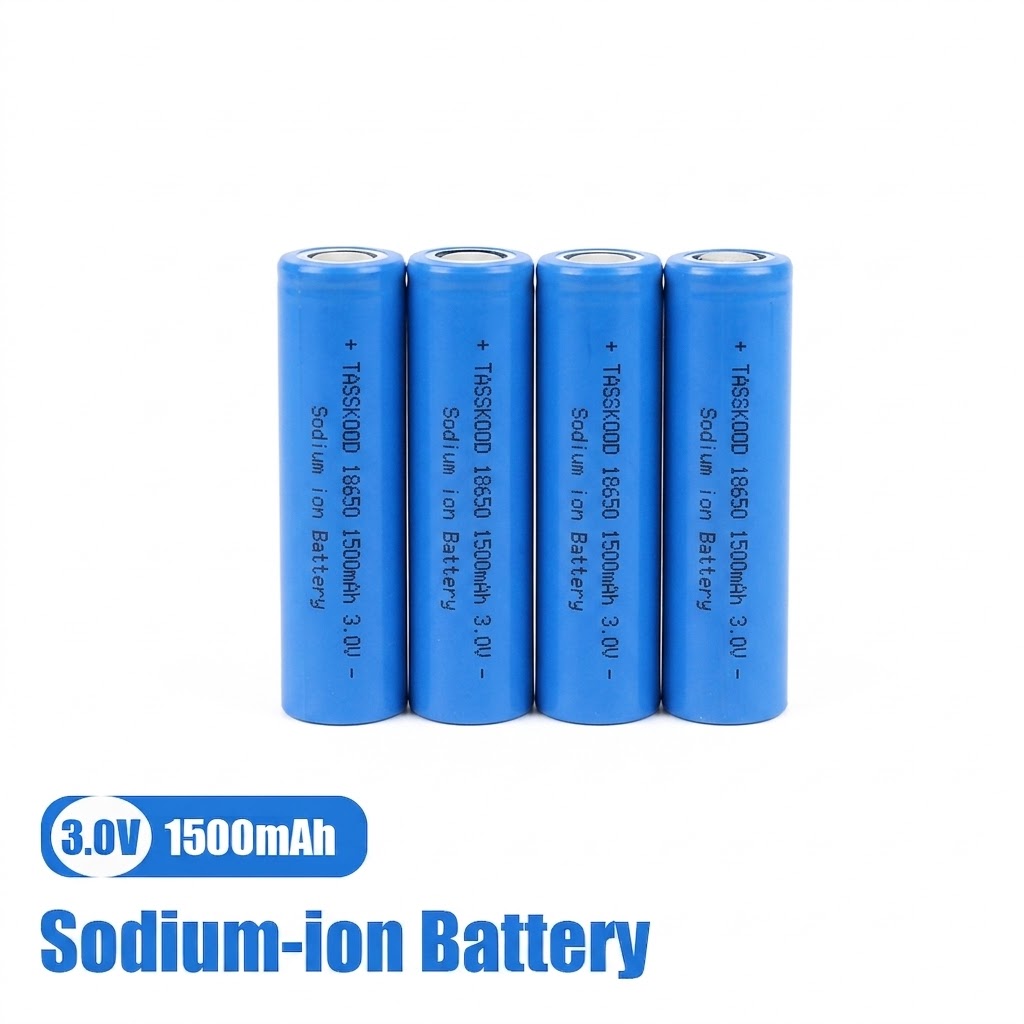
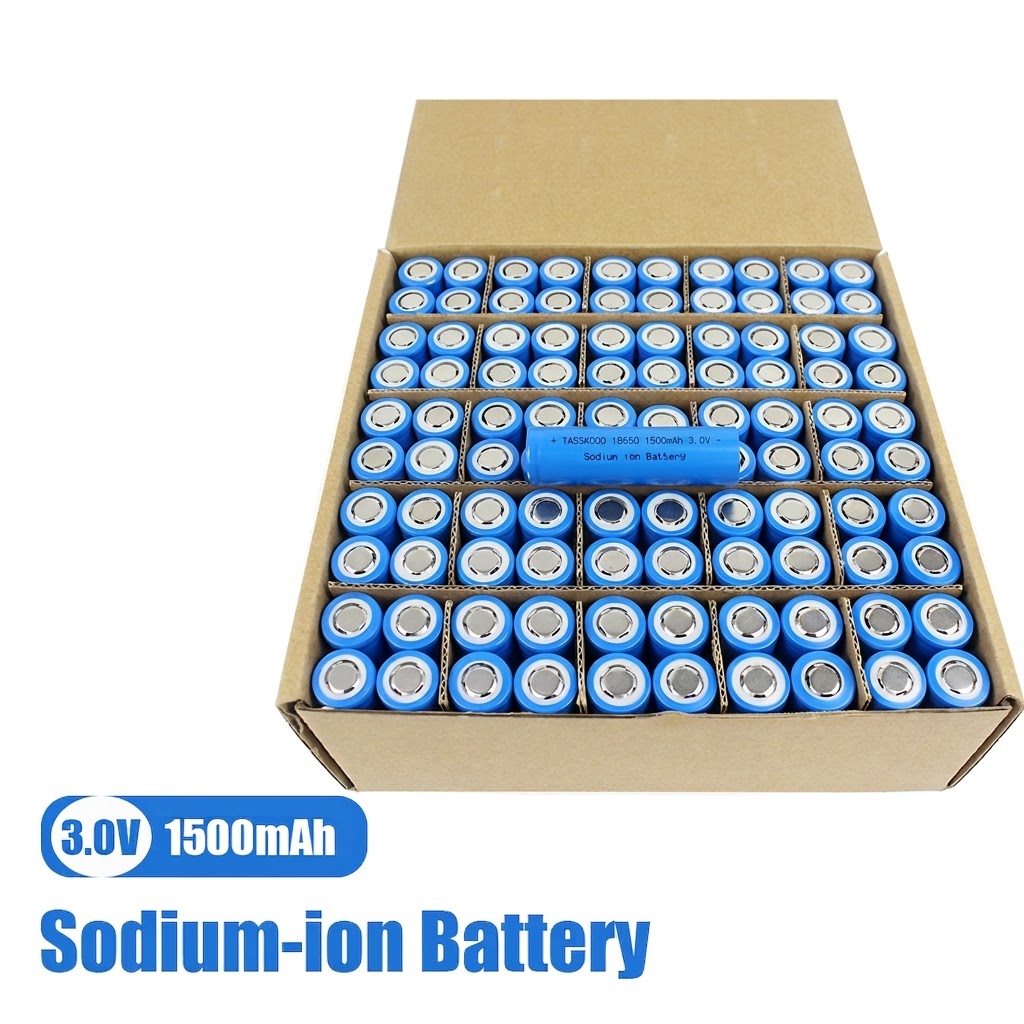
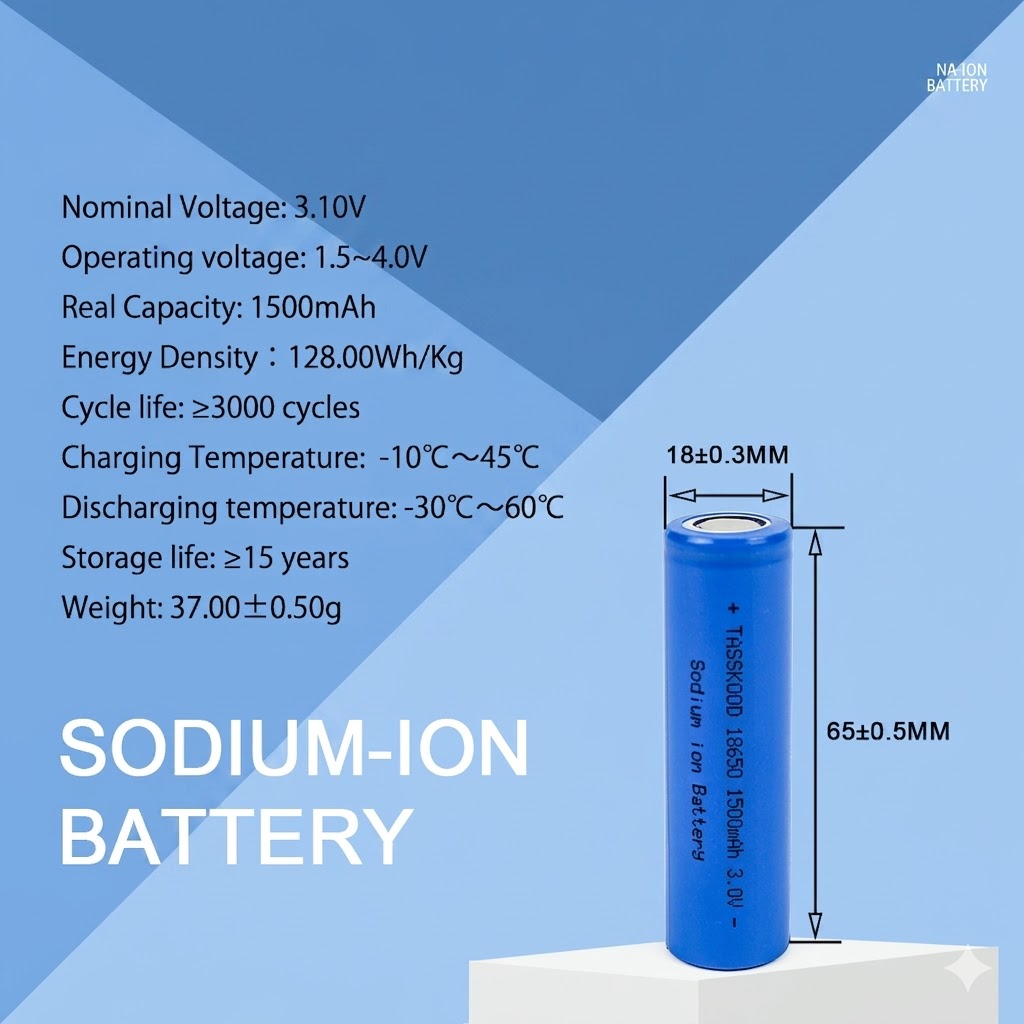
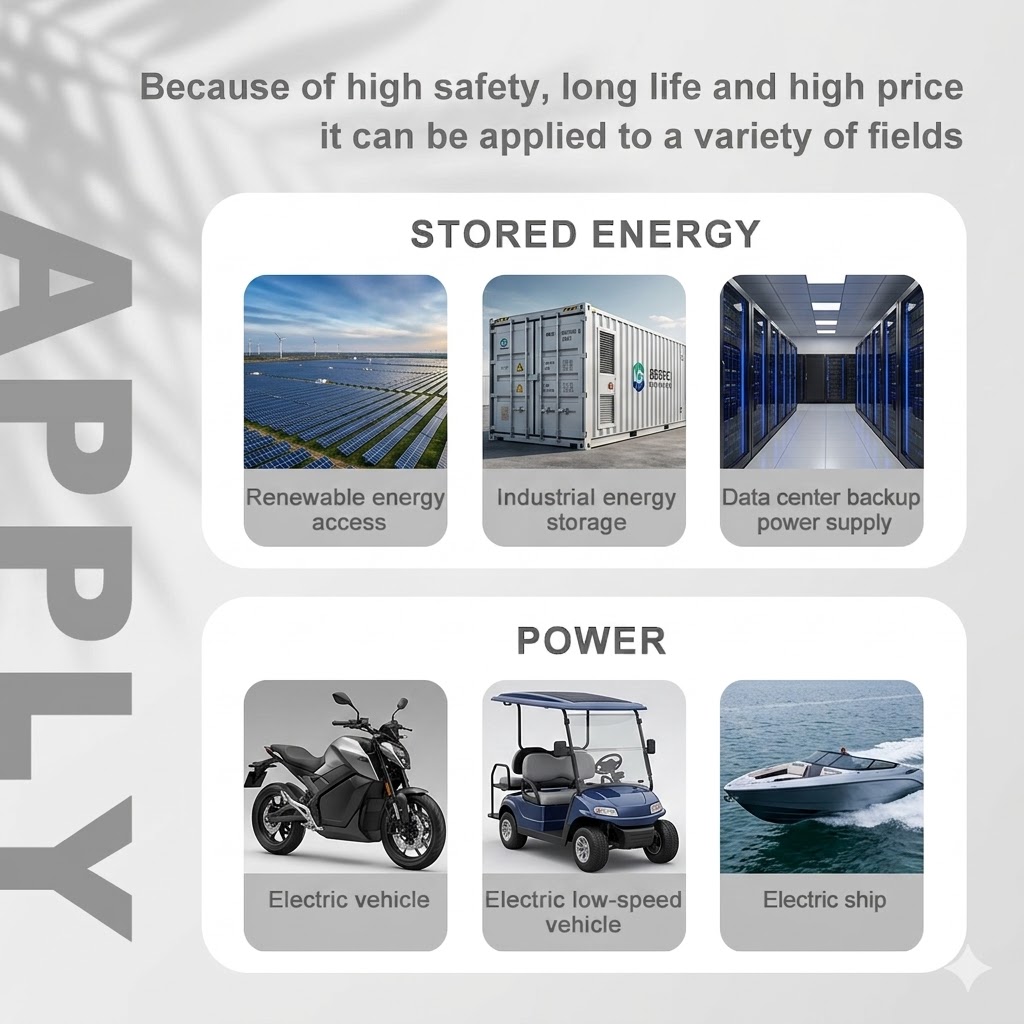
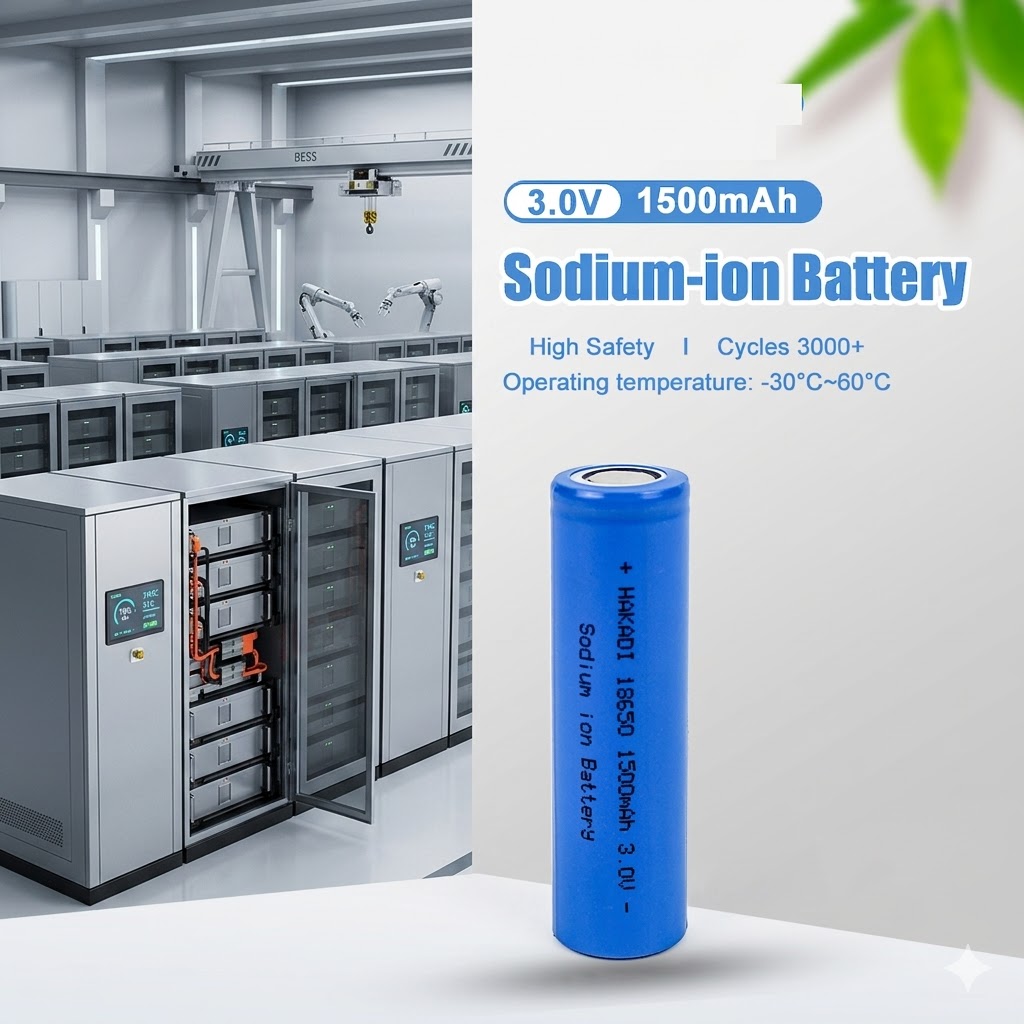
Explore our Sodium Ion Battery 1500mAh with 3V / 3.1V nominal voltage, 18650 cylindrical cell format, long cycle life, low temperature performance, and OEM battery pack support for e-bike, power tools, solar storage, UPS, and DIY battery packs.
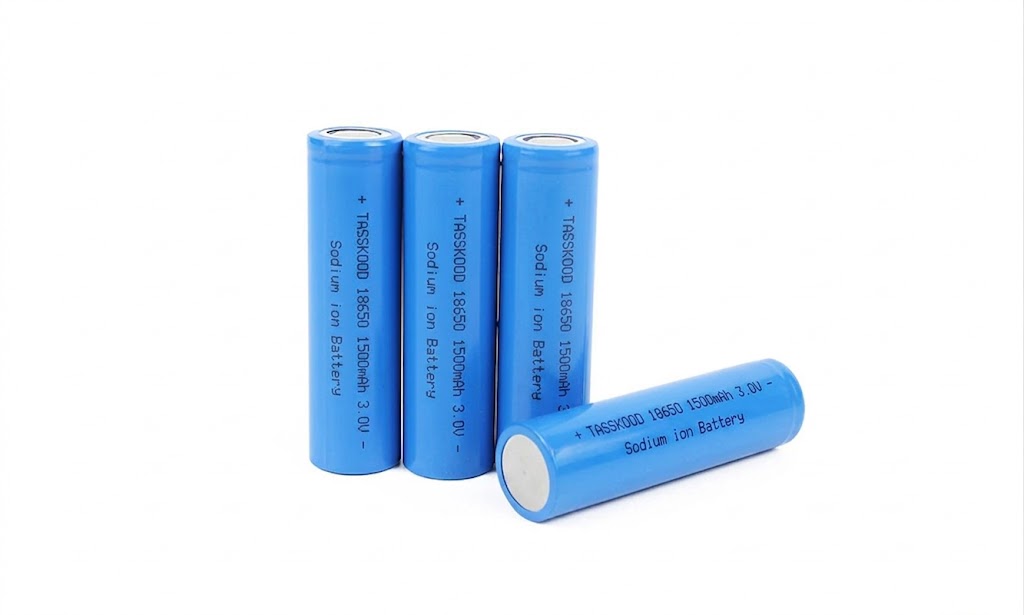
This is a rechargeable sodium-ion battery cell in the standard 18650 cylindrical format. It is designed for buyers who need a reliable 3V sodium ion battery or 3.1V sodium ion battery at 1500mAh capacity — whether for OEM battery pack assembly, light electric mobility, energy storage prototyping, or DIY battery pack projects.
The cell uses sodium-ion (Na-ion) chemistry, which positions it as a practical alternative to lithium-ion in applications where cost, raw material accessibility, and low-temperature performance are real design factors. It ships as a single rechargeable sodium ion cell and can be configured into series or parallel packs depending on your system voltage and capacity requirements.
If you are sourcing a compact, cylindrical sodium-ion battery for integration into a new product or system, this cell is a reasonable starting point for both evaluation and volume procurement.
A sodium-ion battery is a rechargeable electrochemical cell that stores and releases energy through the movement of sodium ions (Na⁺) between the anode and cathode. It is structurally similar to a lithium-ion battery but uses sodium as the charge carrier instead of lithium.
Sodium is one of the most abundant elements on Earth. That abundance is one reason the battery industry has invested heavily in sodium-ion technology over the past decade. For system designers and procurement buyers, this matters because it reduces exposure to lithium and cobalt supply chain constraints — two materials that drive significant cost volatility in lithium-ion cells.
The sodium ion battery market is still maturing, but the technology is commercially viable today in specific use cases, particularly where cost per kWh, low-temperature discharge, and moderate energy density requirements all factor into the design brief.
This product is a single rechargeable sodium ion cell — not a finished battery pack. It is the fundamental building block.
One cell produces the rated voltage and capacity on its own. To build a battery pack, multiple cells are connected in series (to increase voltage) or in parallel (to increase capacity), or both. This distinction matters for buyers who are designing custom systems or ordering cells for pack assembly.
The cell is supplied without a Battery Management System (BMS) or packaging. That is intentional. It gives OEM customers, pack assemblers, and advanced DIY builders direct access to the raw cell performance for integration into their specific hardware.
Na-ion chemistry works on the same intercalation principles as lithium-ion. During charging, sodium ions move from the cathode material into the anode. During discharge, they move back, releasing energy as electrical current.
Key things to understand about this Na-ion rechargeable battery:
For most buyers, the relevant takeaway is that sodium ion rechargeable battery technology is a real, working option for 2025 and beyond — not a future concept.
The 18650 sodium ion battery cell format means the cell body is 18mm in diameter and 65mm in length — the same footprint as the most widely used cylindrical lithium-ion cell in the industry.
This matters for pack integration. Any battery holder, bracket, spot-welding fixture, or pack enclosure designed for standard 18650 lithium cells will accept this cell dimensionally. That makes 18650 sodium ion battery cells straightforward to adopt in systems already built around cylindrical cell architecture.
It also means the supply chain for connectors, nickel tabs, holders, and BMS boards designed for 18650 cells applies directly here.

The nominal voltage of this cell is in the 3V sodium ion battery range. Nominal voltage is the representative average voltage across a typical discharge curve. It is used for system energy calculations and pack voltage planning.
When designing a battery pack, nominal voltage determines how many cells in series you need to reach a target system voltage. For example:
Using the correct nominal voltage in your calculations matters. A rounding error at the cell level becomes a significant system design error at the pack level.
You may see this cell described as a 3.1V sodium ion battery in some datasheets or supplier catalogs. Both 3.0V and 3.1V nominal voltage values appear in published sodium-ion cell specifications, depending on the cathode chemistry and how the manufacturer defines the midpoint of the discharge curve.
The difference between 3.0V and 3.1V nominal is small but affects energy density calculations. When comparing cells or planning a pack, confirm the exact nominal voltage from the datasheet rather than assuming a round number. For this product, the stated nominal voltage is [SPECIFY: 3.0V or 3.1V].
1500mAh is the rated capacity of this cell under standard test conditions. It represents how much charge the cell can deliver in one discharge cycle.
In practical terms:
| Discharge Current | Approximate Runtime |
|---|---|
| 500mA (0.33C) | ~3 hours |
| 1000mA (0.67C) | ~1.5 hours |
| 1500mA (1C) | ~1 hour |
| 3000mA (2C) | ~30 minutes (if supported by cell rating) |
The 1500mAh sodium ion battery produces approximately [4.65Wh] of energy per cell at nominal voltage. For a multi-cell pack, total energy scales with cell count and configuration.
For buyers sizing a system: this capacity is suited to light-duty and moderate-duty applications. It is not positioned as a high-energy-density cell. It is positioned as a cost-effective, safe, and cycle-stable rechargeable cell for the right use case.
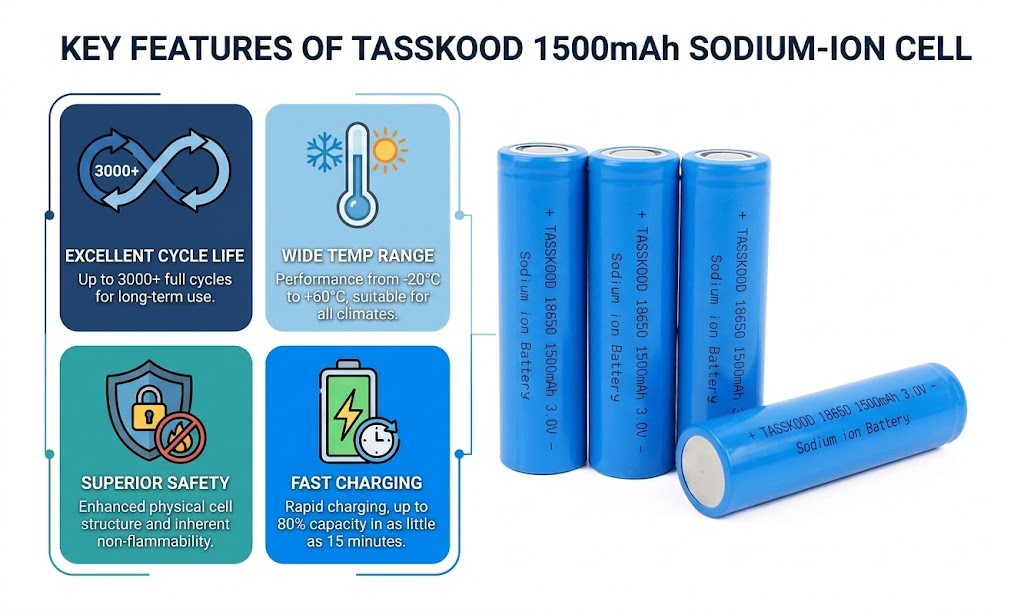
This is a rechargeable sodium ion cell. It is designed for repeated charge and discharge cycles across its rated service life. Unlike primary (non-rechargeable) cells, it supports full recharging to near-original capacity after each discharge.
The rechargeable design means the per-cycle cost decreases with every use. For buyers running regular charge/discharge cycles in a deployed product or system, this is the economically relevant figure to track — not the unit cost alone.
This cell is designed for long cycle life performance. Sodium-ion chemistry, by nature, tends to show stable electrochemical behavior across repeated cycles compared to certain lithium-ion chemistries under equivalent operating conditions.
Cycle life is defined under specific test conditions: a defined charge rate, discharge rate, depth of discharge (DoD), and temperature. Published cycle life figures assume those test conditions. Real-world cycle life will vary depending on:
The long cycle life sodium ion battery characteristic makes this cell worth considering for applications with frequent cycling, provided those operating conditions are within spec. Specific cycle life data for this cell is available on the datasheet: [SPECIFY: 4000 cycles at 0.5C discharge].
Low-temperature performance is one of the most frequently cited advantages of sodium-ion over standard lithium-ion chemistry. Na-ion cells generally retain more usable capacity at sub-zero temperatures, making them relevant for outdoor systems, cold-climate deployments, and winter-season mobility applications.
This low temperature sodium ion battery cell is rated for discharge operation down to [-30: °C]. Actual capacity at low temperature will be lower than the rated 1500mAh at room temperature — that is normal cell behavior. The performance drop is typically more moderate than what you would see in comparable lithium-ion cells at the same temperature.
Note: charging at low temperatures requires careful BMS management. Do not charge this cell below [ minimum charge temperature -10°C] without appropriate thermal management.
This cell supports [1.0C fast charge to 4.0V: fast charge capability — confirm from actual datasheet before publishing].
If the cell supports fast charging: The recommended fast charge rate is [1: C-rate] up to [4.0: charge voltage], followed by a constant voltage phase until current drops to the cutoff threshold. Do not exceed the maximum charge current. Using a charger profile designed for a different cell chemistry or voltage will damage the cell and void any warranty.
Fast charge reduces turnaround time between discharge cycles. This matters in applications where the battery must be ready for the next use within a constrained time window — power tools, light vehicles, and backup systems with regular cycling schedules.
Sodium-ion chemistry does not contain lithium or cobalt, two elements associated with thermal runaway risk in lithium-ion cells under abuse conditions (overcharge, mechanical damage, internal short circuit). Sodium-ion cells are widely cited in technical literature as having a more stable thermal profile.
That said, high safety sodium ion battery performance is not unconditional. Cell safety depends on:
Do not treat the chemistry’s safety profile as a reason to skip BMS integration or proper enclosure design. Safe cells still require safe systems.
The wide voltage range battery cell characteristic refers to the usable voltage window between the fully charged state and the discharged cutoff voltage. For this cell:
This voltage window determines how a BMS should be programmed for cell protection. It also determines the voltage swing your system electronics will need to tolerate across the full state of charge (SoC) range.
The 18650 cylindrical sodium ion cell format provides a balance of energy, power, and physical convenience. The cylindrical geometry distributes internal pressure evenly and is well understood by pack designers worldwide.
For OEM use, the 18650 format simplifies sourcing because the hardware ecosystem — holders, spot welding strips, shrink wrap, rigid enclosures — already exists. Switching from an 18650 lithium-ion cell to this 18650 Na-ion cell in an existing pack design is dimensionally compatible, though the BMS voltage thresholds must be reconfigured for sodium-ion operating voltages.
Note: Fill in all [SPECIFY] values from your official cell datasheet before publishing. Do not estimate or approximate these figures.

| Parameter | Value |
|---|---|
| Nominal Voltage | [3.10: V] |
| Parameter | Value |
|---|---|
| Nominal Capacity | 1500 mAh / 1.5 Ah |
| Test Conditions | [0.5C; temperature 25°C, 1.50V cutoff voltage] |
| Parameter | Value |
|---|---|
| Chemistry | Sodium-Ion (Na-ion) |
| Cathode Material | [SPECIFY: e.g., layered oxide, Prussian blue analogue, or polyanionic] |
| Anode Material | [SPECIFY: e.g., hard carbon] |
| Electrolyte | [SPECIFY: if disclosed] |
| Parameter | Value |
|---|---|
| Cell Format | Cylindrical 18650 |
| IEC Designation | [SPECIFY if applicable] |
| Parameter | Value |
|---|---|
| Maximum Charge Voltage | [SPECIFY: V] |
| Recommended Charge Method | CC/CV |
| Parameter | Value |
|---|---|
| Nominal Voltage | [3.10: V] |
| Discharge Cutoff Voltage | [1.50: V] |
| Parameter | Value |
|---|---|
| Standard Discharge Current | 0.5C/0.75A |
| Maximum Continuous Discharge | 3C/4.5A |
| Peak Discharge (if rated) | 5C/7.5A |
| Parameter | Value |
|---|---|
| Standard Charge Rate | 0.5C/0.75A |
| Fast Charge Rate (if supported) | 1C/1.5A |
| Charge Cutoff Current | 30ma |
| Test Condition | Cycle Life |
|---|---|
| [SPECIFY: C-rate charge / C-rate discharge, DoD, temperature] | [SPECIFY: cycles at ≥ X% capacity retention] |
| Parameter | Value |
|---|---|
| Diameter | 18.3mm |
| Length | 65.3mm |
| Parameter | Value |
|---|---|
| Weight | 38g |
| Condition | Temperature Range |
|---|---|
| Charging | [ -10 °C to 45°C] |
| Discharging | [-30 °C to 60°C] |
| Condition | Temperature Range |
|---|---|
| Short-Term Storage (≤ 3 months) | [SPECIFY: °C to °C] |
| Long-Term Storage (> 3 months) | [SPECIFY: °C to °C] |
| Recommended Storage SoC | [SPECIFY: % — typically 30%–60%] |
The sodium ion battery vs lithium ion battery comparison is relevant for buyers deciding which chemistry fits their project. Here is a practical, side-by-side breakdown:
| Property | Sodium Ion (Na-ion) | Lithium Ion (Li-ion) |
|---|---|---|
| Nominal Voltage | ~3.0–3.2V (cell chemistry dependent) | ~3.2V–3.7V (chemistry dependent) |
| Energy Density (gravimetric) | Lower — typically 100–160 Wh/kg | Higher — typically 150–280 Wh/kg |
| Low Temperature Performance | Generally better | Varies; can degrade significantly below 0°C |
| Raw Material Risk | Lower — sodium is abundant | Higher — lithium, cobalt supply constraints |
| Thermal Stability | Generally considered more stable | Varies; some chemistries are well-managed |
| Cycle Life | Competitive in matched conditions | Established; mature chemistry |
| Maturity | Commercially available; still scaling | Mature; large established supply chain |
The Na-ion cell makes sense when: system weight budget is not the primary constraint, low-temperature discharge is important, and cost stability over time matters to the project.
The Li-ion cell makes more sense when: maximum energy density is required, the system is weight-sensitive, and volume pricing on Li-ion already covers the application.
Neither is universally better. The right choice depends on the application.
Sodium-ion chemistry avoids lithium cobalt oxide cathode materials, which are among the more thermally sensitive lithium-ion formulations. The safer rechargeable battery cell positioning for Na-ion is rooted in the electrochemical stability of the cathode and the absence of metallic lithium plating risk under standard operating conditions.
In practice, this means the cell tolerates some abuse conditions with less dramatic failure modes than certain lithium-ion types. However, this is not an excuse to skip protection circuits. Any multi-cell sodium-ion pack should still have a BMS with overcharge, over-discharge, overcurrent, and temperature protection.
At temperatures below 0°C, sodium-ion cells typically retain a higher percentage of their room-temperature capacity compared to standard lithium-ion cells. This is one of the most consistently cited and practically important advantages of Na-ion chemistry.
For low temperature sodium ion battery applications — outdoor sensors, cold-climate EVs, winter-deployed backup systems — this characteristic reduces the need for active heating systems and simplifies thermal management. That translates directly to lower system cost and higher system reliability in cold environments.
The actual capacity at low temperature for this cell is:85%
A stable cycle life directly reduces the total cost of ownership for any product that uses this cell. Fewer replacement cycles means lower maintenance burden and lower lifetime cost per kWh delivered.
The long service life battery cell characteristic of Na-ion cells is particularly valuable in systems that are expensive to access or disassemble — permanently installed backup systems, embedded light-vehicle battery packs, and industrial sensor arrays where battery replacement requires significant labor.
Actual service life in a deployed system will depend on how well the operating conditions match the datasheet test conditions. Systems running within recommended charge/discharge parameters and temperature ranges will achieve closer to rated cycle life.
The cost effective sodium ion battery argument is application-specific. Sodium-ion cells are not uniformly cheaper than lithium-ion at all specifications and volumes today, but they offer cost advantages in specific scenarios:
For B2B buyers planning large procurement volumes, price stability is often as important as per-unit price. Sodium as a raw material is far more geopolitically stable than lithium or cobalt.

Sodium ion battery for e-bike packs is a growing area of interest, particularly for budget-class or utility-grade e-bikes where maximum range-per-kg is less critical than cost and cold-weather reliability.
An e-bike battery pack typically runs at 36V, 48V, or 52V nominal. Building a pack at 48V nominal from [3.10V] nominal Na-ion cells requires [16pcs: number of cells in series] cells in series. Parallel strings multiply capacity.
Before finalizing an e-bike pack design using these cells, confirm:
Do not assume a lithium-ion BMS or charger is compatible without verification.
Sodium ion battery for power tools applications fits well in moderate-discharge tools — drills, drivers, small saws — where burst current demands do not exceed the cell’s maximum continuous discharge rating.
Power tools often see high peak currents during motor startup. Confirm that the maximum discharge current of this cell matches the peak draw profile of your tool design. Undersizing the cell C-rate in a power tool application reduces tool performance and accelerates cell degradation.
For OEM power tool manufacturers, the 18650 format is straightforward to integrate into existing pack hardware. The key change versus Li-ion is the BMS voltage programming.
Sodium ion battery for electric scooter packs follows similar considerations to e-bike applications. Most electric scooters run at 24V, 36V, or 48V nominal. Pack design requires the right series/parallel configuration and a BMS matched to Na-ion voltage thresholds.
The low-temperature advantage is particularly useful for scooters used in climates where outdoor temperatures drop below 0°C regularly. Cold-weather range loss is a known pain point for lithium-ion scooter batteries; Na-ion cells are generally more tolerant in this condition.
Sodium ion battery for solar energy storage is a fit in small and medium-scale systems where round-trip efficiency and cycle life are balanced against cost and material sustainability goals.
In a solar energy storage context, the battery typically charges during the day and discharges at night or during outages. This daily cycling pattern over years of operation puts pressure on cycle life. Sodium-ion’s cycle stability is relevant here.
Note that solar inverter and charge controller compatibility requires verification. The charge controller must be programmed or configurable for sodium-ion cell voltage thresholds, not lithium-ion defaults.
Sodium ion battery for UPS backup systems benefits from Na-ion’s stable cycle chemistry and safety profile. In a UPS, the battery typically sits at float charge for extended periods, occasionally cycling during grid outages.
Na-ion chemistry is generally tolerant of low-current float conditions, but always verify the cell’s recommended storage SoC and maximum float voltage with the datasheet before integrating into a UPS design. UPS inverter voltage compatibility must also be confirmed.
Sodium ion battery for DIY battery pack projects is one of the most common use cases for individual 18650 cells. Whether you are building a custom power bank, a replacement e-bike battery, a portable solar station, or a bench power supply, these cells provide a solid Na-ion foundation.
For DIY builders:
Safety is the primary concern in any DIY build. Taking shortcuts with BMS selection or cell balancing will reduce pack life and create safety risks.
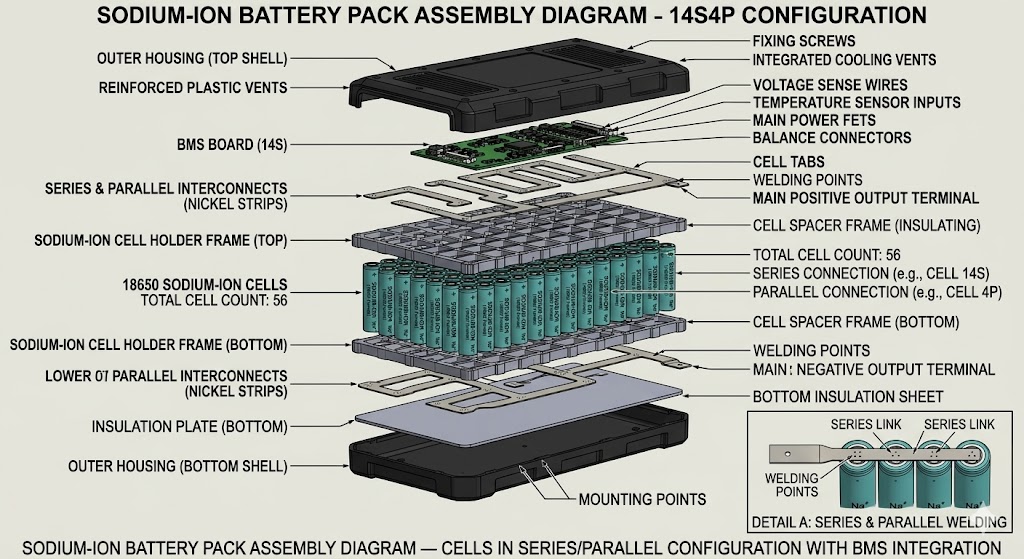
A single 18650 sodium-ion cell produces the nominal voltage and 1500mAh capacity on its own. Real applications almost always require higher voltage, higher capacity, or both. That means assembling multiple cells into a battery pack assembly.
Pack integration involves:
Pack assembly is a technical process. For OEM buyers, we offer custom sodium ion battery pack manufacturing support — see the Why Choose Our Sodium Ion Battery section.
An 18650 sodium ion battery pack is built from individual 18650 Na-ion cells in a series-parallel arrangement. Because the 18650 format is universal, existing pack hardware designed for lithium 18650 cells is dimensionally compatible.
The most important adjustment when switching to Na-ion: reprogram or replace the BMS for Na-ion voltage windows. The charge voltage, discharge cutoff, and balancing thresholds for sodium-ion differ from lithium-ion. A BMS programmed for Li-NMC or LFP will not protect Na-ion cells correctly.
A nominal 12V pack using [3.10 V] nominal cells requires [4PCS: number] cells in series (e.g., a 4S configuration for cells with ~3.0V nominal). Fully charged pack voltage will be approximately [16.00V] (4 × max charge voltage).
Common 12V applications: small UPS, LED lighting systems, portable instruments, low-power robotics.
A 24V sodium ion battery pack requires approximately [8pcs ] cells in series (8S for ~3.0V nominal cells). Fully charged voltage: approximately [32.00V].
Common 24V applications: e-bikes (standard motor controller range), light electric scooters, small solar storage, power tool packs.
A 48V sodium ion battery pack uses approximately [16pcs] cells in series (16S for ~3.0V nominal cells). This voltage class is the most common for e-bike, electric scooter, and light-duty ESS applications.
Fully charged voltage: approximately [64.00 V]. BMS must be rated for the total series cell count and the maximum discharge current of the application.
A 72V sodium ion battery pack is used in higher-performance light electric vehicles and larger DIY or OEM energy storage systems. It requires approximately [24pcs] cells in series (24S for ~3.0V nominal).
At this voltage level, BMS quality, cell balancing accuracy, and thermal management become increasingly important. We recommend consulting with our engineering team before finalizing a 72V pack design.
Understanding series and parallel battery pack design is essential before ordering cells.
Series (S) — increases voltage:
Parallel (P) — increases capacity:
Combined (e.g., 16S2P):
Cell balancing is mandatory in any multi-series pack. Small differences in cell capacity and self-discharge rate accumulate over cycles. A BMS with per-cell or per-group balancing prevents any one cell from being driven out of its safe voltage range.
Do not connect cells in series or parallel without BMS protection. An unprotected pack is a safety hazard.
Charging a sodium ion battery correctly is not complicated, but it requires the right equipment and voltage settings.
Basic charging rules:
The standard charge method is Constant Current / Constant Voltage (CC/CV): charge at the rated constant current until voltage reaches the charge voltage limit, then hold voltage while current tapers to the cutoff threshold.
The recommended sodium ion battery charging method for this cell:
| Stage | Parameter | Value |
|---|---|---|
| Phase 1 — Constant Current (CC) | Charge Current | [SPECIFY: A or C-rate] |
| Phase 2 — Constant Voltage (CV) | Charge Voltage | [SPECIFY: V] |
| Charge Cutoff | Current | [SPECIFY: mA] |
| Typical Charge Time | At standard rate | [SPECIFY: hours] |
Do not use pulse charging, voltage-limited fast charge, or charger profiles designed for other chemistries without first confirming compatibility with the cell datasheet.
The discharge curve of this cell shows [SPECIFY: describe curve shape — flat mid-range plateau, or sloping — from datasheet data] across the operating voltage range.
For system electronics that are sensitive to input voltage variation — DC/DC converters, inverters, motor controllers — knowing the discharge curve shape matters for power system design. A flat discharge curve means stable output voltage for more of the discharge cycle. A sloping curve means more variation in input to downstream electronics.
Key discharge parameters:
| Parameter | Value |
|---|---|
| Standard Discharge Rate | [SPECIFY: C-rate] |
| Maximum Continuous Discharge | [SPECIFY: A] |
| Discharge Cutoff Voltage | [SPECIFY: V] |
| Capacity at 1C (room temp) | ~1500 mAh |
| Capacity at Low Temp ([SPECIFY: °C]) | [SPECIFY: % of rated] |
For any multi-cell pack or product integration using this cell, a Battery Management System (BMS) is required. The BMS should provide:
BMS voltage thresholds must be configured for sodium-ion operating voltage — not lithium-ion defaults. Suppliers of Na-ion compatible BMS hardware are increasingly available as the technology scales.
Handling a safe sodium ion battery cell correctly keeps it that way. The following practices apply during handling, installation, testing, and operation:
If a cell shows signs of swelling, electrolyte leakage, unusual heat during charging, or visible damage, remove it from service. Do not attempt to repair a damaged cell.
UN38.3 is the United Nations standard that governs the transport safety testing of lithium and sodium batteries. It covers a series of abuse tests: altitude simulation, thermal test, vibration, shock, external short circuit, impact/crush, overcharge, and forced discharge.
A UN38.3 sodium ion battery test report confirms that the cell has passed these standardized tests, making it eligible for transport by air, sea, and road under dangerous goods regulations.
For import/export buyers and logistics managers: [SPECIFY: confirm whether UN38.3 test report is available for this cell]. If available, it can be provided upon request alongside shipment documentation.
An MSDS (Material Safety Data Sheet) — also referred to as an SDS (Safety Data Sheet) under GHS regulations — documents the chemical composition, hazards, handling procedures, and emergency response information for the cell.
[SPECIFY: confirm whether MSDS/SDS is available]
If available, the MSDS sodium ion battery document can be supplied to importers, warehouse operators, and wholesale buyers on request. It is typically required by customs authorities in many countries and by workplace safety regulations in commercial and industrial environments.
Long-term storage of sodium-ion cells requires attention to a few key variables:
Recommended Storage SoC: Store cells at approximately [SPECIFY: % SoC — typically 30%–60%]. Storing at full charge or fully discharged accelerates capacity degradation.
Temperature:
| Storage Duration | Recommended Temperature |
|---|---|
| ≤ 1 month | [SPECIFY: °C range] |
| 1–3 months | [SPECIFY: °C range] |
| > 3 months | [SPECIFY: °C range, lower is generally better] |
Humidity: Store in a dry environment. Avoid condensation on cell surfaces. Recommended relative humidity: [SPECIFY: % RH].
Periodic check: For storage longer than 3 months, check cell voltage every 3 months. Recharge to storage SoC if voltage has dropped below [SPECIFY: V].
Physical storage: Store cells in a non-conductive container or tray. Prevent cells from touching metal objects that could cause short circuits. Do not stack heavy weight on cells.

We are a factory direct sodium ion battery supplier. Orders go directly to the source — no middlemen, no distributor markups. That structure gives buyers direct access to:
Whether you are placing a sample order to evaluate the cell for a new design or sourcing at volume for ongoing production, working directly with the manufacturer shortens the technical feedback loop.
We support both OEM and ODM sodium ion battery programs.
OEM (Original Equipment Manufacturer): Supply cells or finished packs branded to your specifications — label, packaging, and documentation under your brand.
ODM (Original Design Manufacturer): We design and manufacture a custom sodium-ion battery pack to your application requirements — target voltage, capacity, form factor, connector type, BMS specification, and enclosure design.
Custom programs are available for qualified buyers with defined volume commitments. Contact us with your application brief, target specs, and annual volume estimate to initiate a custom project discussion.
We supply bulk sodium ion battery cells for volume buyers — pack manufacturers, system integrators, electronics OEMs, and research institutions.
Bulk orders benefit from:
If you are sourcing cells for ongoing production rather than evaluation, discuss your quarterly or annual volume so we can align supply planning and pricing accordingly.
For distributors and resellers, wholesale 18650 sodium ion battery supply is available with appropriate pricing, documentation, and logistics support.
We work with wholesale partners in multiple regions. If you are establishing a sodium-ion cell supply line for your customer base, reach out with your distribution region, target customer profile, and expected volume range.
Beyond cell supply, we offer custom battery pack support for buyers who need a complete assembled solution rather than individual cells.
Custom pack services include:
| Service | Description |
|---|---|
| Pack Design | Series/parallel configuration to target voltage and capacity |
| BMS Integration | Selection and programming of Na-ion compatible BMS |
| Cell Balancing | Pre-assembled packs with balanced cell groups |
| Connector Selection | JST, XT60, Anderson, or custom connector options |
| Shrink Wrap / Enclosure | Standard shrink sleeve or custom rigid housing |
| Labeling | OEM label, capacity marking, warning labeling |
| Application Testing | Basic performance verification before shipment (confirm scope) |
Contact us with your pack specification: target voltage, capacity (Ah), discharge current requirement, physical dimensions, connector type, and quantity.
It is a rechargeable electrochemical cell that uses sodium ions as the charge carrier. The 1500mAh rating is the nominal capacity under standard test conditions. This specific product is a single cylindrical 18650-format Na-ion cell, not a finished battery pack.
The nominal voltage of this cell is [SPECIFY: 3.0V or 3.1V]. Both values appear in sodium-ion cell datasheets depending on cathode chemistry and how the midpoint of the discharge curve is defined. Always use the actual nominal voltage from the datasheet — not an assumed round number — for pack voltage calculations.
Yes. The cell is 18mm in diameter and 65mm in length — the standard 18650 cylindrical format. It fits 18650 battery holders, pack fixtures, and enclosures designed for standard 18650 cells.
Use a CC/CV charger or programmable power supply set to the correct Na-ion charge voltage: [SPECIFY: V]. Do not use a lithium-ion charger without confirming voltage compatibility. Always charge through a BMS with overcharge protection. Do not charge below the minimum temperature: [SPECIFY: °C].
Yes. Sodium-ion chemistry retains more usable capacity at low temperatures compared to standard lithium-ion. This cell is rated for discharge down to [SPECIFY: °C]. Capacity at low temperature is lower than the room-temperature rating — see the datasheet for specific low-temperature capacity data. Do not charge below the minimum charge temperature without thermal management.
Yes, with the correct setup. You need a BMS programmed for Na-ion voltage thresholds (not Li-ion defaults), properly matched cells from the same production batch, spot-welded connections (not soldered directly to terminals), and an appropriate enclosure. Do not operate a multi-cell pack without a BMS.
Yes. We support OEM projects (branded cell or pack supply) and ODM projects (custom pack design and manufacturing to your specification). Contact us with your application requirements, target specs, and estimated annual volume to start the discussion.
Yes. We supply bulk 18650 sodium-ion cells in volume for pack manufacturers, distributors, and OEM customers. Pricing is volume-dependent. Contact us with your target quantity and delivery schedule for a quote.
UN38.3 test reports and MSDS/SDS documentation are available upon request for qualifying orders. These documents are typically required for air freight and customs clearance in most import regions. Contact our sales team to request documentation with your order.
This cell is suitable for:
It is not suited for applications requiring maximum gravimetric energy density where lithium-ion’s higher Wh/kg is a hard requirement.