

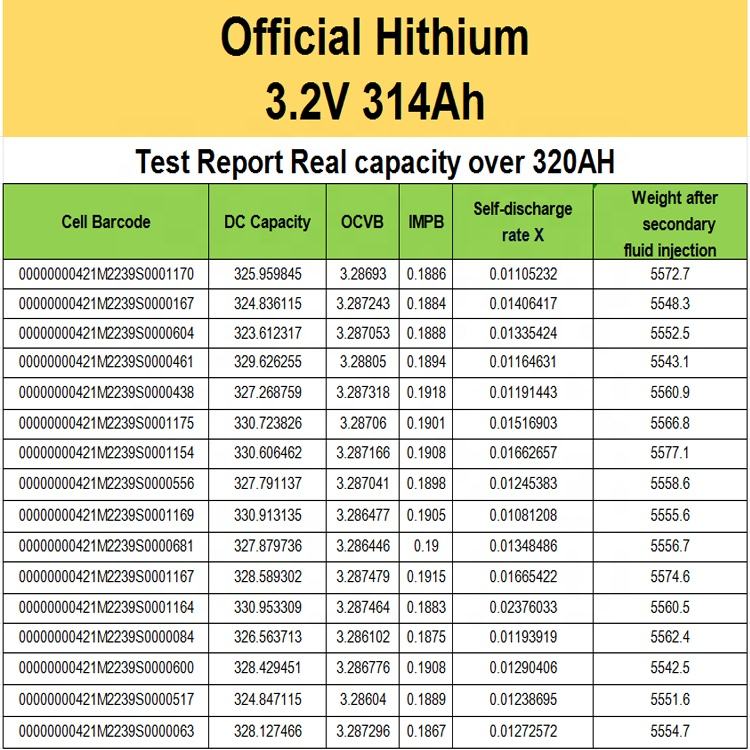
5 core selling points for the HiTHIUM 314Ah cell:
Free standard shipping on all orders Estimated to be delivered within 2-5 business days.
Backed up by techical support within 24hrs.
30 Days Hassle Free Returns
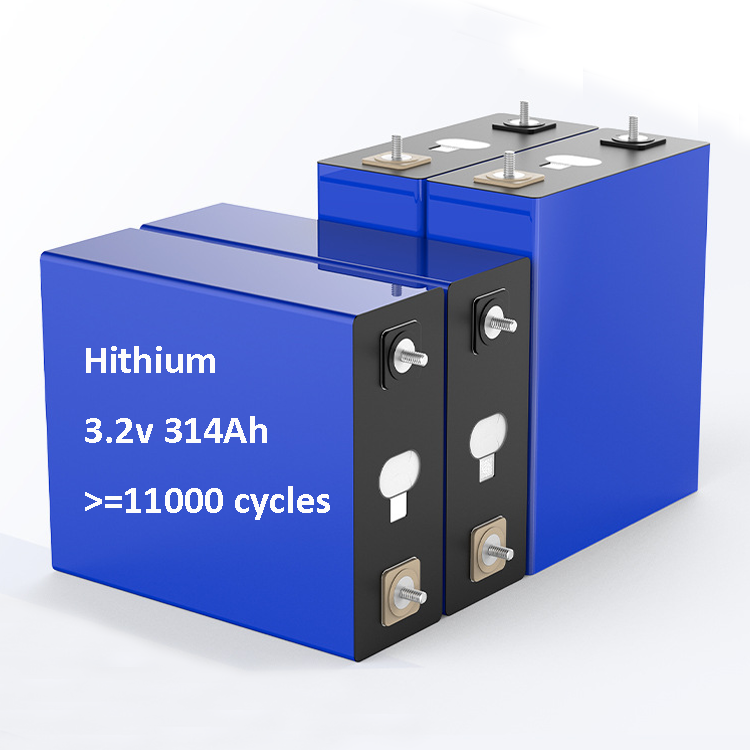
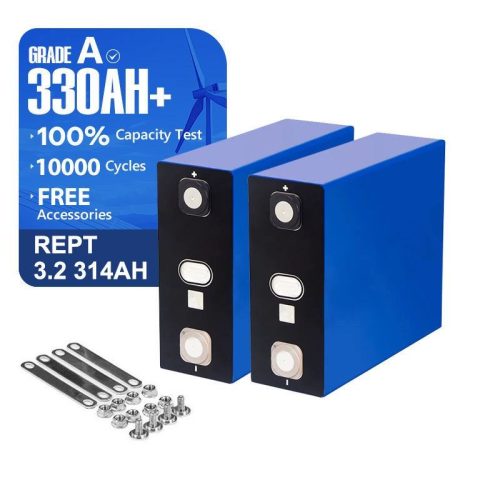
The HiTHIUM 314Ah cell is a single prismatic LiFePO4 (LFP) battery cell. It operates at a nominal voltage of 3.2V and delivers 314Ah of capacity per cell.
This is not a finished 12V, 24V, or 48V battery. It is a cell-level component — the building block you use to assemble a battery pack. To get a usable system voltage, you connect multiple cells in series.
HiTHIUM designed this cell primarily for stationary energy storage — solar storage systems, grid-tied ESS cabinets, backup power banks, and large-format custom battery assemblies. It is not a general-purpose cell. The chemistry, format, and cycle-life target are all shaped around stationary duty.
Most buyers come to this cell for a specific reason: they need a high-capacity prismatic LFP cell that is built for stationary storage, not repurposed from an EV application.
Key reasons buyers choose this format:
[IMAGE SUGGESTION: Single HiTHIUM 314Ah prismatic cell, front and terminal view, on a clean background]
Alt text: HiTHIUM 314Ah LiFePO4 prismatic cell, 3.2V single cell for ESS and solar storage
| Parameter | Value |
|---|---|
| Nominal Voltage | 3.2V |
| Nominal Capacity | 314Ah |
| Chemistry | LiFePO4 / LFP |
| Format | Prismatic cell |
| Nominal Energy | ~1,005Wh per cell |
| Primary Use | Stationary ESS / solar storage / custom battery packs |
Most cells in this capacity range are either EV-derived or sourced from mixed-use production lines. HiTHIUM positions the 314Ah cell specifically as an ESS-oriented product — the cell design, cycle-life target, and quality controls are aimed at stationary storage applications.
Practically, that means:
If you have been searching for this cell, you have probably seen it listed under several different names:
These names generally refer to the same cell. The variation comes from how different resellers, distributors, and importers choose to label the product. When you are comparing listings, check the actual specs — nominal voltage, capacity, dimensions, and chemistry — rather than relying on the model name alone.
This is a common source of confusion in the market.
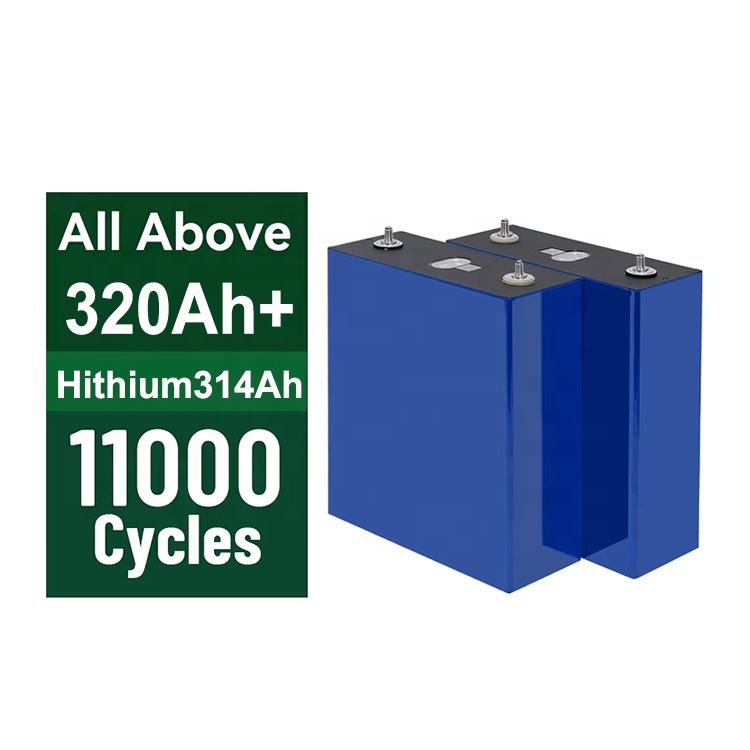
The nominal rating for this cell is 314Ah. That is the official product specification.
Some sellers advertise 320Ah, 325Ah, or even 330Ah. There are a few reasons this happens:
For engineering and system design purposes, always use the nominal 314Ah as your planning figure. Do not size a system around a 325Ah claim unless you have verified test data from the actual batch you are buying.
This page stays focused on the HiTHIUM 314Ah cell — the official nominal product. Where capacity variation is relevant, it is explained in context. Mixed-capacity titles and inflated spec claims are not used here.
LiFePO4 (lithium iron phosphate) is the right chemistry for stationary storage. The iron-phosphate bond is chemically stable, which means the cell does not release oxygen under stress the way some other lithium chemistries can. That stability is why LFP is the dominant chemistry in grid-scale and residential ESS today.
For a system that cycles daily for 10–15 years, chemistry stability matters more than raw energy density. The HiTHIUM 314Ah cell is built around that priority.
HiTHIUM publishes cycle-life figures in the range of 6,000–10,000+ cycles depending on test conditions. What that means in practice:
Always ask for the specific test conditions behind any cycle-life claim. A number without test conditions is not useful for system design.
LFP chemistry has a higher thermal runaway threshold than NMC or NCA chemistries. The HiTHIUM 314Ah cell handles normal operating temperature ranges well and does not require aggressive active cooling in most stationary storage applications.
That said, thermal management still matters. Cells should not be operated at the edges of their temperature range continuously, and pack design should allow for adequate airflow or passive thermal management.
At 314Ah per cell, you need fewer cells to reach a given system capacity. A 16S1P pack (16 cells in series) gives you a 51.2V / ~16kWh system. That same energy from 100Ah cells would require 32 cells — twice the interconnections, twice the BMS channels, and more potential failure points.
Fewer cells also means:
Low internal resistance means the cell handles current more efficiently. Less energy is lost as heat during charge and discharge, and the cell maintains more consistent voltage under load. For ESS applications where the system may run at moderate continuous current for hours, this matters for both efficiency and thermal management.
The 314Ah cell works well in:
The prismatic format also fits standard rack-mount and cabinet enclosures used in residential and commercial ESS products.
| Parameter | Value |
|---|---|
| Nominal Voltage | 3.2V |
| Nominal Capacity | 314Ah |
| Nominal Energy | ~1,005Wh |
| Charge Cut-off Voltage | 3.65V |
| Discharge Cut-off Voltage | 2.5V |
| Standard Charge Current | 0.5C (157A) |
| Standard Discharge Current | 0.5C (157A) |
| Maximum Continuous Charge Current | 1C (314A) |
| Maximum Continuous Discharge Current | 1C (314A) |
| DC Internal Resistance | ≤0.25mΩ (typical) |
Note: Confirm exact internal resistance and max current values against the datasheet for your specific batch. Values can vary slightly between production runs.
| Parameter | Value |
|---|---|
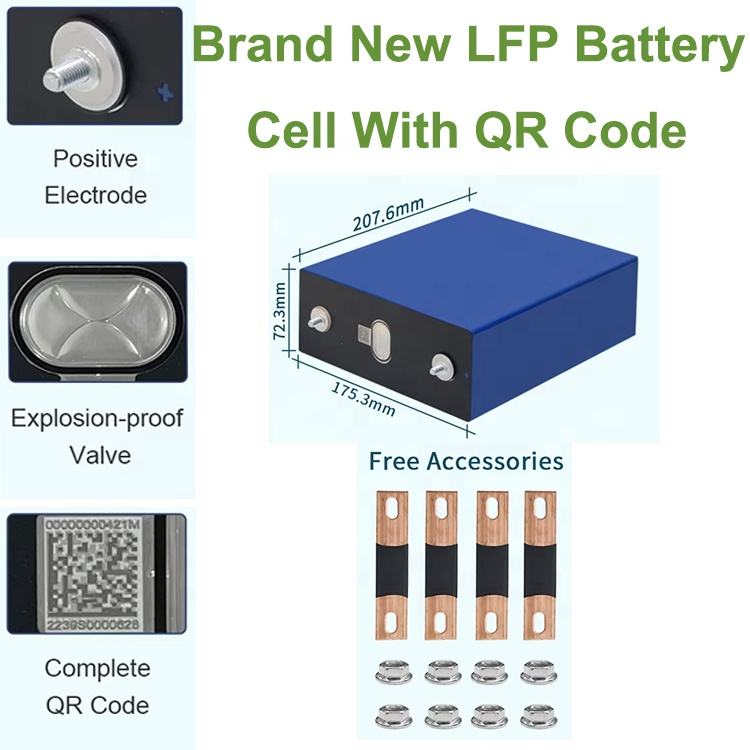
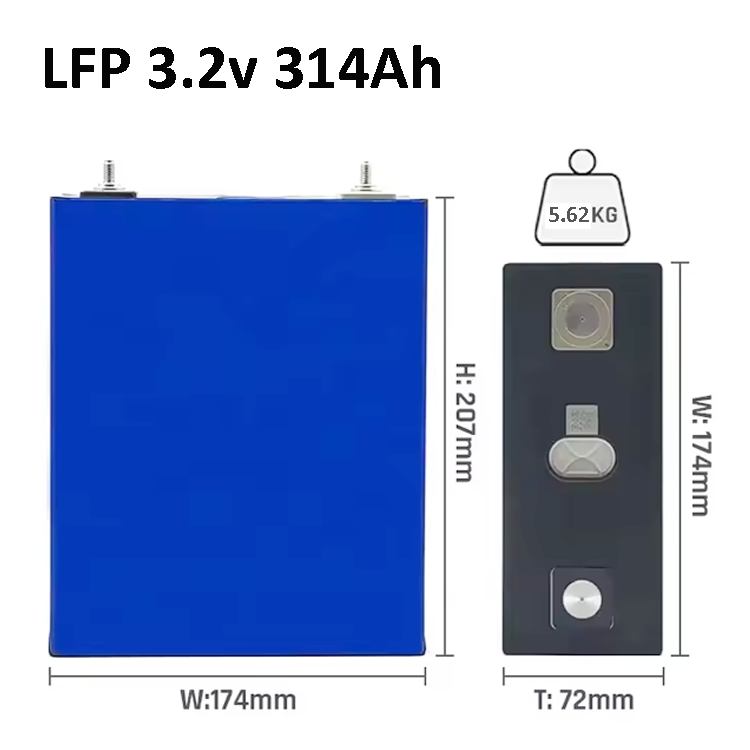
| Length | ~174mm |
| Width / Thickness | ~71mm |
| Height (with terminal) | ~207mm |
| Weight | ~5.5kg (approx.) |
| Terminal Type | M6 threaded stud |
| Case Format | Aluminum prismatic shell |
Note: Verify exact dimensions from the current batch datasheet before designing compression frames or enclosures. Minor dimensional revisions occur between production generations.
[IMAGE SUGGESTION: Dimensional drawing of HiTHIUM 314Ah cell with labeled length, width, height, and terminal spacing]
Alt text: HiTHIUM 314Ah LiFePO4 prismatic cell dimensional drawing with terminal spacing and size labels
| Parameter | Range |
|---|---|
| Charge Temperature | 0°C to 45°C |
| Discharge Temperature | -20°C to 60°C |
| Storage Temperature | -10°C to 35°C (recommended) |
| Recommended Storage SOC | 30–50% for long-term storage |
| Parameter | Value |
|---|---|
| Rated Cycle Life | 6,000+ cycles (to 80% SOH) |
| Test Conditions | 1C/1C, 100% DOD, 25°C ±2°C |
| EOL Definition | 80% of initial capacity |
Cycle life is always tied to test conditions. The published figure above applies at 1C charge/discharge, full depth of discharge, and room temperature. In a real residential ESS running at 0.5C and 80% DOD, you can reasonably expect longer service life than the rated number.
High temperature, high C-rate, and deep cycling all accelerate degradation. Design your system to stay within comfortable operating margins.
📄 [Download HiTHIUM 314Ah Cell Datasheet (PDF)]
📋 [Request Latest Batch Datasheet and Test Report]
The HiTHIUM 314Ah cell is a large-format prismatic cell. Its footprint is designed to fit standard ESS rack and cabinet enclosures. Before finalizing any enclosure or compression frame design, pull the current batch datasheet and verify dimensions — small changes between production generations can affect fit.
[IMAGE SUGGESTION: Labeled dimensional drawing showing cell length, width, height, terminal stud position, and terminal-to-terminal spacing]
Alt text: HiTHIUM 314Ah prismatic cell dimension drawing with terminal spacing and mounting reference
Mounting advice:
Getting dimensions right before you order saves significant rework cost:
This is the strongest fit for the HiTHIUM 314Ah cell. A 16S1P configuration gives you a 51.2V / ~16kWh pack — a practical size for a home solar storage system paired with a hybrid inverter.
Common residential configurations:
The cell scales well into commercial applications:
The 314Ah cell is popular with experienced DIY builders and small integrators who want to build custom LFP packs. The large capacity per cell keeps part count manageable, and the prismatic format is well-documented in the DIY community.
The clearest positioning is stationary storage — systems that sit in one place, cycle daily or on demand, and need to last 10+ years.
This cell is not the first choice for high-vibration mobile applications (EV traction, marine propulsion) where cylindrical or pouch cells may be better suited. It can be used in RV house battery applications, but the primary design target is stationary ESS.
LFP cells have a nominal voltage of 3.2V. To reach your target system voltage, you connect cells in series:
| Target Voltage | Cells in Series | Nominal Pack Voltage |
|---|---|---|
| 12V class | 4S | 12.8V |
| 24V class | 8S | 25.6V |
| 48V class | 16S | 51.2V |
| 96V class | 32S | 102.4V |
| Higher voltage | More series cells | Scales linearly |
For most residential solar storage, 16S (48V / 51.2V) is the standard configuration. It matches the input voltage range of most hybrid inverters and gives you ~16kWh per pack from 16 cells.
| Config | Cells | Pack Voltage | Pack Capacity | Pack Energy |
|---|---|---|---|---|
| 4S1P | 4 | 12.8V | 314Ah | ~4kWh |
| 8S1P | 8 | 25.6V | 314Ah | ~8kWh |
| 16S1P | 16 | 51.2V | 314Ah | ~16kWh |
| 16S2P | 32 | 51.2V | 628Ah | ~32kWh |
| 16S4P | 64 | 51.2V | 1,256Ah | ~64kWh |
Adding parallel strings (P) increases capacity and energy. Adding series cells increases voltage. Most residential systems use 16S1P or 16S2P.
[IMAGE SUGGESTION: Simple wiring diagram showing 16S1P configuration with cell numbering, BMS connection points, and positive/negative terminals]
Alt text: 16S1P LiFePO4 battery pack wiring diagram using 16 prismatic cells in series for 48V ESS
A pack is not just cells. Here is what you need to build a complete, safe system:
A few things that experienced pack builders get right from the start:
At 314Ah per cell, a 16S1P pack delivers ~16kWh. To reach the same energy with 100Ah cells, you need 32 cells in a 16S2P configuration. That means:
Large-capacity cells reduce system complexity. That is a real engineering advantage, not a marketing claim.
Fewer cells means:
For a small integrator building 10–20 systems per month, the time savings from fewer cells per pack adds up quickly.
The cost per delivered kWh over a system’s life is what matters, not the upfront cell price. A cell that lasts 6,000 cycles at 80% DOD delivers far more total energy than a cheaper cell that degrades to 70% SOH in 2,000 cycles.
For a 16kWh pack cycling once per day at 80% DOD:
Divide the pack cost by that number and you get a real cost-per-kWh figure. Long cycle life is the single biggest driver of ESS economics.
The market has a lot of cells that are technically LFP but were designed for EV applications, repurposed from EV packs, or manufactured without a clear application target. Those cells may work in stationary storage, but they are not optimized for it.
The HiTHIUM 314Ah cell is designed and marketed specifically for stationary ESS. The cycle-life target, the C-rate optimization, and the quality controls reflect that. For a system that needs to run reliably for 10–15 years, that alignment matters.
LFP chemistry is the safest commercially available lithium chemistry for stationary storage. The reasons are structural:
This is why LFP dominates grid-scale and residential ESS globally. It is not just about cost — it is about the safety profile being appropriate for systems installed in homes and commercial buildings.
Prismatic LFP cells are robust under normal handling. However:
Nail penetration and crush test data, where available, should be requested from the supplier for the specific batch you are purchasing.
HiTHIUM cells typically ship with a QR code label on the cell body. This code links to batch production and test data in HiTHIUM’s traceability system.
What to know:
For any significant order, do not skip incoming inspection. At minimum:
HiTHIUM cells for ESS applications are tested and certified to key international standards. Relevant certifications for the 314Ah cell include:
| Certification | Scope |
|---|---|
| IEC 62619 | Safety requirements for secondary lithium cells and batteries for use in industrial applications |
| UL 9540A | Test method for evaluating thermal runaway fire propagation in battery energy storage systems |
| UL 1973 | Standard for batteries for use in stationary, vehicle auxiliary power, and light electric rail applications |
| UN 38.3 | Transportation testing for lithium batteries (required for air and sea freight) |
Always request current certification documents for the specific SKU and production batch you are purchasing. Certifications are issued to specific product versions and may not automatically apply to all variants.
Certifications are not just paperwork. They matter for:
If you are building a system for a commercial customer or a permitted residential installation, verify certifications before committing to a supply source.
HiTHIUM 314Ah cells are typically packaged as follows:
Packaging protects against terminal shorts and physical damage during transit. Inspect packaging on arrival before signing off on delivery.
| Order Type | Notes |
|---|---|
| Single sample | Available for qualification testing |
| Small batch (10–50 cells) | Suitable for prototype pack builds |
| Project quantity (100–500+ cells) | Standard project order |
| Container / pallet orders | Full container pricing available |
Contact us to discuss your specific quantity and project requirements.
| Method | Notes |
|---|---|
| Sea freight | Standard method for bulk orders; most cost-effective for large quantities |
| Rail freight | Available for certain trade lanes (e.g., China–Europe) |
| Air freight | Restricted for lithium batteries; limited to small quantities with proper documentation |
| DDP / FOB / EXW | Multiple Incoterms available depending on destination and order size |
UN 38.3 documentation is required for all lithium battery shipments. We provide full shipping documentation with orders.
Busbars and insulation hardware are not included in the standard cell package unless specified at order.
| Accessory | Notes |
|---|---|
| Active balancer | Recommended for multi-parallel string configurations |
| BMS | 16S, 8S, or 4S options available; specify current rating |
| Compression kit | End plates and threaded rod hardware for prismatic cell stacks |
| Metal battery box / enclosure | Available for 8S and 16S configurations |
| Busbar upgrade kit | Thicker copper busbars for high-current applications |
It is a single cell. One cell gives you 3.2V and 314Ah. To build a usable battery pack, you connect multiple cells in series to reach your target voltage. For a 48V system, you need 16 cells in series. See Section 8 for full pack-building guidance.
ESS. The HiTHIUM 314Ah cell is designed and optimized for stationary energy storage — solar storage, grid backup, and similar applications. It is not designed for EV traction use. The large prismatic format, low C-rate optimization, and cycle-life target all point to stationary duty.
LF314 is a shorthand model code. LF stands for LiFePO4 (the chemistry), and 314 refers to the nominal capacity in amp-hours. You will see this code used in technical documents and some reseller listings. It refers to the same cell as the HiTHIUM 314Ah.
The nominal rating is 314Ah. Some sellers advertise higher numbers because cells can test above nominal at low discharge rates and room temperature. A 314Ah cell may measure 318–322Ah under favorable test conditions. Some sellers use the higher tested figure as their headline number. For system design, always use 314Ah as your planning figure.
16 cells in series gives you a 51.2V nominal pack (16 × 3.2V). This is the standard configuration for residential ESS and most hybrid inverter systems. One 16S1P pack delivers approximately 16kWh.
Cells sourced through authorized channels ship with original HiTHIUM QR codes and batch test data is available on request. If traceability is important for your project, confirm the supply chain and request batch documentation before ordering.
Yes, cells supplied through this page are Grade A — new, unused cells from current production. Grade A means the cells meet the manufacturer’s full specification for capacity, internal resistance, and appearance. If you are comparing suppliers, ask specifically whether cells are Grade A new production or whether they are graded from tested EV or ESS packs.
The HiTHIUM 314Ah cell is certified to IEC 62619, UL 9540A, UL 1973, and UN 38.3. Current certification documents are available on request. See Section 11 for details.
Yes. Solar storage is one of the primary applications. The cell is well-suited for daily cycling in solar storage systems paired with hybrid inverters. A 16S1P configuration gives you ~16kWh, which is a practical size for residential solar storage.
For a 16S pack using 314Ah cells, you need a 16S BMS rated for your maximum continuous current. For a standard residential ESS running at 0.5C, that is approximately 157A continuous. Size the BMS to at least that rating, with headroom for peak current. Common choices are 16S 200A or 16S 300A BMS units depending on your inverter’s max charge/discharge current.
Prismatic LFP cells require controlled lateral compression to maintain capacity and cycle life. Typical compression pressure is in the range of 10–30 PSI on the cell face. Use end plates and threaded rods (or a purpose-built compression frame) to apply even pressure across the cell stack. Do not rely on the enclosure alone to provide compression — it is not designed for that purpose.
Yes. For project and container orders, we can supply cells from matched production batches with consistent internal resistance and capacity. Specify your matching requirements when requesting a quote.
Request a Quote for HiTHIUM 314Ah Cells


Golf Cart Batteries Solar Batteries
Commercial Batteries
Mobility Scooter Batteries
Heated LiFePO4 Batteries
Wheelchair Batteries
Marine Starter Batteries
Lawn Mower Batteries
Semi Truck Batteries
Heavy Duty Truck Batteries
Yellow Iron Equipment Batteries
Motorcycle Batteries
ATV Batteries
Jet Ski Batteries
Snowmobile Batteries
Side by Side/UTV Batteries


