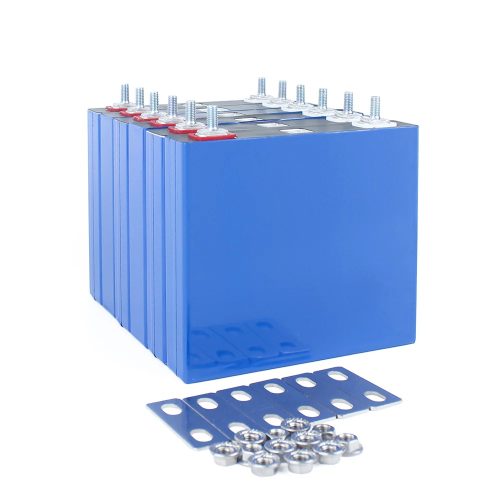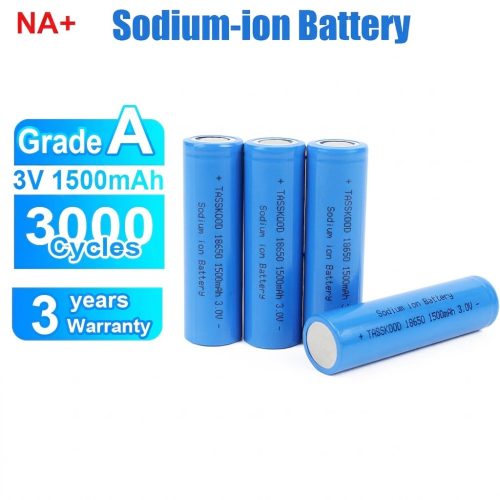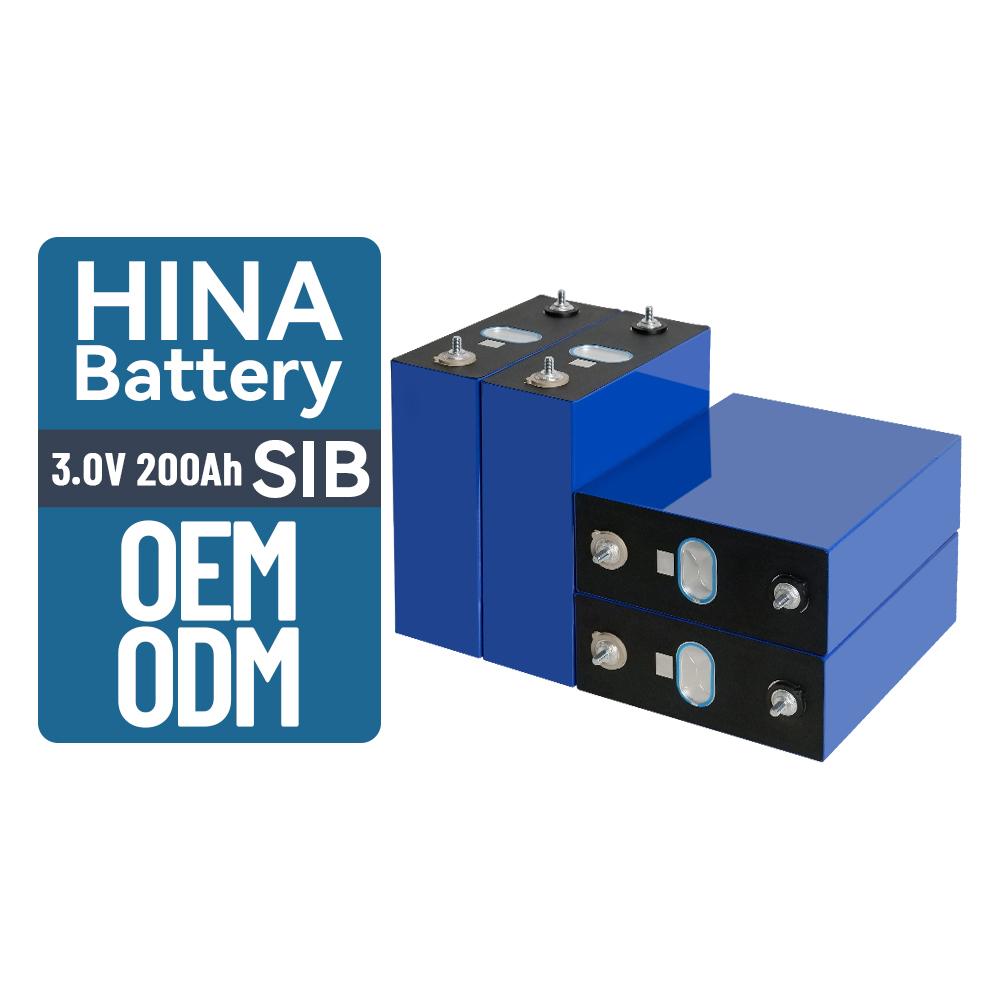
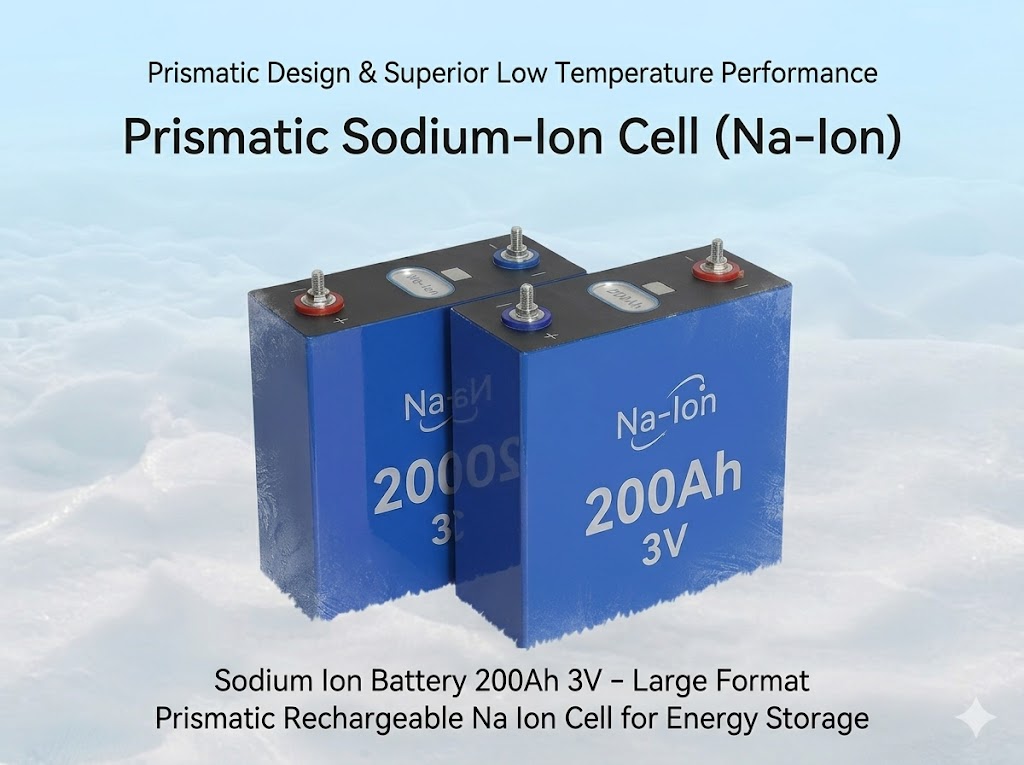
This is a 3V 200Ah Sodium Ion Battery built for energy storage applications. It uses rechargeable Na ion battery technology in a prismatic format — one of the more practical large-format cell designs available today for integrators building packs from scratch.
If you’re working on a solar storage system, a stationary ESS rack, or a custom OEM battery pack, this 200Ah 3V sodium battery is worth a serious look. It’s a rechargeable sodium ion battery cell that handles deep-cycle daily use without the supply-chain headaches tied to lithium-based chemistries.
This cell is aimed at engineers, system integrators, and procurement teams who want a stable, large-capacity sodium ion battery cell with consistent batch quality and transparent specs.
Sodium-ion (Na-ion) batteries work on the same basic principle as lithium-ion batteries — ions shuttle between electrodes during charge and discharge. The key difference is the charge carrier: sodium instead of lithium.
Sodium is abundant, widely distributed, and cheaper to source than lithium. That changes the cost structure for large-format cells significantly. It also enables electrode materials that avoid cobalt and nickel — two of the most problematic materials in conventional lithium-ion chemistry.
This matters for buyers thinking long-term. An energy storage sodium battery solution built on Na-ion chemistry isn’t dependent on the same raw material constraints that have caused price spikes and supply disruptions in the lithium market.
Na-ion technology has matured considerably over the past few years. Cycle life, energy density, and low-temperature performance have all improved to the point where Na-ion is a genuine option for stationary storage — not just a research curiosity.
This product is a 200Ah 3V sodium battery in prismatic cell format. Here’s what that means in practical terms:
This is not a consumer product. It’s a cell component. Buyers integrate it into multi-cell packs using a BMS, busbars, and an enclosure. If you’re building a 48V system, for example, you’d configure 16 cells in series. If you need higher capacity, you add parallel strings.
Sodium-ion cells share a lot with lithium-ion in terms of cell construction. Both use a cathode, an anode, a separator, and an electrolyte. The ion transport mechanism is the same. The difference is chemistry:
| Feature | Sodium-Ion | Lithium-Ion |
|---|---|---|
| Charge carrier | Na⁺ | Li⁺ |
| Cathode material | Layered oxide / Prussian blue analog | LFP / NMC / NCA |
| Anode material | Hard carbon | Graphite / silicon |
| Nominal cell voltage | ~3.0–3.2V | ~3.2–3.7V |
| Raw material risk | Low (sodium abundant) | Higher (lithium, cobalt) |
| Low-temp performance | Strong | Varies by chemistry |
| Safety profile | Favorable | Varies by chemistry |
For stationary storage applications, the slightly lower energy density of Na-ion compared to NMC lithium-ion is not a significant drawback. Weight and volume constraints are less critical in ground-mounted or rack-mounted ESS. What matters more is cycle life, cost per kWh over the system lifetime, and supply chain reliability.
Buyers searching for a large-capacity sodium-ion cell are typically making a deliberate decision to move away from lithium dependency — either for cost reasons, supply chain reasons, or both.

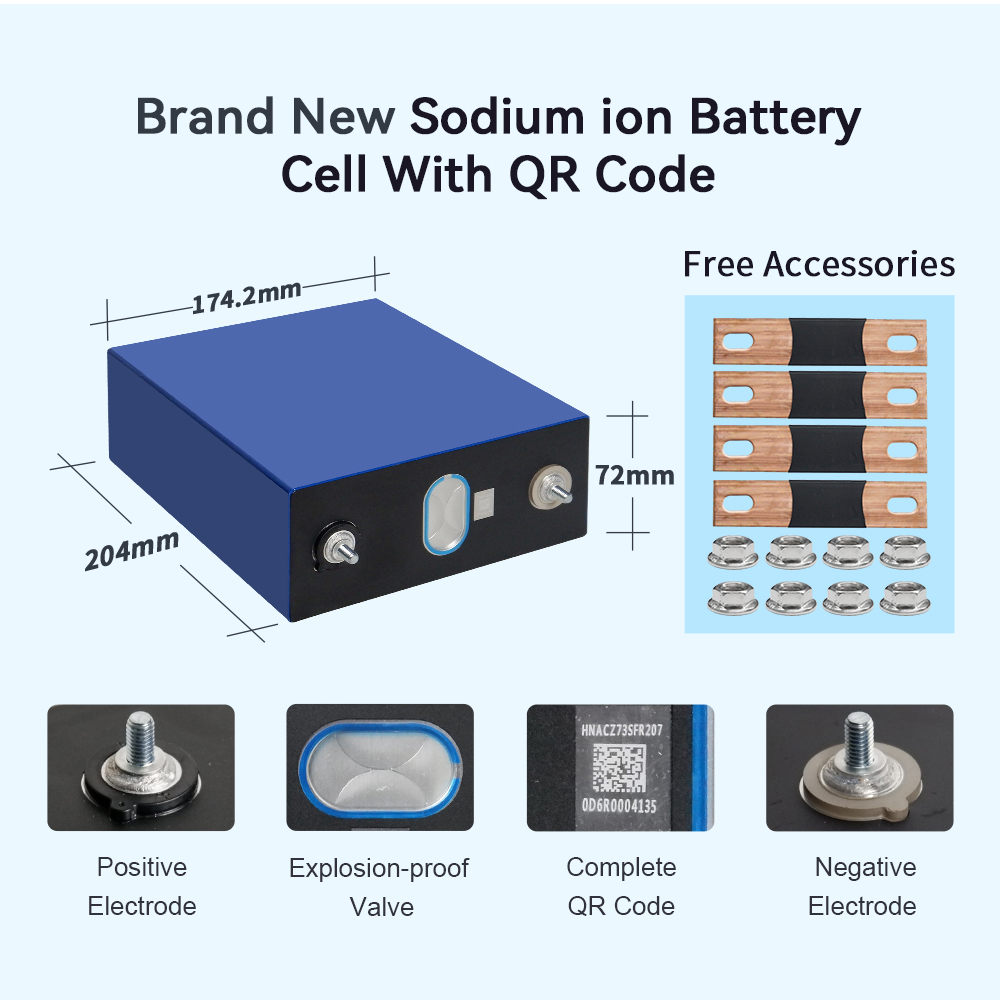
The 200Ah sodium ion prismatic cell uses a hard-case prismatic design. This is the most common format for large-capacity stationary storage cells.
Prismatic cells are preferred in ESS design for several reasons:
The 3V sodium ion prismatic battery format is used here specifically because it aligns with standard battery pack architectures. A 3V cell can be stacked into 12V, 24V, 48V, or higher configurations depending on the number of cells in series.
The 3V 200Ah Na Ion Battery Cell is available for both sample evaluation and bulk orders.

At 200Ah, this is a genuine high capacity 200Ah sodium battery. A single cell stores 600Wh (3.0V × 200Ah) of usable energy. That’s meaningful capacity per unit — fewer cells needed to hit a target kWh versus smaller-format cells.
This reduces:
For integrators building 10kWh to 100kWh systems, using large-format 200Ah cells is more economical than building with smaller cylindrical or pouch cells.
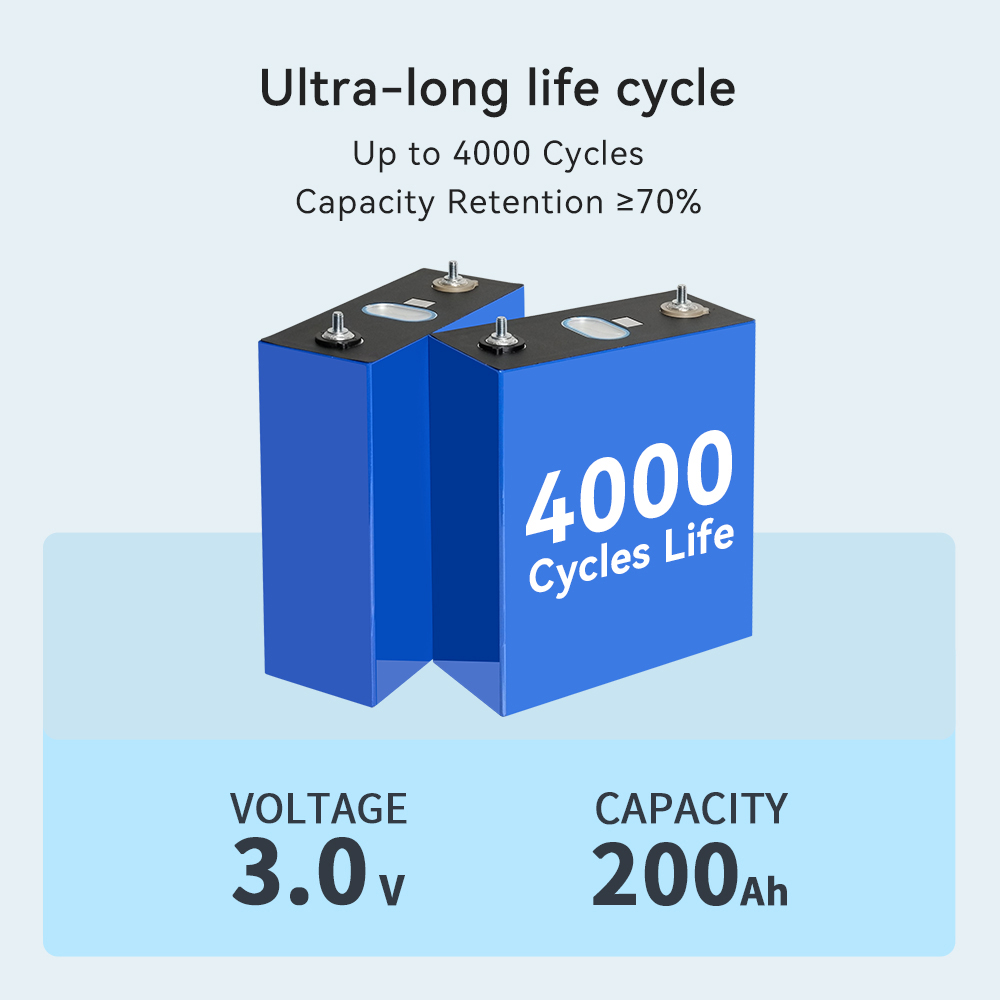
This cell is designed as a rechargeable sodium ion battery cell rated for thousands of charge-discharge cycles. It is not a primary (single-use) cell.
Long service life sodium ion battery performance means your system continues delivering usable capacity over years of daily cycling. The cycle life rating is determined under controlled test conditions — see the Specifications section for exact figures.
The rechargeable energy storage battery design is optimized for:
The prismatic structure sodium battery design keeps the internal electrode stack under consistent mechanical compression throughout its service life. This matters for long-term performance.
Electrode expansion and contraction during cycling is a real degradation mechanism. A well-designed prismatic case constrains that movement. The result is a stable performance sodium battery cell that degrades more predictably than less constrained formats.
Consistent mechanical structure also means consistent internal resistance from batch to batch — important when you’re matching cells for pack assembly.
This cell is designed explicitly for pack integration. Terminals are sized and positioned for standard busbar configurations. Cell-to-cell spacing in a rack or module follows normal prismatic pack design rules.
Pack configurations using this cell:
| System Voltage | Cells in Series |
|---|---|
| 12V nominal | 4S |
| 24V nominal | 8S |
| 48V nominal | 16S |
| 96V nominal | 32S |
Parallel strings increase total capacity. A 16S2P configuration gives you 48V at 400Ah — 19.2kWh from 32 cells.
This cell is a practical battery cell for custom battery pack designs. It works with standard prismatic cell holders, compression fixtures, and BMS modules designed for large-format cells.
Safe sodium ion battery chemistry is one of the primary reasons system designers consider Na-ion for stationary storage. The cathode materials used in current sodium-ion cells generally operate at lower temperatures under stress conditions compared to NMC lithium-ion.
The hard-case prismatic format adds a layer of physical protection. Combined with a well-configured BMS, this cell design supports reliable, long-term operation in fixed installation environments.
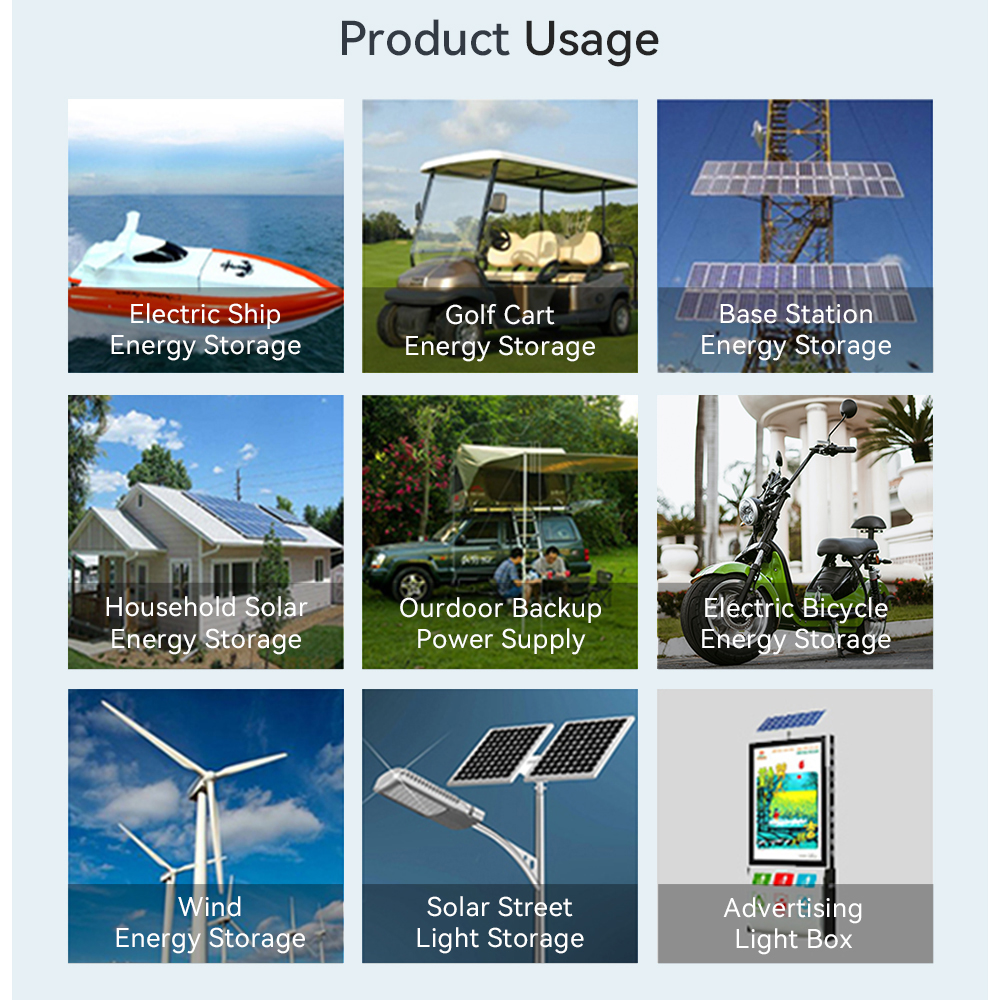
This cell is not a general-purpose cell. It’s sized, formatted, and rated specifically for:
Wide application sodium battery cell design means it integrates into standard rack-mount ESS enclosures and custom battery box designs without modification.

| Parameter | Value |
|---|---|
| Battery Chemistry | Sodium-Ion (Na-Ion) |
| Cell Type | Rechargeable, Secondary Cell |
| Nominal Voltage | 3.0V |
| Nominal Capacity | 200Ah |
| Nominal Energy | 600Wh |
| Charge Voltage | 4.0V |
| Discharge Cut-Off Voltage | 2.0V |
| Standard Charge Current | 100A |
| Max Charge Current | 200A |
| Continuous Discharge Current | 200A |
| Peak Discharge Current | 600A |
| Internal Resistance | 1mΩ |
Note: Request the full technical datasheet for complete electrical parameters. Values for charge voltage, cutoff voltage, and current ratings are chemistry- and batch-specific. Do not operate this cell outside the specified voltage window.
| Parameter | Value |
|---|---|
| Cell Format | Prismatic Cell Design |
| Case Material | Aluminium Alloy |
| Terminal Type | M6 |
| Cell Dimensions (L × W × H) | 173*71*204MM |
| Cell Weight | 4.90±0.50Kg |
Note: Exact dimensions are critical for pack design. Request the dimensional drawing before finalizing your pack enclosure.
| Parameter | Range |
|---|---|
| Charge Temperature | 0~45℃ |
| Discharge Temperature | -30~60℃ |
| Storage Temperature | -20~25℃ |
| Recommended Storage Humidity | 25-85%R.H. |
| Recommended Storage State of Charge | 30% to 50% |
Note: Operating outside rated temperature ranges accelerates degradation. Na-ion chemistry generally offers wider usable temperature windows than some lithium chemistries — confirm the exact limits in the datasheet before deploying in extreme environments.
| Parameter | Value |
|---|---|
| Cycle Life | 4000 |
| Test Conditions | 0.5C,25±3℃ |
| Depth of Discharge (DoD) at Rated Cycles | 80% |
| Capacity Retention at EOL | [See Datasheet] |
Note: Cycle life figures are measured under specific test conditions. Real-world cycle life depends on operating temperature, depth of discharge, charge and discharge rates, and BMS configuration. Request the full cycle life test report if this is a specification-critical application.
The core advantage of this cell is straightforward: you get a large capacity sodium ion battery cell that integrates directly into stationary ESS applications, without depending on lithium supply chains.
For system developers who have been tracking lithium carbonate and lithium hydroxide price volatility, Na-ion is a hedge. The raw materials — sodium compounds, hard carbon, iron-based cathode materials — are geographically diverse and not subject to the same extraction bottlenecks.
Why this matters for buyers:
A stable high capacity sodium cell at 200Ah simplifies ESS system architecture. You’re building larger packs with fewer individual components.
Compare the cell count for a 48V/200Ah (9.6kWh) system:
| Cell Format | Cell Voltage | Cells in Series | Capacity per String | Parallel Strings | Total Cells |
|---|---|---|---|---|---|
| This cell (200Ah) | 3V | 16S | 200Ah | 1P | 16 |
| 50Ah prismatic | 3V | 16S | 50Ah | 4P | 64 |
| 100Ah prismatic | 3V | 16S | 100Ah | 2P | 32 |
Fewer cells means fewer connections, simpler BMS wiring, and less potential for cell mismatch. That directly reduces integration labor and long-term maintenance complexity.
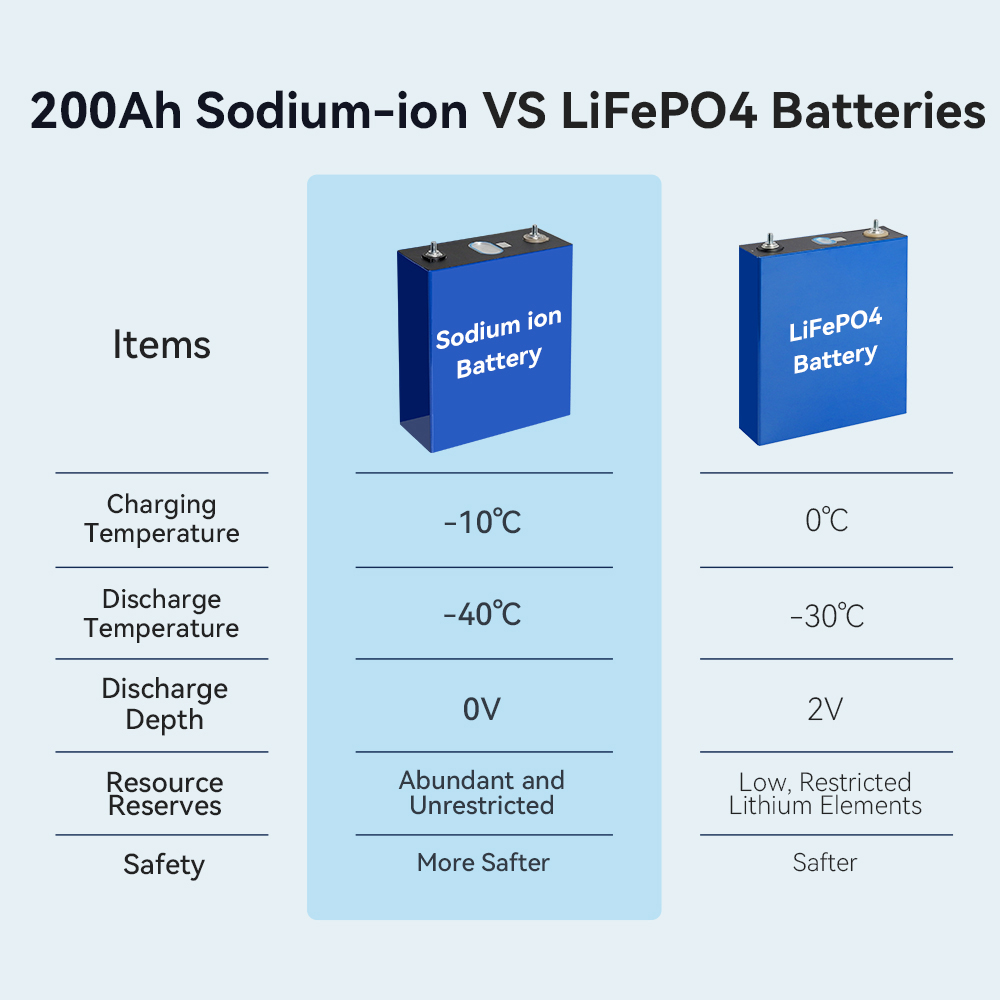
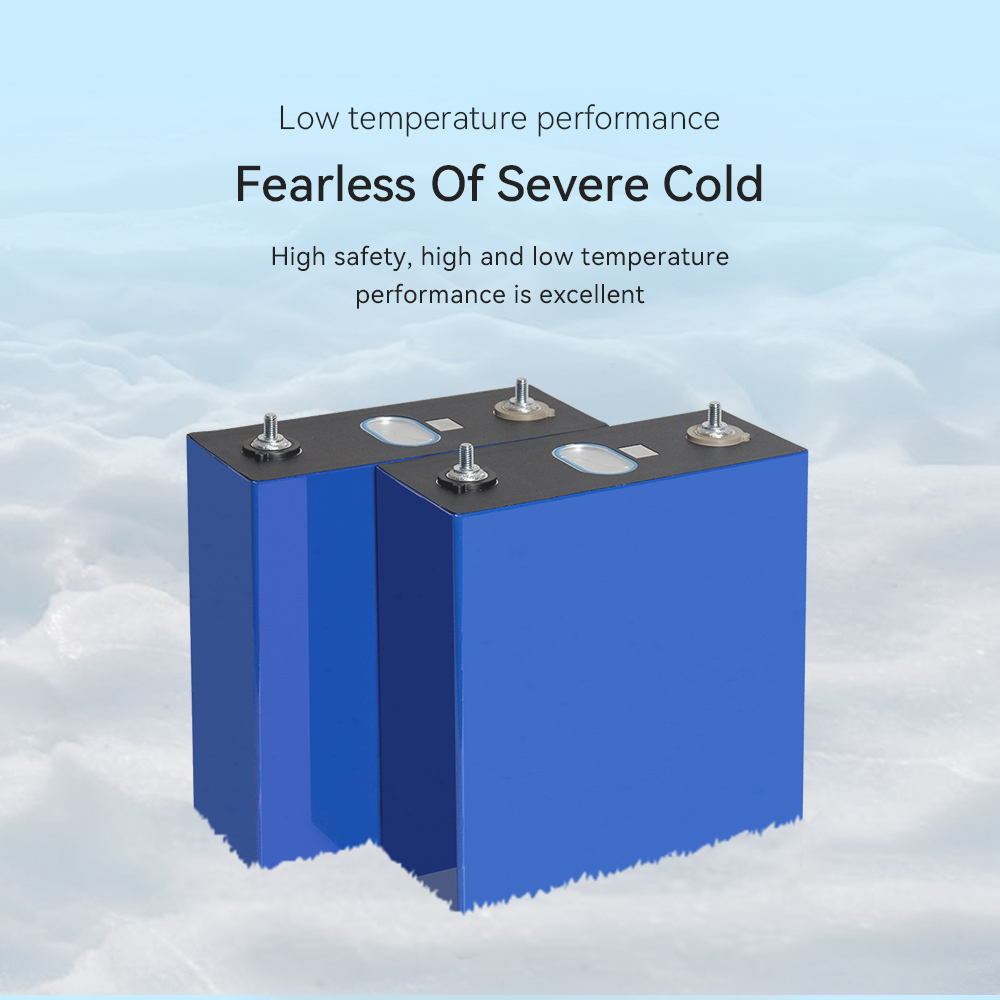
Low temperature performance sodium battery is one of the more practically useful properties of Na-ion chemistry.
Sodium-ion cells generally retain usable capacity at sub-zero temperatures better than standard lithium-ion chemistries. Hard carbon anodes — typical in Na-ion cells — don’t suffer from the same lithium plating risk at low temperatures that limits how aggressively you can charge LFP or NMC cells in cold weather.
This makes Na-ion a realistic choice for:
Confirm the exact low-temperature capacity retention curve in the datasheet for your specific deployment conditions.
A long cycle life battery cell reduces total cost of ownership in a stationary storage application. The cost metric that matters in ESS is cost per kWh cycled — not cost per kWh installed.
If a cell delivers rated capacity for [X] cycles before reaching 80% capacity retention, the effective cost per kWh cycled is:
(Cell cost ÷ Total kWh over cycle life) = Cost per kWh cycled
Long cycle life sodium ion battery performance directly reduces this number. Systems that cycle daily need cells that can sustain that workload for years without premature capacity fade.
High safety energy storage cell design is a priority in any installation that operates near people or inside a building. Na-ion chemistry has inherent safety characteristics that make it suitable for stationary applications:
Combine that with a hard-case prismatic housing and a properly configured BMS, and you have a reliable prismatic sodium cell that is appropriate for occupied building installations and utility-scale outdoor racks alike.
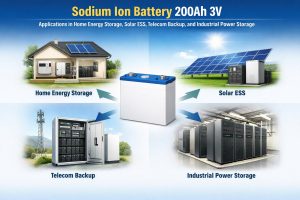
Sodium ion battery for home energy storage systems typically require 5kWh to 20kWh of usable capacity. This 200Ah 3V cell fits directly into home ESS designs:
Home ESS buyers value this cell for its rechargeable energy storage battery reliability and straightforward integration into standard 48V residential inverter systems.
Sodium battery cell for solar storage applications cycle once or twice per day — charge from the array during daylight, discharge overnight or during grid outages. This usage profile favors long cycle life and stable capacity retention over time.
A 3V 200Ah sodium battery for solar system integration:
For larger solar installations, multiple 16S strings in parallel build up the capacity without increasing system voltage.
Sodium ion battery for off-grid system deployments need cells that handle deep discharge, irregular charging patterns, and wide temperature swings. Off-grid users typically discharge to 80–90% DoD regularly.
This cell’s large base capacity means the system holds meaningful energy reserves even after years of heavy cycling. Off-grid cabins, remote monitoring stations, and rural electrification projects are practical use cases.
Key advantage here: A large capacity rechargeable sodium battery reduces how often users run backup generators to supplement a low battery bank.
Many buyers for this cell are engineers or technically experienced builders assembling custom packs. A rechargeable 3V 200Ah sodium battery cell works well in DIY pack contexts because:
What you need alongside this cell:
Sodium ion battery for telecom backup and sodium ion battery for industrial energy storage applications require cells that operate reliably in harsh environments — wide temperature ranges, infrequent maintenance cycles, and mission-critical availability requirements.
This cell’s wide application sodium battery cell design makes it suitable for:
Sodium ion battery for UPS backup specifically benefits from Na-ion’s favorable behavior at elevated temperatures — common in equipment rooms and telecom shelters.
Beyond standard ESS categories, this cell supports a range of custom applications:
The prismatic sodium ion cell for ESS design is documented and repeatable — consistent enough for production programs, not just one-off builds.
The honest answer is that not every project should use Na-ion. It’s worth stating that clearly.
If you need maximum energy density in a weight- or space-constrained application, NMC lithium-ion still leads. If your system operates exclusively in controlled indoor environments and lithium supply and pricing are stable for your procurement window, LFP remains a practical option.
Why choose 3V 200Ah sodium battery specifically for energy storage projects:
Large pack designs benefit from large-format cells. A wholesale sodium ion battery 200Ah 3V order for a 100kWh ESS rack requires far fewer individual cells than a comparable LFP 50Ah cell order.
Fewer cells means:
The prismatic sodium battery cell format is the dominant choice for rack-mount ESS precisely because of these integration advantages.
Why choose prismatic sodium ion cell designs over cylindrical or pouch:
| Format | Pros | Cons |
|---|---|---|
| Prismatic (this cell) | High capacity per unit, rigid structure, bolt terminals, easy busbar integration | Less flexible in form factor |
| Cylindrical | Mature manufacturing, good thermal management | High cell count for large packs, spot-weld connections |
| Pouch | Lightweight, flexible form factor | Requires external compression, softer terminals |
For stationary storage, prismatic wins on integration simplicity at large capacity. A reliable energy storage battery cell in prismatic format holds up mechanically over thousands of cycles without the swelling issues that can affect poorly compressed pouch designs.
OEM buyers need cells that are:
Sodium ion battery for OEM ODM programs require a supplier who can match cell grades, maintain lot traceability, and support design-in engineering. A grade A sodium ion battery cell supply requires sorting, testing, and grading at the manufacturing level — not just shipping whatever comes off the line.
If you’re designing a commercial product around this cell, those factors matter more than the nominal spec sheet alone.
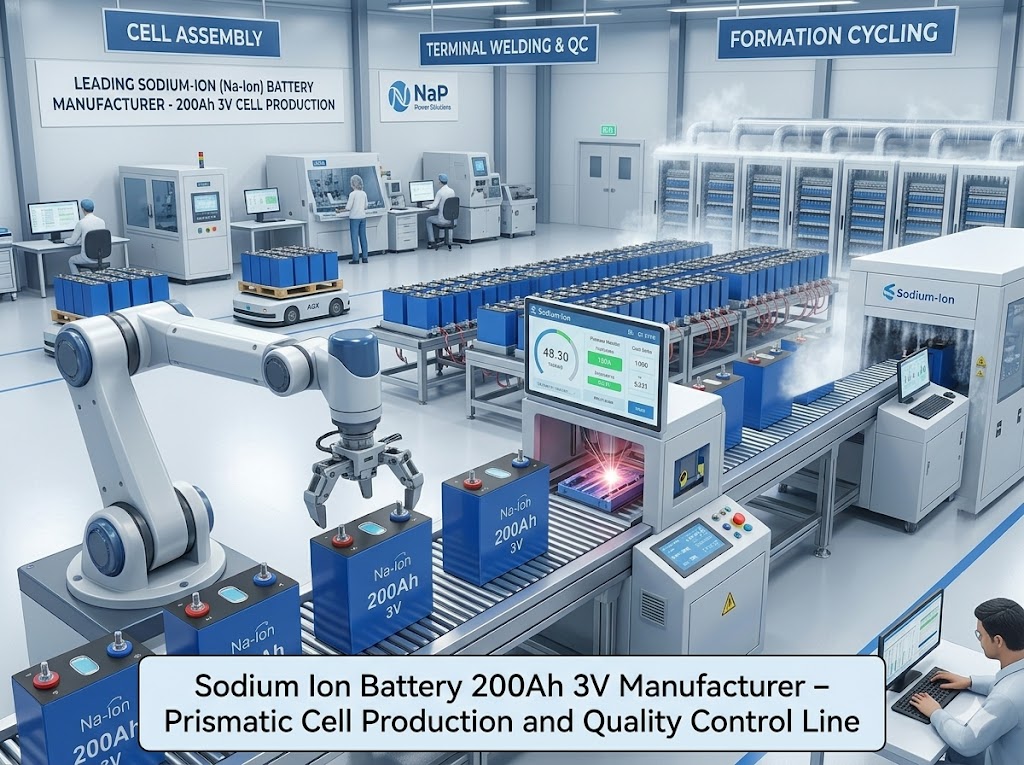
We manufacture the sodium ion battery 200Ah 3V in a dedicated Na-ion cell production facility. This is not a resale or trading operation. We produce the cells, which means we control the materials, process, and quality at the source.
Manufacturing-direct supply has real implications for buyers:
A professional high capacity sodium ion battery manufacturer operates formation, aging, grading, and outgoing inspection in-house — not outsourced to a third party.
Cell production follows a controlled process that includes:
Grade A sodium ion battery cell supply requires that each cell passes a defined acceptance threshold for capacity, internal resistance, and open-circuit voltage before leaving the facility.
Production capacity supports both sample volumes and full commercial production quantities. Lead times vary by order volume and cell specification — contact us for your project timeline.
Every cell is tested before shipment. Testing includes:
Cells are graded and matched before batch shipment. Matched cells reduce the balancing load on your BMS and improve pack performance uniformity.
Batch test reports are available on request. If your application requires traceability, we support lot documentation.
We support sodium ion battery for OEM ODM programs at both the cell level and the module level. OEM support includes:
Custom sodium ion battery solution development timelines depend on the degree of customization required. Contact our engineering team early in your design process.
As a manufacturer-direct sodium ion battery 200Ah 3V supplier, we supply:
Wholesale sodium ion battery cell orders receive priority scheduling and dedicated account support. Volume pricing is available at standard quantity breaks — request a quote with your projected annual volume for accurate pricing.
We do not operate a minimum order quantity that prevents engineering evaluation. If you need two cells to build a prototype, we can support that. If you need a container load, we can support that too.
Buy sodium ion battery 200Ah 3V in quantities that match your actual project need:
| Order Type | Typical Quantity | Lead Time | Purpose |
|---|---|---|---|
| Sample / Evaluation | 1–10 cells | Short | Design verification, testing |
| Development | 10–100 cells | Standard | Prototype build, small pilot |
| Production | 100–1000+ cells | Standard–Long | Commercial ESS deployment |
| Bulk / Wholesale | 1000+ cells | By agreement | Volume OEM / integrator programs |
Contact us to discuss your specific quantity requirements and timeline.
Bulk supply sodium ion battery cell shipments require proper packaging for international transport. We ship with:
We have experience shipping large-format cells to markets in North America, Europe, Southeast Asia, and the Middle East. If your import country has specific battery import documentation requirements, contact us before placing an order so we can prepare the correct paperwork.
Buying a rechargeable 3V 200Ah sodium battery cell isn’t the end of the transaction — it’s the start of a system integration process. We provide:
Prismatic sodium ion cell for ESS buyers who are transitioning from LFP often have questions about BMS voltage settings, balancing strategy, and SOC calibration. Our team can address those questions directly.
It’s a rechargeable single cell using sodium-ion chemistry, formatted as a large prismatic cell. The rated capacity is 200Ah at a nominal voltage of 3.0V, giving 600Wh of energy per cell. It’s designed for multi-cell battery pack assembly — primarily for stationary energy storage applications including home ESS, solar storage, UPS, and industrial backup.
It is not a finished battery module. You need a BMS, busbars, and an enclosure to build a functional battery system from this cell.
The nominal voltage of sodium-ion cells varies slightly depending on chemistry and cathode material. Some Na-ion cells are rated at 3.0V nominal, others at 3.1V or 3.2V. This is similar to how LFP lithium-ion cells are nominally 3.2V but often cited as 3.3V depending on the source.
For pack design purposes, use the voltage window defined in the datasheet — charge voltage (upper cutoff) and discharge cutoff voltage — not just the nominal figure. Configure your BMS to those exact values.
Confirm the actual voltage profile for this cell with our technical team before finalizing your BMS settings.
Yes. This is a secondary (rechargeable) cell designed for repeated charge and discharge cycling. It is rated for thousands of cycles at the rated depth of discharge.
Primary (single-use) sodium batteries are a separate product category entirely. This cell is not that. It requires a BMS to manage charge and discharge boundaries.
Yes. Sodium ion battery for solar energy storage is one of the primary application targets for this cell. Solar ESS systems cycle once per day — charge from the array during daylight, discharge overnight or during outages. This usage pattern is well within the cycle life design of this cell.
The cell handles partial-state-of-charge cycling (common in solar applications) without the accelerated degradation seen in some lithium chemistries under the same conditions.
For a standard 48V solar ESS:
It depends on your target voltage and capacity:
| System Config | Cells in Series | Strings in Parallel | Total Cells | Total Energy |
|---|---|---|---|---|
| 12V / 200Ah | 4S | 1P | 4 | ~2.4kWh |
| 24V / 200Ah | 8S | 1P | 8 | ~4.8kWh |
| 48V / 200Ah | 16S | 1P | 16 | ~9.6kWh |
| 48V / 400Ah | 16S | 2P | 32 | ~19.2kWh |
| 96V / 200Ah | 32S | 1P | 32 | ~19.2kWh |
Use these as starting points. Your BMS and inverter specifications will determine the exact configuration.
Yes. The cell voltage (3.0V nominal) is the building block. You set system voltage by choosing how many cells to connect in series:
Most stationary ESS applications use 48V as the battery bank voltage, paired with a 48V inverter-charger. This is the most common configuration for systems from 5kWh to 50kWh.
Larger systems (100kW+) typically use higher voltage strings (96V, 192V, or higher) to reduce current and cable sizing requirements.
This cell covers a wide range of stationary energy storage applications:
Sodium ion battery vs lithium ion battery in these applications: Na-ion is competitive on cycle life cost and supply chain stability. LFP still leads on energy density per kg, but for stationary applications where weight is not the primary constraint, Na-ion is a strong alternative.
Evaluate any sodium ion battery 200Ah 3V manufacturer on these criteria:
Request samples before committing to a production order. Test them yourself under your actual operating conditions. A reliable supplier will have no problem with that.
Ready to evaluate or source the sodium ion battery 200Ah 3V for your project?
We support:
To get an accurate quote, please share:
Contact our team via the form below or reach out directly to our sales and engineering department. We respond to technical inquiries within one business day.
This product page covers the Sodium Ion Battery 200Ah 3V prismatic cell for energy storage applications. Specifications are subject to confirmation — request the current datasheet for exact electrical, physical, and performance parameters before finalizing your system design.