

M12 Stud Terminals · Copper Busbar Included · Fast Charging · Wide Temperature Range · 10-Year Warranty
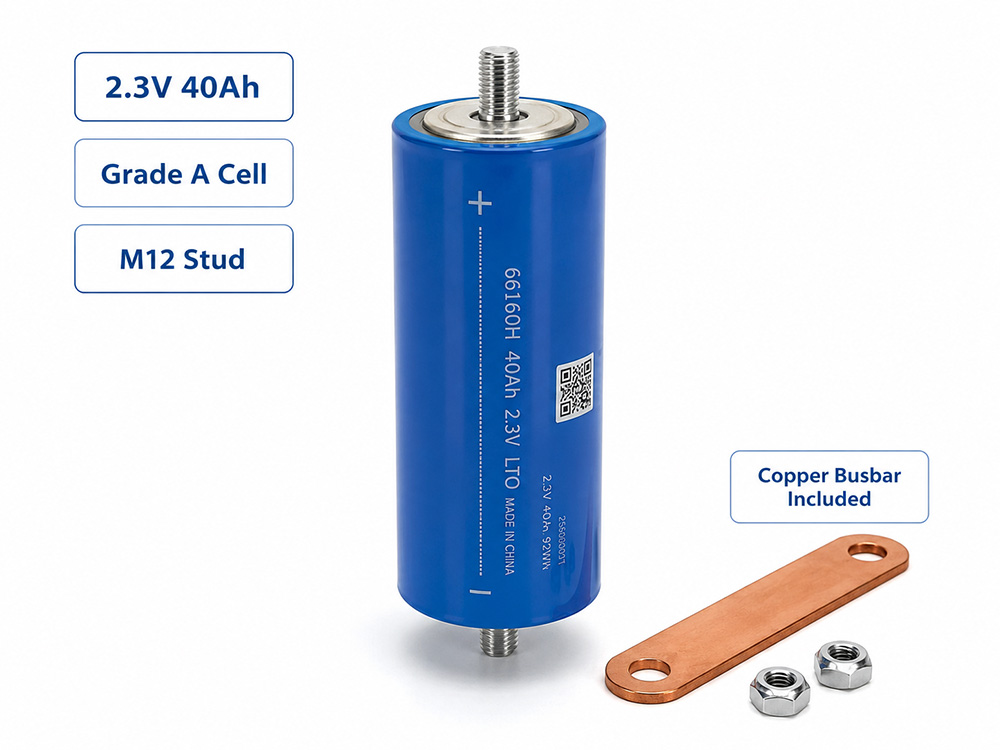
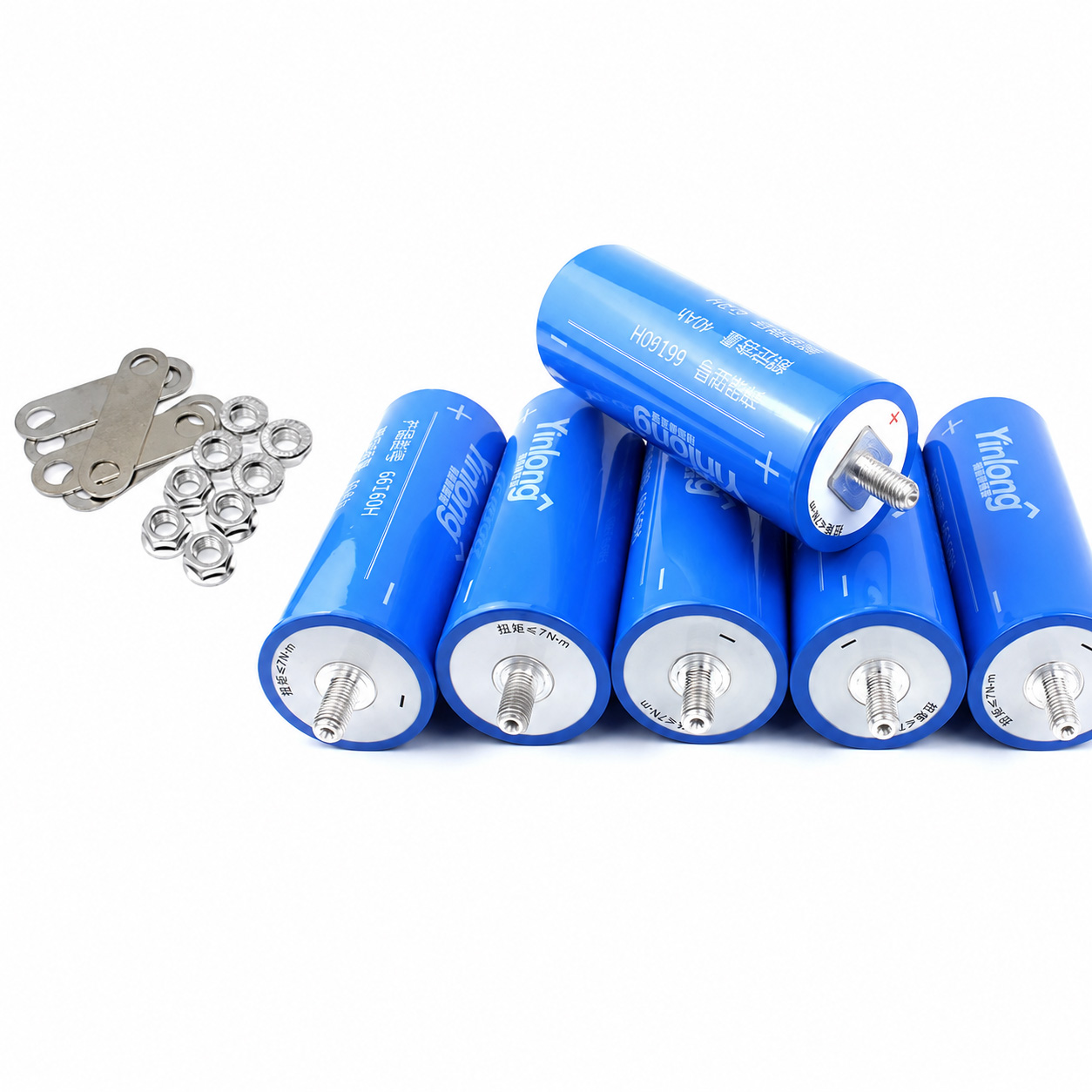
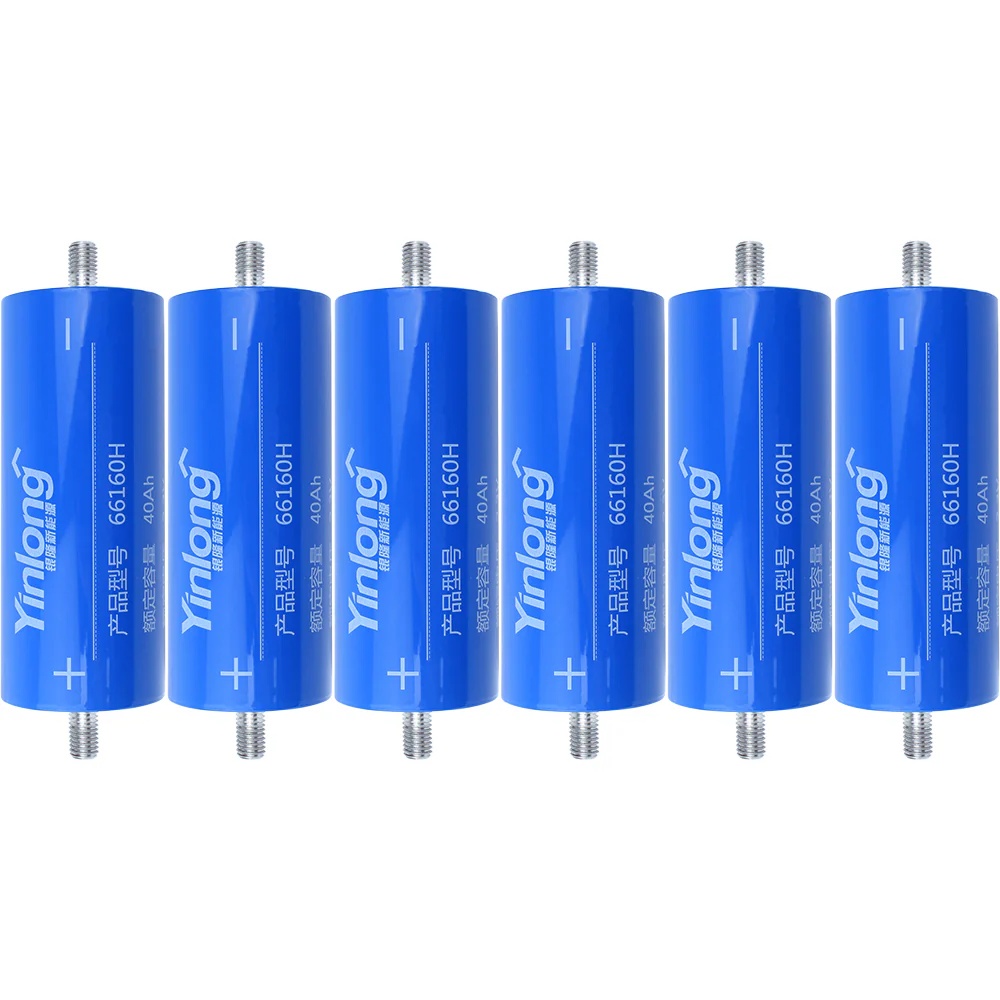
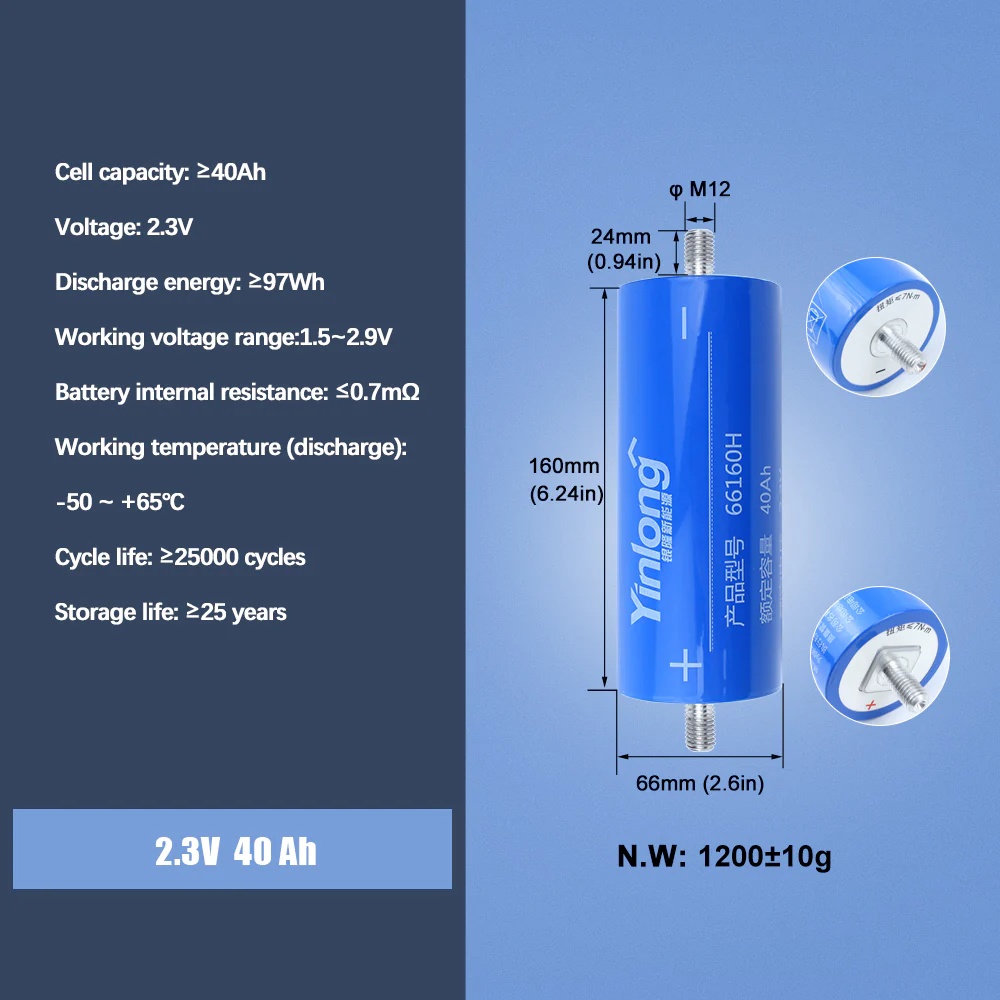
The Yinlong 66160 is a cylindrical lithium titanate (LTO) cell rated at 2.3V and 40Ah. Its model number comes from its dimensions: 66mm in diameter, 160mm long. The shell is aluminum.
Unlike most lithium cells, which use a graphite anode, LTO uses a lithium titanate oxide anode. The trade-off is straightforward: you give up some energy density, and in return you get a significantly faster charge rate, a much longer cycle life, and the ability to charge in temperatures well below freezing. For applications where those three things matter, LTO is often the better choice.
This is a single bare cell, not a finished battery pack. It’s designed for builders who know how to design, balance, wire, and protect a custom pack.
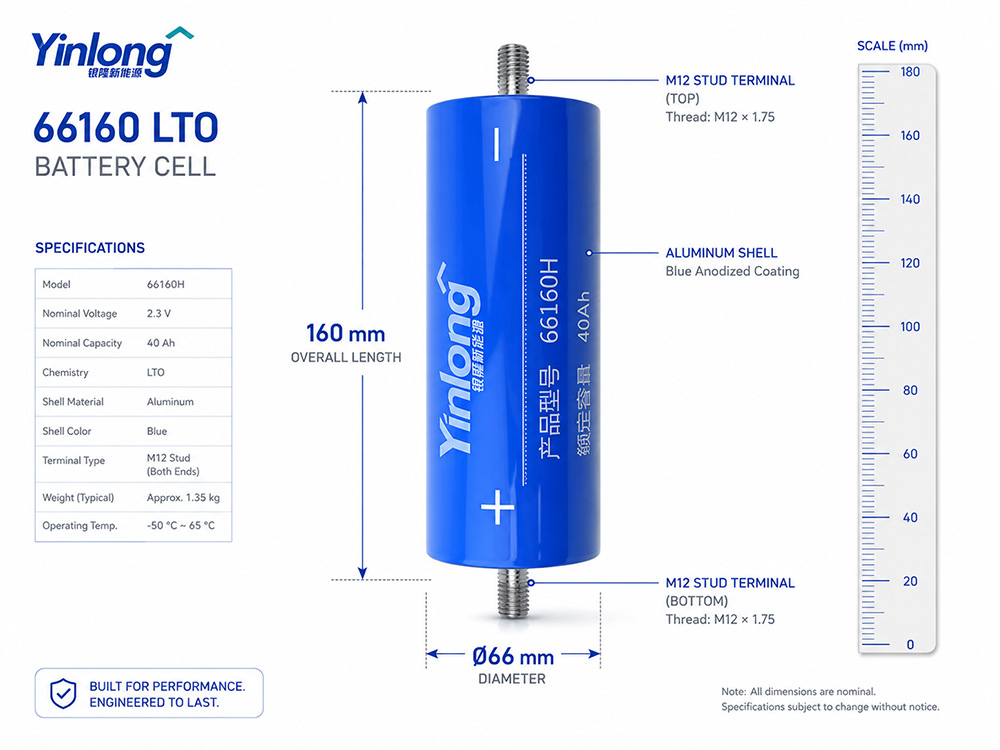
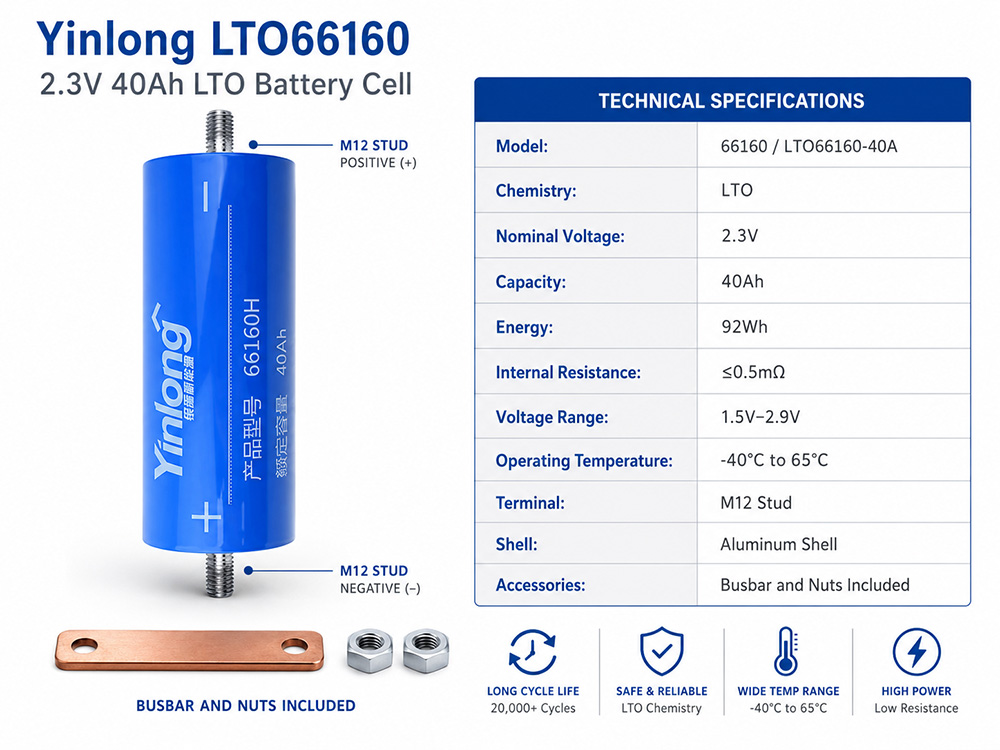
| Item | Specification |
|---|---|
| Model | LTO66160-40A / 66160 |
| Chemistry | Lithium Titanate Oxide (LTO) |
| Nominal Voltage | 2.3V |
| Capacity | 40Ah |
| Energy | ~92Wh |
| Internal Resistance | ≤0.5mΩ |
| Voltage Range | 1.5V – 2.9V |
| Operating Temperature | -40°C to 65°C |
| Terminal | M12 Stud |
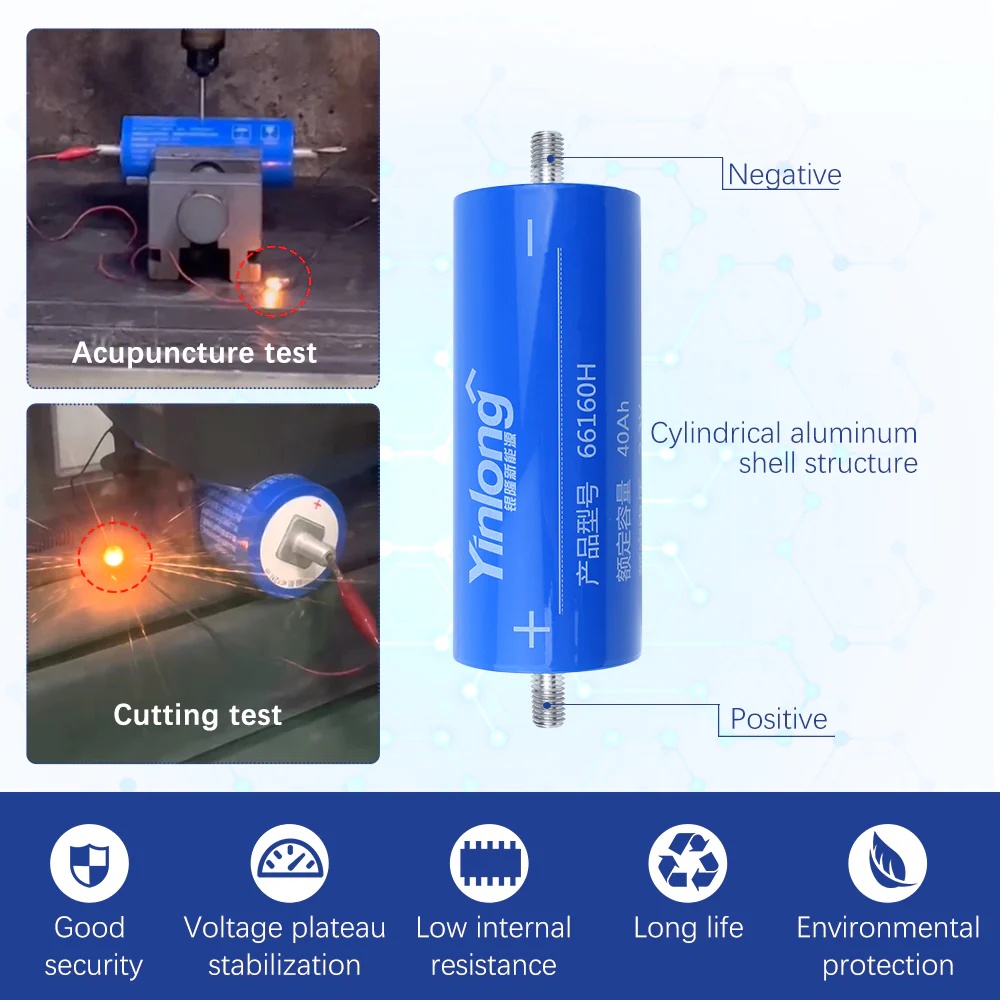
| Form Factor | Cylindrical, Aluminum Shell |
| Included Accessories | 1 copper busbar, 2 M12 nuts per cell |
The ≤0.5mΩ internal resistance is notably low for a cell this size. That keeps heat generation minimal during high-rate charge and discharge — which matters both for performance and for long-term reliability.
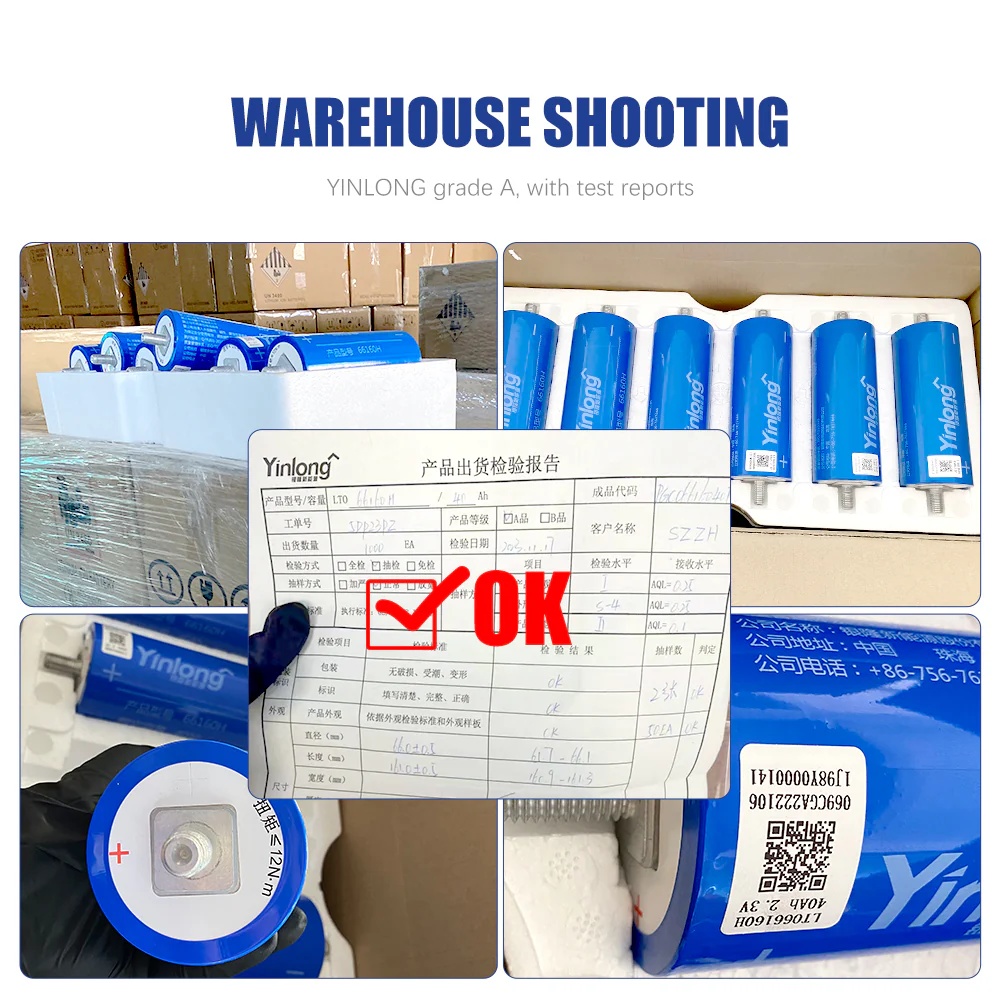
These cells are Grade A and brand new. They haven’t been used, pulled from another pack, or reconditioned.
Each cell has a clear, scannable QR code linked to its production batch. This is useful for two reasons: traceability if a cell ever needs to be tracked back, and confirmation that the cell passed the manufacturer’s full capacity and resistance checks before leaving the factory.
For anyone building packs in volume, consistency matters more than almost anything else. Mixing Grade A new cells with anything else introduces variation that shortens pack life and puts extra load on the BMS.

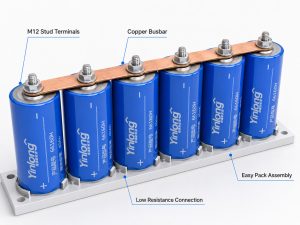
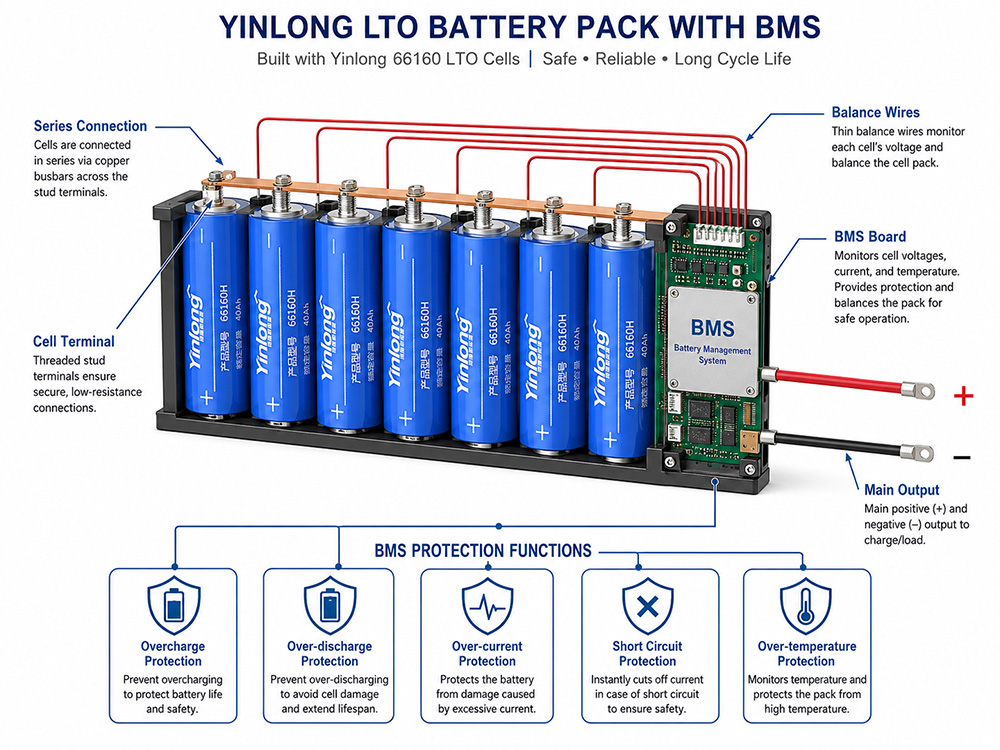
The M12 stud is a practical choice for pack assembly. It’s a heavy thread — enough to hold torque reliably through vibration and temperature swings without working loose over time.
Each cell ships with:
Copper keeps joint resistance low. That matters when you’re pulling high currents, whether in a car audio build or an EV application. The stud design also makes reconfiguration straightforward — you can take a pack apart and reassemble it without damaging the terminals.
LTO’s structural advantage over graphite anodes is that lithium ions can enter and leave the anode without causing the volume changes or plating risks that limit how fast graphite-anode cells can charge. The result is a cell that accepts charge significantly faster without the degradation associated with fast-charging most other lithium chemistries.
Published test results for similar Yinlong cells show charge times as short as six minutes under controlled conditions. Real-world application charge rates will depend on your charger, BMS, and pack configuration, but the point stands: this cell can absorb charge at rates that would damage a comparable LFP cell.
That makes a difference in:

These are the two practical reasons most builders choose LTO over LFP.
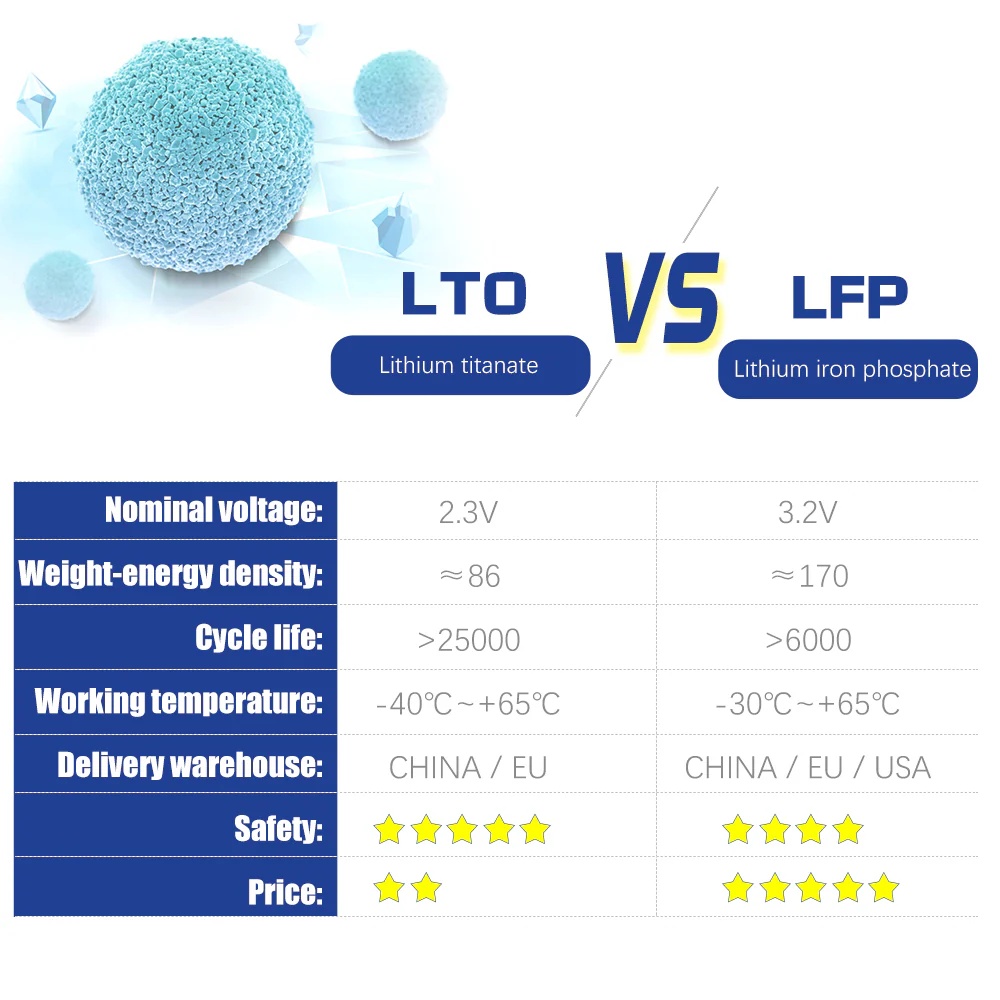
Cycle life: LTO cells are rated for over 25,000 cycles under appropriate conditions. Most LFP cells fall in the 3,000–6,000 cycle range. For a system that cycles daily, the difference is years of additional service life before capacity drops below a useful threshold. The lifetime cost per cycle drops substantially.
Low-temperature charging: LFP and NMC cells generally can’t charge safely below 0°C without risking lithium plating on the anode. This cell operates down to -40°C — charging included. Understanding how battery chemistry responds under cold operating conditions is important when evaluating suitability for cold-climate installations, unheated vehicle compartments, outdoor enclosures, and any setup where heating the battery isn’t practical.
Both properties come from the same underlying chemistry: the LTO anode doesn’t expand and contract as much during cycling as graphite does. That preserved electrode structure is what allows the cell to hold up over thousands of cycles and continue performing in the cold.

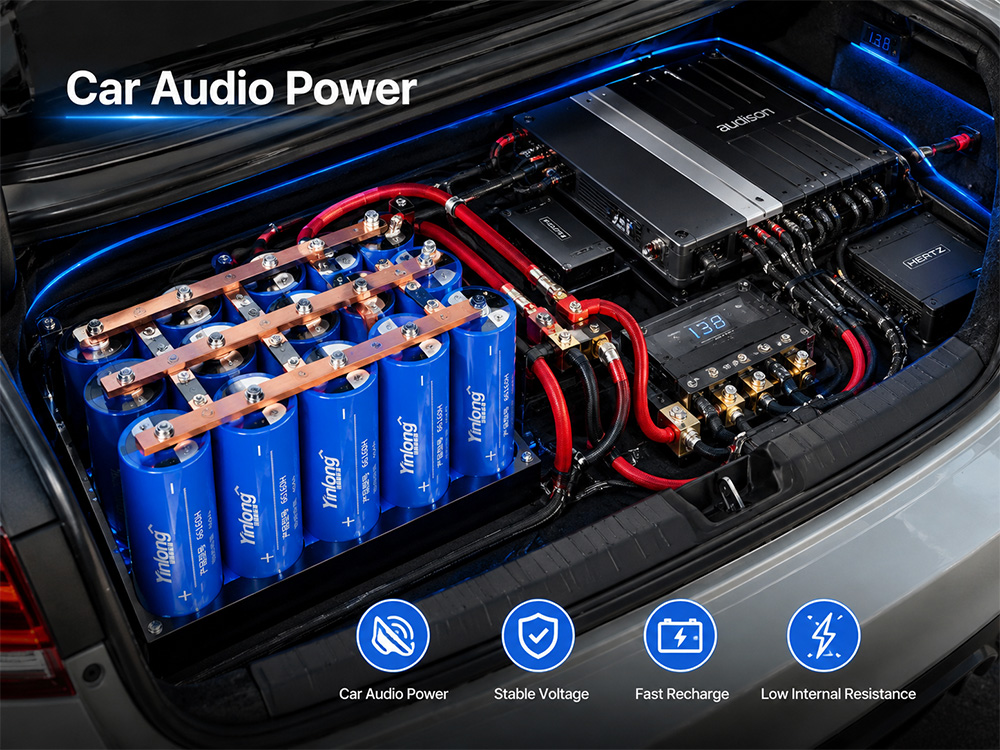
High-powered car audio systems pull large, sustained current — more than most vehicle electrical systems are designed to handle. Voltage sags. Amplifiers clip. The low end loses definition.
A bank of Yinlong LTO cells provides stable voltage under high instantaneous current demand, charges quickly from the alternator while the engine is running, and delivers clean peak power without the sag that compromises audio quality. LTO’s flat discharge curve and low internal resistance make it particularly well-suited to this application.
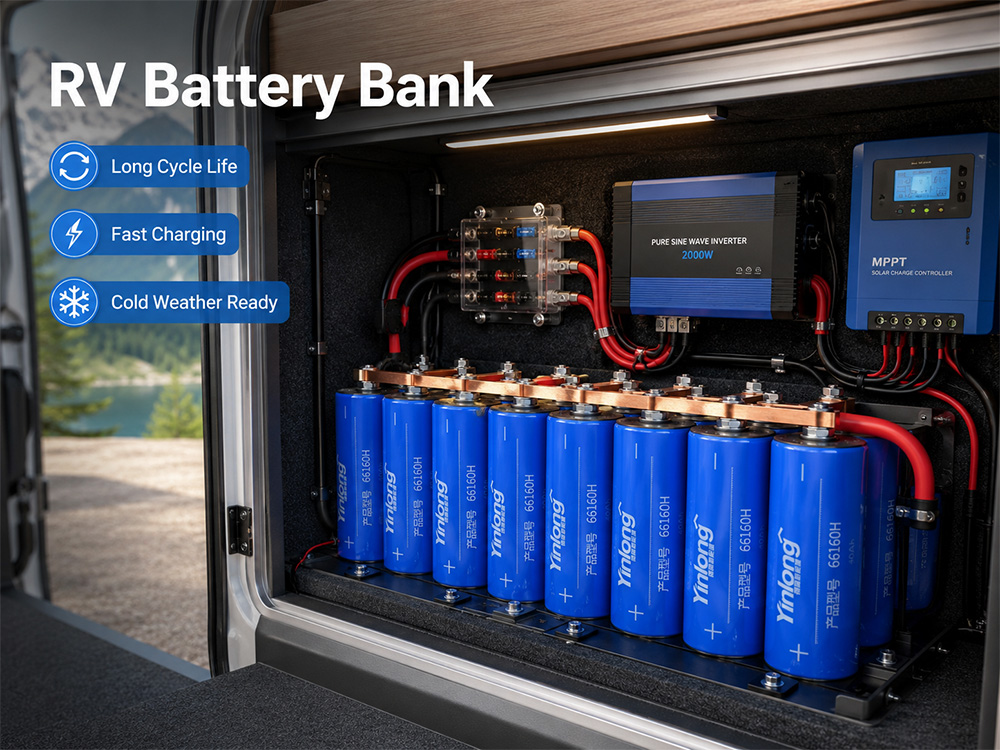
RV and caravan house banks deal with irregular charging from solar, shore power, and vehicle alternators, and they cycle regularly over years of use. The design requirements for lithium house battery systems in RV and caravan applications differ meaningfully from those for stationary storage — temperature range, charge source variety, and physical vibration all need to be accounted for in the pack design. A 12V or 24V LTO bank built from Yinlong 66160 cells handles all of that comfortably, with a cycle life that should outlast most RV platforms. The temperature range covers both summer heat and winter storage without needing a battery heater.
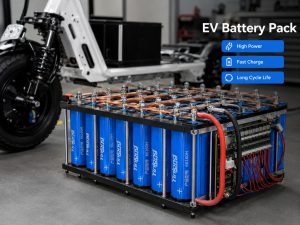
For small EV conversions, electric motorcycles, and scooters — especially those that cycle more than once per day or operate in cold weather — LTO’s advantages over LFP become meaningful over a multi-year ownership period. Less heat per cycle also means less demand on the cooling system. The engineering considerations for e-mobility battery packs cover a range of cell chemistries and form factors, and LTO’s unique properties make it worth evaluating for high-cycle or cold-climate EV applications specifically.
Off-grid and hybrid solar systems cycle their batteries every day. An LTO bank built from Yinlong cells offers cycle life that matches or exceeds the expected lifespan of most solar panels. The -40°C lower limit also means the battery keeps charging through winters that would force an unheated LFP system into a no-charge state.

UPS applications need fast recharge and reliable peak current delivery when the grid drops. LTO handles both. The chemistry is also inherently stable, which reduces thermal risk in data center and industrial environments where a battery fault has serious downstream consequences.

Cold starts demand very high current for a short time — exactly the condition that exposes weaknesses in a battery’s internal resistance and cold-temperature capacity. LTO’s low resistance means less voltage drop under load, and its cold-temperature rating means it retains useful capacity where lead-acid and LFP cells have already fallen off. It’s a practical choice for cold-climate vehicles, boats, and outdoor equipment. The performance characteristics of lithium cells in low-temperature operating environments are worth understanding in detail before finalising a starting battery design for sub-zero conditions.

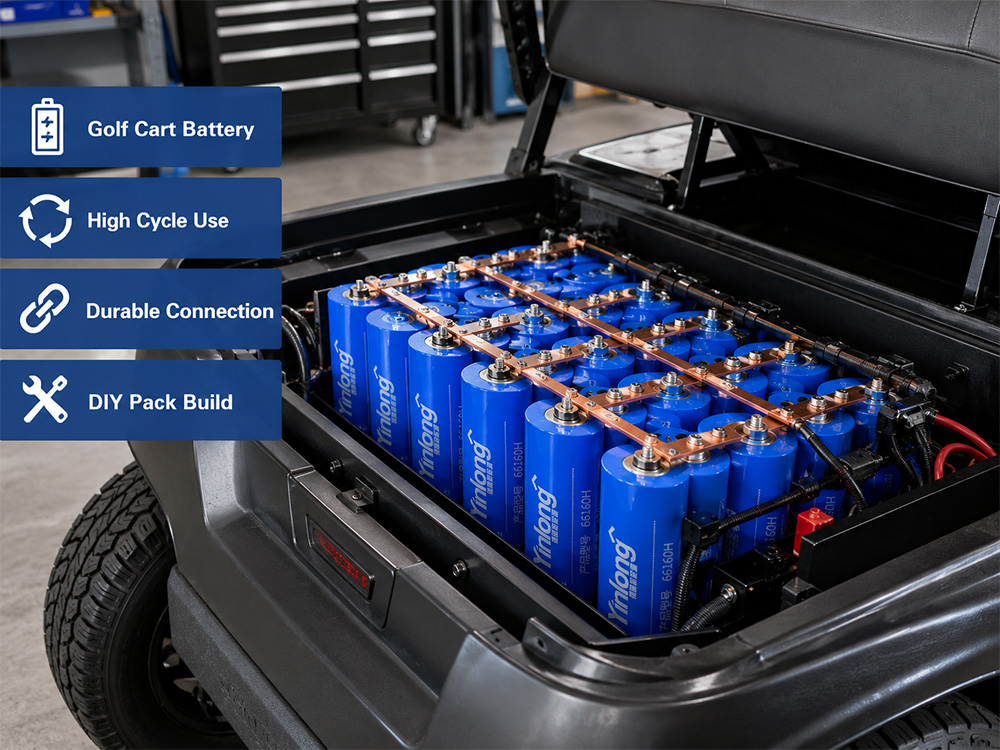
Golf cart packs cycle regularly and often sit in uncontrolled temperature environments. A Yinlong-based pack holds up well in those conditions, and the M12 terminals and included busbars make the assembly process straightforward for experienced builders. For builders looking at the broader context of lithium battery applications in golf cart and marine equipment, the key design considerations — discharge rate, vibration tolerance, and temperature range — apply directly to LTO packs as well.
This is a single LTO cell for DIY battery pack construction. It is not a ready-to-use battery and not a drop-in replacement for lead-acid or LFP systems.
Before connecting anything:
BMS requirements:
Who this is for:
If you’re new to pack assembly, work with someone who has done it before. Incorrect assembly can produce a dangerous result.
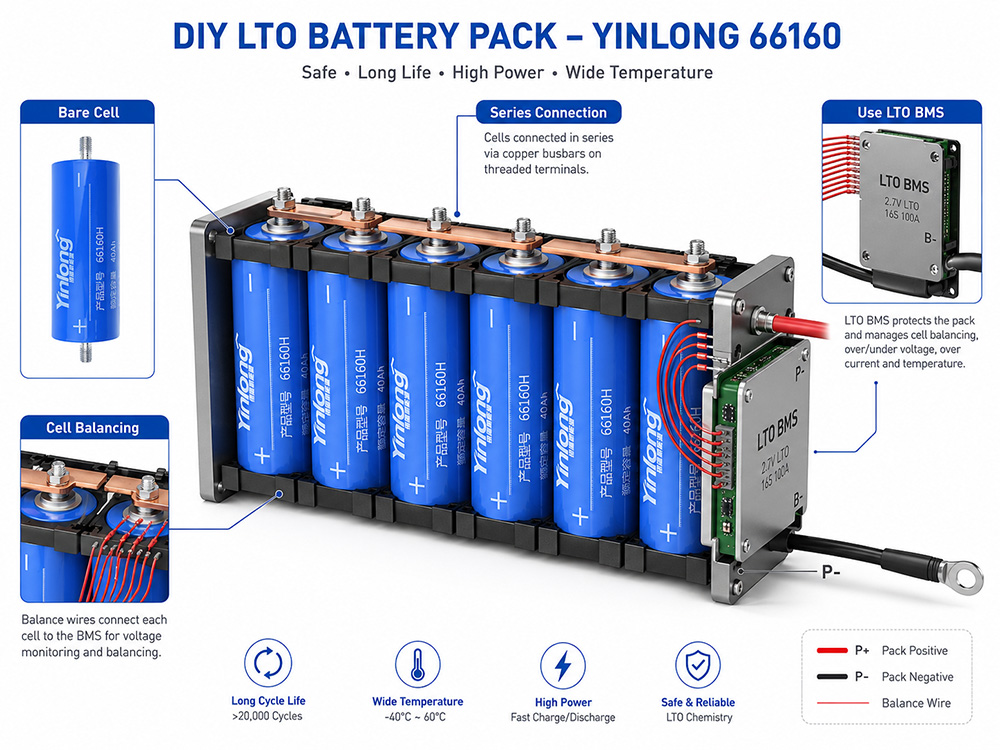
Every pack assembled from these cells needs a Battery Management System. The BMS monitors individual cell voltages, balances the pack during charging, and cuts the circuit if a cell goes out of range. Understanding what a BMS is responsible for — and how it needs to be configured for a specific cell chemistry — is foundational to safe pack design.
The BMS needs to handle:
Set the voltage thresholds to the LTO range (1.5V–2.9V per cell). A BMS set to LFP thresholds will either overcharge the cells or underprotect them — neither is acceptable.
Size the BMS for your actual load current. An undersized BMS trips under normal load, which wears it out faster and disrupts operation.
Cells are available in set quantities to make ordering easier for common pack voltages.
| Quantity | Notes |
|---|---|
| 6 cells | Small test packs or lower-voltage custom builds |
| 12 cells | 27.6V nominal (12S) reference pack |
| 18 cells | Higher-voltage custom configuration |
| 24 cells | Larger RV, solar, EV, or UPS systems |
Nominal pack voltage = number of cells × 2.3V. A 12S pack is 27.6V nominal. Factor this into your BMS and charger selection. For reference, the voltage configurations used in common custom battery pack designs — including 24V and 48V system architectures — can help inform how series cell counts translate to usable system voltages for different applications.
Included with each cell: 1 copper busbar, 2 M12 nuts.
For volume orders, contact us directly for bulk pricing.

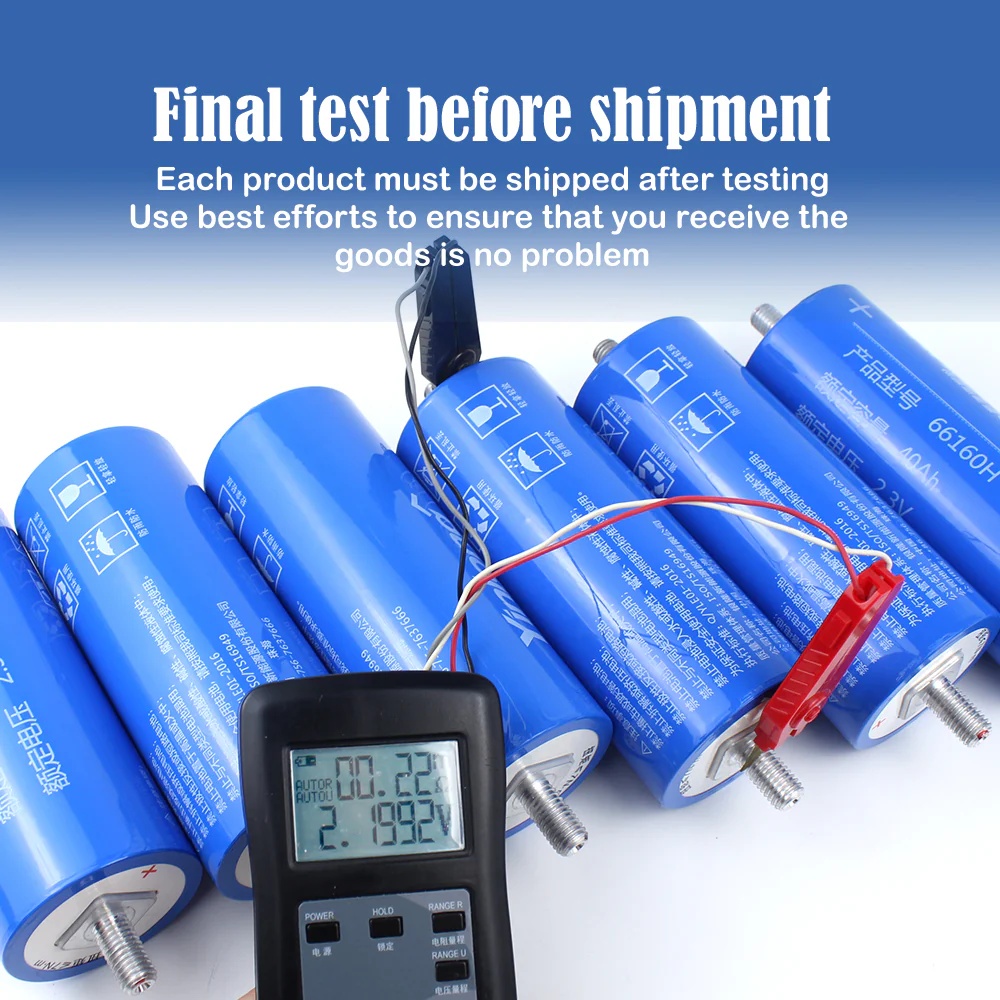
Every cell is checked before shipment:
Warranty: 10 years covering manufacturing defects. Cells confirmed defective within one week of delivery are eligible for replacement or refund. Test your cells promptly after receiving them — don’t wait until you’re mid-assembly.
The warranty does not cover:

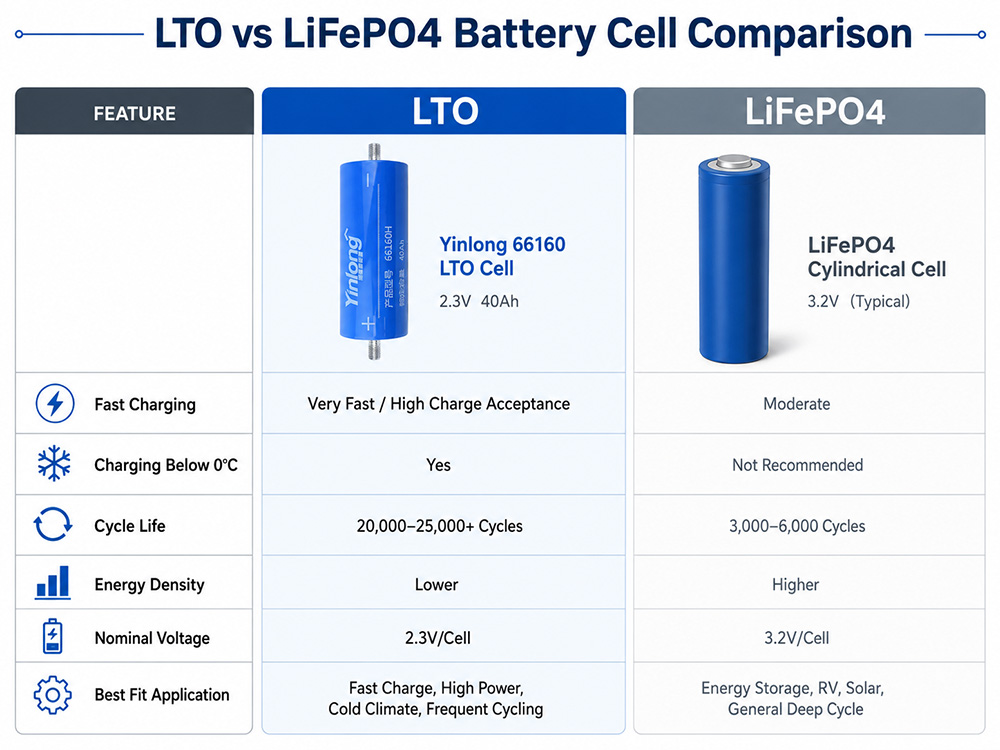
Both are safe lithium chemistries — neither carries the thermal runaway risk associated with NMC or NCA. The difference is in where each one is optimised. For a broader overview of how LiFePO4 pack engineering differs across applications, it’s worth reading up on the chemistry-specific design constraints before committing to either technology for a given system.
| LTO (This Cell) | LFP | |
|---|---|---|
| Fast Charging | Excellent | Good |
| Charging Below 0°C | Yes, down to -40°C | Not recommended |
| Cycle Life | 25,000+ cycles | 3,000–6,000 cycles |
| Energy Density | Lower (~92Wh this cell) | Higher per unit volume |
| Nominal Voltage | 2.3V per cell | 3.2V per cell |
| Best Fit | High power, cold climate, fast charge, high-cycle applications | General energy storage where upfront cost per kWh is the priority |
Choose LTO if your application cycles frequently, needs to charge in cold weather, requires fast recharge, or needs the battery to outlast the rest of the system.
Choose LFP if energy density and upfront cost per kilowatt-hour are your main constraints and the other factors aren’t critical.
Q: Are these brand new cells? Yes. Grade A, brand new, never used or reconditioned. Each cell has a clear QR code from the original production batch.
Q: Does each cell include the busbar and nuts? Yes. Every cell comes with one copper busbar and two M12 nuts.
Q: Can I use this for car audio? Yes. The low internal resistance and high discharge rate make it a good fit. It delivers stable voltage under heavy amplifier loads and recharges quickly from the alternator.
Q: What about RV or caravan use? Yes, it works well in DIY house battery builds. The cycle life and temperature range hold up better than lead-acid or basic LFP options in most RV applications. See our notes in the RV section above, and review how lithium systems are typically configured for RV house banks to inform your design.
Q: Is it suitable for solar storage? Yes. Daily cycling and variable outdoor temperatures are where LTO’s strengths show up most clearly. The cycle life comfortably exceeds most solar panel service life expectations.
Q: Can I build a golf cart pack with it? Yes. You’ll need an LTO-rated battery management system with thresholds set to the LTO voltage window, a charger matched to your pack voltage, and all cells balanced before assembly.
Q: Is this suitable for someone new to battery building? No. Pack assembly requires a solid understanding of cell balancing, BMS selection, series and parallel design, and appropriate current ratings throughout the system. If you’re new to this, build alongside someone with experience before attempting it on your own.